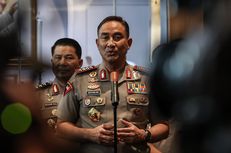
Yet Again, Police Chief Suyudi Reshuffles Police Ranks, Now 7 Times in 2 Months
-
News
-
11 minutes ago
This article was translated by AI. Read the original article on Kompas.com. See Original

The President already has ministries and developmental coordination apparatus.
Adding vice presidents without clear functions risks extending bureaucracy and obscuring accountability.
While the presidential system does not universally prohibit having more than one vice president, institutional design must follow proven needs rather than create positions first and then seek their authorities.
Article 6A paragraph (1) of the 1945 Constitution regulates the direct election of the President and Vice President as a pair by the electorate.
If there are three vice presidents, what will the election mechanism be? Will they be elected alongside the President, based on territory, or through a separate mechanism?
Each option carries implications for legitimacy and political accountability.
Hanna Pitkin in The Concept of Representation (1967) distinguishes between descriptive and substantive representation.
Having a common regional background does not automatically mean that an individual advocates for the interests of that region's populace.
A vice president based in Papua does not necessarily represent the interests of all Papuans.
Without a clear mandate and accountability mechanisms, geographical representation may only serve as a political symbol.
The most serious issue lies in presidential succession.
Article 8 paragraph (1) of the 1945 Constitution mandates that the vice president succeeds the President in constitutionally defined circumstances.
This provision ensures governmental continuity.
If there are three vice presidents, who has the first right to succeed the President?
Is it based on seniority, votes received, or political decisions?