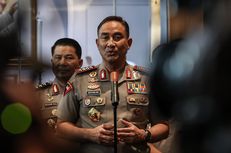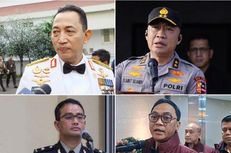
Yet Again, Police Chief Suyudi Reshuffles Police Ranks, Now 7 Times in 2 Months
-
News
-
11 minutes ago
This article was translated by AI. Read the original article on Kompas.com. See Original

INDONESIA is not short on ideas about power distribution. What is often lacking is an explanation of why that distribution is necessary.
Amid the debate regarding the vice presidential position, the Chairman of the Regional Representative Council (DPD) Sultan Baktiar Najamudin proposed having three vice presidents based in Sumatra, Kalimantan, and Papua.
The rationale is that Indonesia's vast territory cannot be effectively managed by a single vice president.
By adding these positions, fairer development and better regional representation are hoped to be ensured.
This intention to enhance attention to regional issues is commendable. However, should the imbalance in development be addressed by increasing constitutional posts?
This brings us to the crux of the matter: the proposal confuses regional representation with the organization of executive power.
Article 4 paragraph (2) of the 1945 Constitution clearly states that the President is assisted by one vice president.
This provision must be read in conjunction with Article 4 paragraph (1) concerning the presidential power, Article 6A paragraph (1) about the election of the President and Vice President as a pair, and Article 8 regarding presidential succession.
These articles create an interconnected constitutional design.
Changing the number of vice presidents means redefining the relationship between electoral mandates, power execution, and government continuity.
Indeed, Article 37 allows for amendments to the 1945 Constitution.
Proposing three vice presidents is not in itself unconstitutional. However, the mere possibility of change does not automatically prove it to be necessary.
In Indonesia's presidential system, the President holds executive power. The vice president does not possess independent governance authority that exists separately from the President.
If three vice presidents are assigned responsibilities based on territory, how does their authority relate to that of ministers, governors, and local governments?
Conversely, if they merely execute the President's mandates, why is there a need for three constitutional posts?