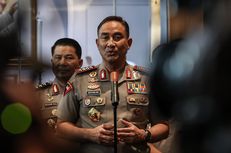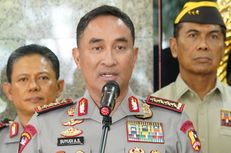
Yet Again, Police Chief Suyudi Reshuffles Police Ranks, Now 7 Times in 2 Months
-
News
-
12 minutes ago
This article was translated by AI. Read the original article on Kompas.com. See Original

INDONESIA is not short on ideas about power distribution. What is often lacking is an explanation of why that distribution is necessary.
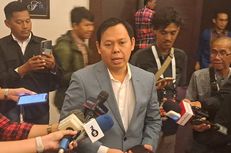
Amid the debate regarding the vice presidential position, the Chairman of the Regional Representative Council (DPD) Sultan Baktiar Najamudin proposed having three vice presidents based in Sumatra, Kalimantan, and Papua.
The rationale is that Indonesia's vast territory cannot be effectively managed by a single vice president.
By adding these positions, fairer development and better regional representation are hoped to be ensured.
This intention to enhance attention to regional issues is commendable. However, should the imbalance in development be addressed by increasing constitutional posts?
This brings us to the crux of the matter: the proposal confuses regional representation with the organization of executive power.
Article 4 paragraph (2) of the 1945 Constitution clearly states that the President is assisted by one vice president.
This provision must be read in conjunction with Article 4 paragraph (1) concerning the presidential power, Article 6A paragraph (1) about the election of the President and Vice President as a pair, and Article 8 regarding presidential succession.
These articles create an interconnected constitutional design.
Changing the number of vice presidents means redefining the relationship between electoral mandates, power execution, and government continuity.
Indeed, Article 37 allows for amendments to the 1945 Constitution.
Proposing three vice presidents is not in itself unconstitutional. However, the mere possibility of change does not automatically prove it to be necessary.
In Indonesia's presidential system, the President holds executive power. The vice president does not possess independent governance authority that exists separately from the President.
If three vice presidents are assigned responsibilities based on territory, how does their authority relate to that of ministers, governors, and local governments?
Conversely, if they merely execute the President's mandates, why is there a need for three constitutional posts?
The President already has ministries and developmental coordination apparatus.
Adding vice presidents without clear functions risks extending bureaucracy and obscuring accountability.
While the presidential system does not universally prohibit having more than one vice president, institutional design must follow proven needs rather than create positions first and then seek their authorities.
Article 6A paragraph (1) of the 1945 Constitution regulates the direct election of the President and Vice President as a pair by the electorate.
If there are three vice presidents, what will the election mechanism be? Will they be elected alongside the President, based on territory, or through a separate mechanism?
Each option carries implications for legitimacy and political accountability.
Hanna Pitkin in The Concept of Representation (1967) distinguishes between descriptive and substantive representation.
Having a common regional background does not automatically mean that an individual advocates for the interests of that region's populace.
A vice president based in Papua does not necessarily represent the interests of all Papuans.
Without a clear mandate and accountability mechanisms, geographical representation may only serve as a political symbol.
The most serious issue lies in presidential succession.
Article 8 paragraph (1) of the 1945 Constitution mandates that the vice president succeeds the President in constitutionally defined circumstances.
This provision ensures governmental continuity.
If there are three vice presidents, who has the first right to succeed the President?
Is it based on seniority, votes received, or political decisions?
Without clear priority rules, adding positions could create legitimacy disputes instead.
This change would also require a reorganization of Articles 8 paragraphs (2) and (3) regarding vacancy and continuity of governance.
The Constitution should mitigate political uncertainty, not create new sources of conflict.
Articles 18 and 18A of the 1945 Constitution already provide a foundation for regional autonomy and the relationship between central and regional authority and finances.
Articles 22C and 22D establish the DPD as a body for regional representation.
The Constitutional Court's decision Number 92/PUU-X/2012 also emphasizes the DPD's involvement in the legislative process according to its constitutional authority.
If regional interests are not yet accommodated, why not first strengthen the DPD's functions, improve fiscal decentralization, and enhance local government capacity?
This question is relevant because the notion of three vice presidents originates from the leadership of an institution created to advocate for regional interests.
The development imbalance is not primarily due to a lack of vice presidents but is related to the quality of policies, budget distribution, and governmental effectiveness.
Constitutional amendments must address three questions: what issue is to be resolved, why are existing institutions unable to resolve it, and does the new design offer greater benefits than risks?
The idea of three vice presidents has not yet provided convincing answers.
The vastness of Indonesia is a geographical reality, not a standalone justification for multiplying constitutional posts.
If territorial size is the basis, why three vice presidents and not five or seven?
The constitution is not an instrument for increasing power seats; it is the fundamental law that governs the establishment, limitation, and accountability of state power.
Therefore, the idea of three vice presidents deserves to be questioned not only for its incompatibility with the current 1945 Constitution but also for its failure to demonstrate a justifiable constitutional need.
The issue in Indonesia is not a lack of vice presidents but how to ensure that the powers conferred by the constitution truly serve the people.