

Suspect in Presidential Wiretapping Case, Ahrie Sonta Removed from Kadivkum Polri, Here’s His Successor
-
News
-
2 minutes ago
This article was translated by AI. Read the original article on Kompas.com. See Original
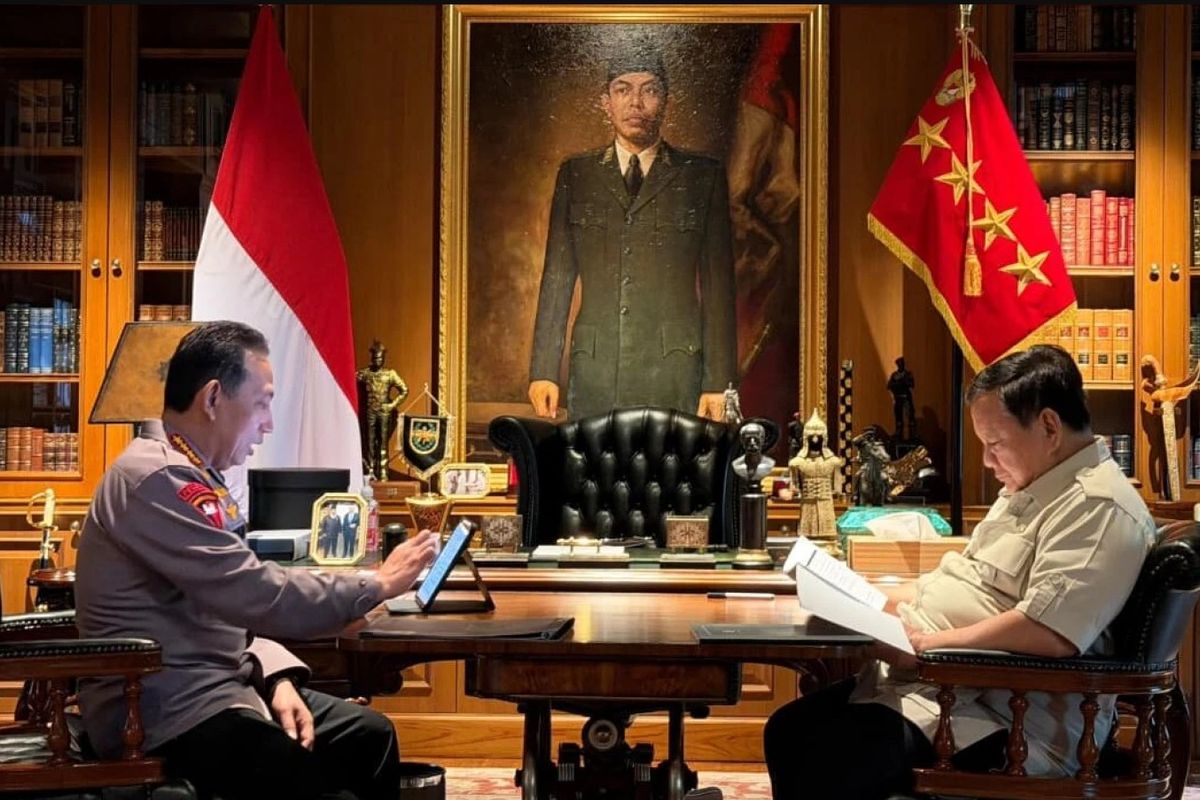
THE CASE of illegal wiretapping conducted by former National Police Chief, General Listyo Sigit Prabowo, along with three other two-star generals—EHS, SU, and ASN—against President Prabowo, as well as several other political and government figures, has sparked intense debate in the parliament.
Numerous calls have emerged for the Indonesian House of Representatives (DPR RI) to urgently draft a Wiretapping Bill.
Commission III of the DPR RI, which oversees legal and security matters, has responded positively to this proposal.
The commission's head, Habiburokhman, clearly stated that discussion will commence once the Judges Bill and the Advocates Bill are ratified in December.
Essentially, regulations regarding wiretapping are already outlined in various laws—sui generis—such as the State Intelligence Law, the Police Law, the Anti-Corruption Commission Law, the Electronic Information and Transactions Law, and the Criminal Code.
This indicates that the state and government have given due attention to this activity.
However, the existing regulations give a partial impression, as if issues surrounding wiretapping are case-by-case and differ among institutions.
From a legal perspective, such a situation can have negative consequences, as sectoral regulations leave gaps in oversight and law enforcement regarding violations that occur.
This is exemplified by the situation within the National Police, which is supposed to uphold the law.
Wiretapping is a legal activity.
It is called so not only because the authority to conduct wiretapping is granted only to law enforcement, but also because conducting wiretapping by the state incurs legal consequences.
Wiretapping involves listening to, recording, and documenting the transmission of information or electronic documents privately for the purpose of enforcing the law.
According to various regulations governing this activity, wiretapping is conducted for the purpose of investigating serious crimes such as terrorism, corruption, narcotics, and threats to national security.
Wiretapping cannot be carried out arbitrarily; it must be regulated through strict control processes, including court approval and oversight mechanisms, both internal and external.
The court approval and oversight mechanisms are two key phrases to ensure that the wiretapping mechanisms are genuinely implemented within the framework of law enforcement.