

DPR Member: Vice Presidential Proposal of 3 is Unconstitutional!
-
News
-
4 minutes ago
This article was translated by AI. Read the original article on Kompas.com. See Original

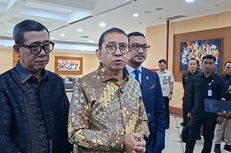
JAKARTA, KOMPAS.com - Ahmad Doli Kurnia, a member of Commission II of the Indonesian House of Representatives (DPR), stated that the proposal by the Chairman of the Regional Representative Council (DPD), Sultan Najamudin, to have three vice presidents in Indonesia contradicts the 1945 Constitution.
"It does not align with the constitution, theory, or the logical framework of an advancing and modern state governance and substantial democracy development," Doli said in a statement on Saturday (21/11/2026).
The Deputy Chairman of the Golkar Party continued his response by emphasizing the importance of differentiating between a nation and state institutions.
According to him, these two terms have different meanings and positions within the governance system and cannot be equated.
"Perhaps Sultan is reminiscing about when he was elected as a package in the DPD or was preparing a paper in school. We must differentiate between 'the nation' and 'state institutions.' They are fundamentally different," Doli remarked.
The 1945 Constitution of the Republic of Indonesia states that the number of vice presidents is one. Here is the excerpt from the article:
Article 4
(2) In carrying out his duties, the President is assisted by one Vice President.
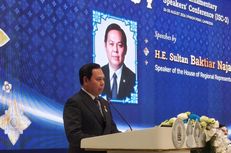
Chairman of the DPD, Sultan Baktiar Najamudin, proposed that Indonesia have three vice presidents.
He suggested that the three vice presidents could be located in three regions of Indonesia: the eastern, central, and western parts.
"This is an old proposal of ours, but I believe it is still relevant to discuss as the nation seeks a new vice president. In the future, we want these vice presidents to be able to operate from Papua, Kalimantan, and Sumatra," Sultan stated.
He noted that each region of Indonesia has its own character and needs.
According to Sultan, national leadership should also consider geographical and political justice factors.
"Indonesia is a vast archipelagic nation, and from a sociological perspective, it's quite complex. Each region, whether in the West, Center, or East of Indonesia, has different character needs and challenges," Sultan added.