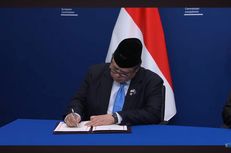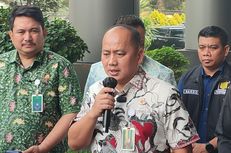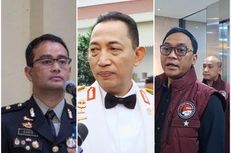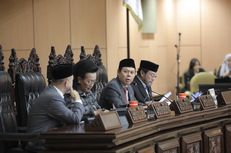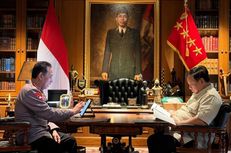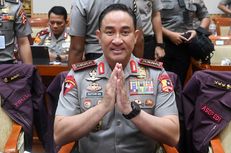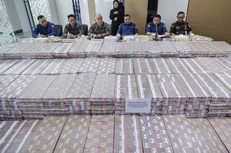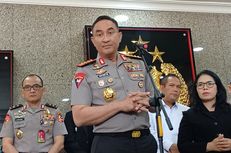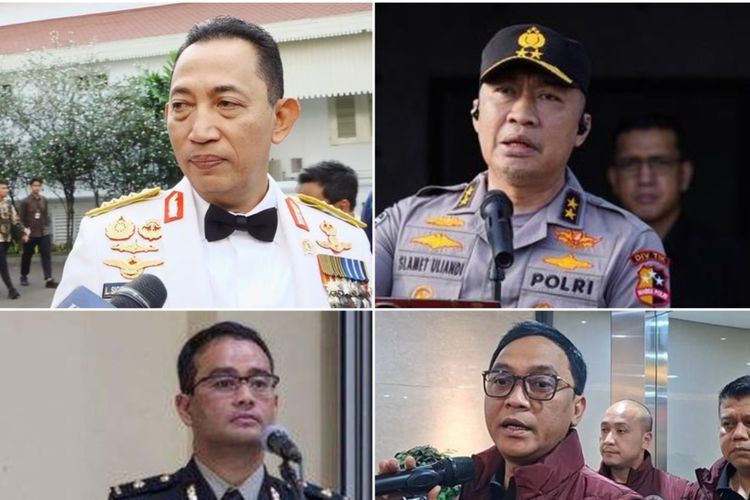

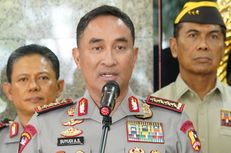
Police Chief Reshuffles Officials of Metro Jaya Regional Police and Several Precinct Chiefs, Here is the List
-
News
-
3 minutes ago
This article was translated by AI. Read the original article on Kompas.com. See Original
All of this fosters speculation, but speculation is not evidence.
If other parties are indeed involved, the path should be through transparent investigations, not public labeling.
Presidential transitions in this country always come with a change in personnel.
Habibie removed Prabowo from his position as Kostrad Commander in 1998, and Abdurrahman Wahid dismissed Wiranto from the cabinet in 2000.
What is unusual about the 2024 transition is the absence of transition itself.
Many close to Jokowi remain in strategic positions, leading to a simultaneous, harsh correction for this delay.
Two theoretical lenses help to analyze this situation. Dan Slater, in his study on party cartelization in Indonesia (2018), mentions the tendency of promiscuous power-sharing, where the president embraces almost all political forces into government until the opposition evaporates.
Milan Svolik in The Politics of Authoritarian Rule (2012) shows that coalitions among elites are always haunted by commitment issues, as each side fears their allies may turn against them.
Although Svolik writes about authoritarian regimes, this logic applies to any elite coalition.
The partnership between Prabowo and Jokowi stems from a loose power-sharing arrangement and has now fractured due to a loss of mutual trust.
From here, three possibilities emerge. First, a managed distance, whereby both sides continue to protocolarily honor each other without sharing agendas, while Prabowo relies on established parties within his coalition.
Second, an open rift, if the investigation reaches the closer circle and Jokowi's camp chooses to oppose, including through the PSI.
Third, a limited reconciliation of a transactional nature, where both sides restrain themselves for stability heading into 2029.
The first possibility appears to be the most realistic, especially since the appointment of the vice president is now entirely in the hands of the President and the MPR.
This nation has spent too long expending energy on cycles of inter-regime clean-ups.
A country that seeks to leap forward requires institutions that are stronger than networks, regardless of who owns them.
This matter should serve as a moment to tighten wiretapping rules and oversight of the authorities holding that power, rather than simply replacing one network with another.
Measured clean-ups will be remembered as recovery, while unchecked ones will be seen as a new chapter of political vengeance.
What needs to be cleaned is, in fact, actions, or merely proximity?