

When the Baduy Settlement Ignited in Flames...
-
News
-
19 minutes ago
This article was translated by AI. Read the original article on Kompas.com. See Original
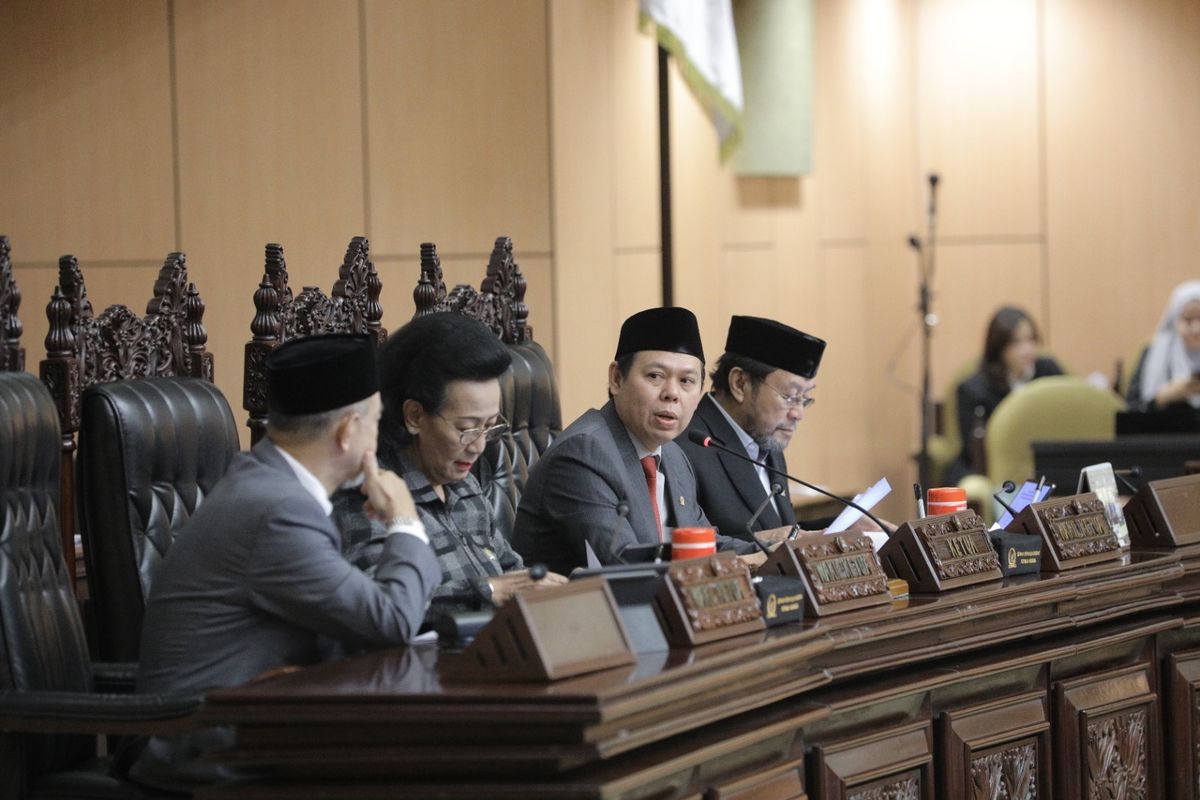
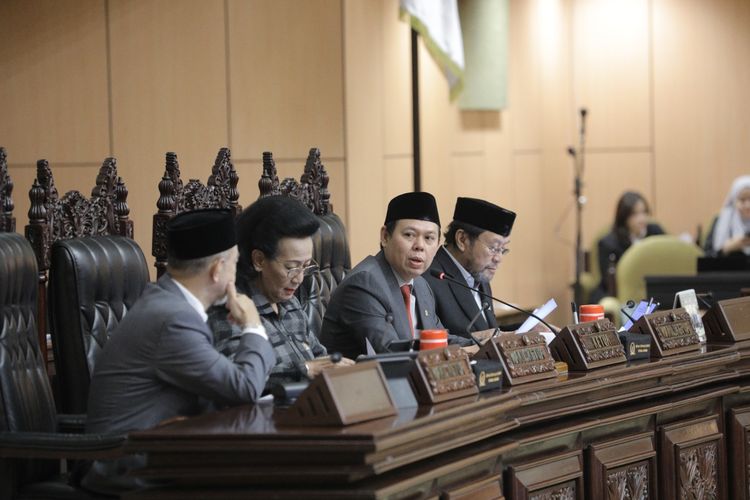
BREAKTHROUGH The Chairperson of the Regional Representative Council (DPD) of the Republic of Indonesia, Sultan Baktiar Najamudin, has proposed that Indonesia have up to three vice presidents amidst the vacancy of the second-highest office, igniting a new discourse within the framework of national governance.
The idea of having vice presidents office separately in Sumatra, Kalimantan, and Papua to oversee equitable development and monitor the performance of regional leaders initially appears promising as a breakthrough in regional representation.
However, behind the narrative of political justice for an expansive archipelagic nation, this proposal raises fundamental questions in legal philosophy and constitutional theory.
Does this idea stem from a consciousness of substantive justice aimed at reorganizing the architecture of the state, or is it merely a pragmatic response that ultimately obscures the lines of accountability for power following Gibran Rakabuming Raka's resignation?
Within the framework of the current positive law, the notion of introducing more than one vice president directly confronts the rigid constitutional wall.
Article 4, paragraph (2) of the 1945 Constitution of the Republic of Indonesia explicitly states that in carrying out his duties, the President is assisted by one Vice President.
Meanwhile, Article 8, paragraph (2) regulates the mechanism for filling vacancies through the president proposing two candidates to the People's Consultative Assembly (MPR) no later than sixty days.
In the tradition of legal philosophy and modern constitutional theory, U.S. legal philosopher Ronald Dworkin argues in his work Law's Empire (1986) that law should not be treated merely as a flexible political instrument shaped by momentary will but must adhere to the integrity of coherent constitutional principles.
Consistent with Dworkin's viewpoint, the constitutional text serves as a normative fence that maintains procedural consistency in governance amid political upheavals.
Introducing the discourse of adding vice presidents during the ongoing constitutional process to fill this vacancy risks undermining the certainty of the rules and eroding the constitution's authority as the highest law.
In addition to conflicting with constitutional text, the proposal to divide the vice presidency into three supervising regions leaves serious questions regarding the doctrine of accountability for public officials.
In the discourse of constitutional theory and modern state philosophy, Austrian constitutional theorist Georg Jellinek, in his work Allgemeine Staatslehre (1900), explained that state organs operate within the boundaries of competence defined by constitutional law to ensure power is organized clearly without overlap.
Furthermore, French political theorist and constitutionalist Benjamin Constant, in his classic treatise Principes de Politique (1815), reminds us that the division and limitation of power must be designed to prevent arbitrary action and ensure that each authority remains firmly accountable to the law and the citizens.
Within Indonesia's pure presidential system, the unity of executive command is structured so that both political and legal accountability remains centralized around a single president and one vice president.
Dividing the vice presidency into three regional entities charged with overseeing hundreds of governors and regents creates a gray area of authority that complicates accountability, especially during abuses of power or constitutional violations leading to impeachment processes as outlined in Article 7A of the 1945 Constitution.