

When the Baduy Settlement Ignited in Flames...
-
News
-
1 minute ago
This article was translated by AI. Read the original article on Kompas.com. See Original
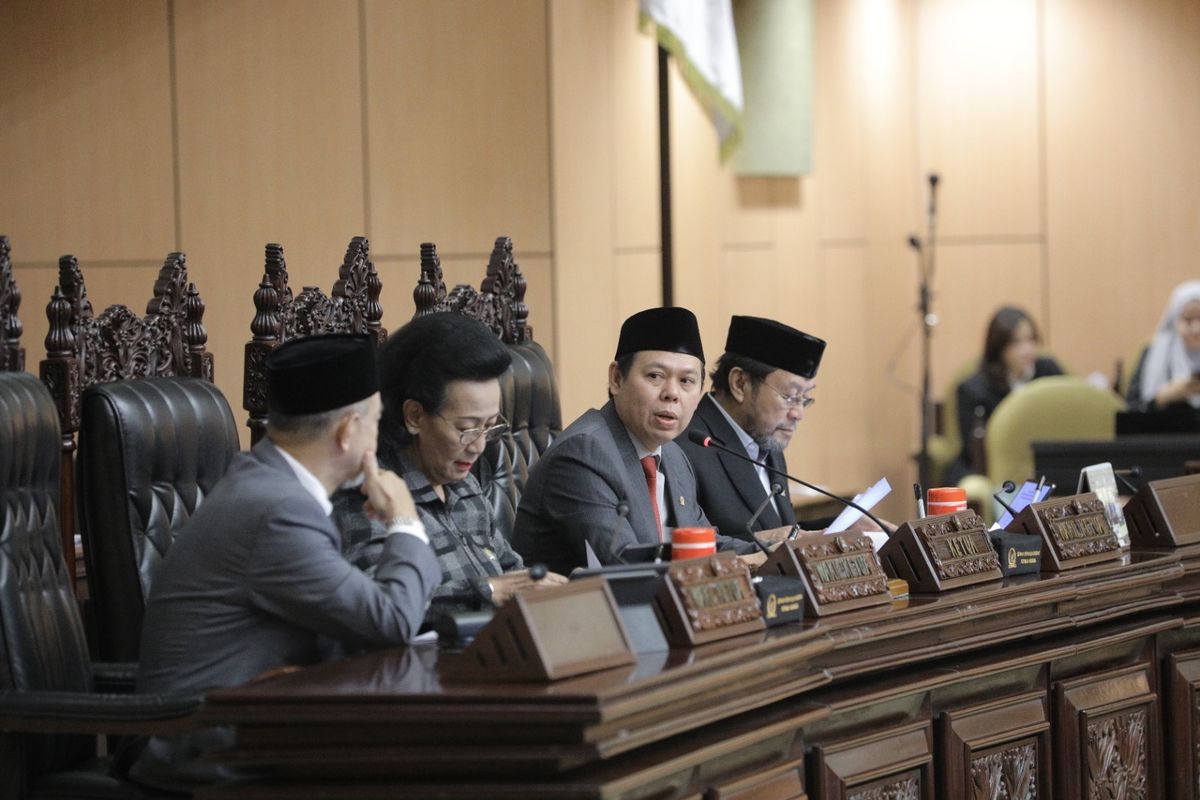
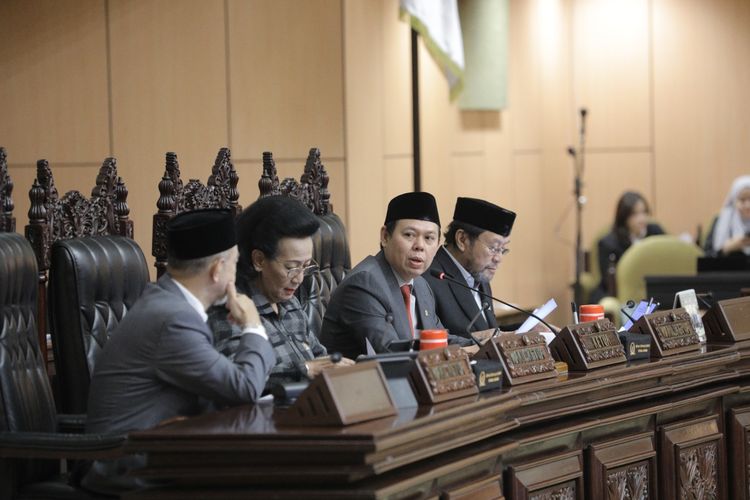
BREAKTHROUGH The Chairperson of the Regional Representative Council (DPD) of the Republic of Indonesia, Sultan Baktiar Najamudin, has proposed that Indonesia have up to three vice presidents amidst the vacancy of the second-highest office, igniting a new discourse within the framework of national governance.
The idea of having vice presidents office separately in Sumatra, Kalimantan, and Papua to oversee equitable development and monitor the performance of regional leaders initially appears promising as a breakthrough in regional representation.
However, behind the narrative of political justice for an expansive archipelagic nation, this proposal raises fundamental questions in legal philosophy and constitutional theory.
Does this idea stem from a consciousness of substantive justice aimed at reorganizing the architecture of the state, or is it merely a pragmatic response that ultimately obscures the lines of accountability for power following Gibran Rakabuming Raka's resignation?
Within the framework of the current positive law, the notion of introducing more than one vice president directly confronts the rigid constitutional wall.
Article 4, paragraph (2) of the 1945 Constitution of the Republic of Indonesia explicitly states that in carrying out his duties, the President is assisted by one Vice President.
Meanwhile, Article 8, paragraph (2) regulates the mechanism for filling vacancies through the president proposing two candidates to the People's Consultative Assembly (MPR) no later than sixty days.
In the tradition of legal philosophy and modern constitutional theory, U.S. legal philosopher Ronald Dworkin argues in his work Law's Empire (1986) that law should not be treated merely as a flexible political instrument shaped by momentary will but must adhere to the integrity of coherent constitutional principles.
Consistent with Dworkin's viewpoint, the constitutional text serves as a normative fence that maintains procedural consistency in governance amid political upheavals.
Introducing the discourse of adding vice presidents during the ongoing constitutional process to fill this vacancy risks undermining the certainty of the rules and eroding the constitution's authority as the highest law.
In addition to conflicting with constitutional text, the proposal to divide the vice presidency into three supervising regions leaves serious questions regarding the doctrine of accountability for public officials.
In the discourse of constitutional theory and modern state philosophy, Austrian constitutional theorist Georg Jellinek, in his work Allgemeine Staatslehre (1900), explained that state organs operate within the boundaries of competence defined by constitutional law to ensure power is organized clearly without overlap.
Furthermore, French political theorist and constitutionalist Benjamin Constant, in his classic treatise Principes de Politique (1815), reminds us that the division and limitation of power must be designed to prevent arbitrary action and ensure that each authority remains firmly accountable to the law and the citizens.
Within Indonesia's pure presidential system, the unity of executive command is structured so that both political and legal accountability remains centralized around a single president and one vice president.
Dividing the vice presidency into three regional entities charged with overseeing hundreds of governors and regents creates a gray area of authority that complicates accountability, especially during abuses of power or constitutional violations leading to impeachment processes as outlined in Article 7A of the 1945 Constitution.
Nevertheless, Sultan Baktiar Najamudin's concerns regarding development imbalances between the center and regions in western, central, and eastern Indonesia should be interpreted as a valid sociological aspiration for justice.
In contemporary legal and institutional thought, British constitutional jurist Albert Venn Dicey, through his work Introduction to the Study of the Law of the Constitution (1885), emphasizes that the rule of law and clarity in the division of institutional authority demand mechanisms that are orderly and measurable—not merely adding new official positions without clear boundaries of power.
When viewed through the lens of governance, the issues of development disparities and weak oversight of regional heads are not primarily due to an insufficient number of vice presidents but stem from the yet-optimized functional oversight instruments and the enforcement of integrity in law.
The irony becomes more pronounced amidst challenges to the State Ministry Law, which is contested to streamline government architecture and curb the bloating of the state budget, that discussions arise about adding vice presidents up to three, potentially creating new problems.
The challenge to the State Ministry Law arises from public concern over a bloated cabinet that burdens the state budget and hampers inter-ministerial coordination, leading to the perception that institutional streamlining is a rational step to maintain fiscal efficiency.
Instead of addressing the needs for efficiency and orderly bureaucracy, the discourse around adding vice presidential seats at the executive summit risks opening new state expenditure posts, extending coordination chains, and complicating the institutional framework.
Increasing the number of high officials at the executive peak as a shortcut to supervise regional heads is a form of "over-institutionalization" that ignores the root problems—namely, strengthening the oversight functions of the Ministry of Home Affairs, internal government oversight apparatus, and the regional representative council (DPD) itself.
Ultimately, every proposal for structural change in governance requires scrutiny that goes beyond mere rhetorical feasibility or the division of power among political elites.
From the perspective of legal philosophy and constitutional morality, U.S. political philosopher John Rawls, in his work A Theory of Justice (1971), emphasizes that a just institutional order is based on basic principles that apply universally and equally to all parties, without allowing for special privileges or manipulation of rules for unilateral interests.
When justifications for practical utility, such as sharing the burden of regional oversight, are used as a pretext for violating constitutional certainty without careful systemic review, what emerges is not a realization of substantive justice but rather institutional pragmatism that blurs the lines of state accountability.
Therefore, national energy in responding to the current vacancy of the vice presidential seat should be directed toward fulfilling the available constitutional mechanisms transparently and accountably while allowing any proposals for changes to the fundamental structure of the state to undergo clear public deliberation free from transient interests.