
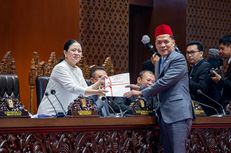
Habiburokhman's Response After Being Reported by ICW to the MKD Regarding the Approval of the Asset Seizure Bill
-
News
-
8 minutes ago
This article was translated by AI. Read the original article on Kompas.com. See Original
What if an advocacy group accepted sponsorship from a company that was later revealed to be a money-laundering vehicle?
What if an educational institution received operational assistance from a party that years later was found to have been misappropriating state finances?
This line of questioning does not end there. What about individuals who have long been vocal?
What about sources who appear in podcasts every week discussing democracy, transparency, and anti-corruption?
What about podcasters receiving sponsorship from certain parties without ever truly knowing the source of the funds?
What of influencers accepting promotional contracts? What about political buzzers paid to produce specific narratives?
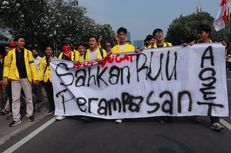
What about the masses attending demonstrations after receiving transportation allowances?
What if part of that fund flow is eventually discovered to come from corruption or other criminal acts?
These questions do not serve as accusations. They are intellectual experiments.
For therein lies the most interesting aspect of the Asset Forfeiture Law's paradox.
Everyone wants corruptors arrested. However, not everyone is prepared when the law starts to follow the money that has ever touched their lives.
We love the slogan “follow the money” as long as it points to others. We begin to feel uneasy when that money potentially leads back to our own environment.
Theoretically, this position is easy to understand. Practically, the situation is far more complex.
Imagine an activist who has consistently criticized corruption. He received an honorarium as a speaker at an event years ago.
It was later revealed that the event organizer was financed by proceeds of financial crimes.
Or consider a podcaster who accepted a sponsorship contract. The contract was administratively valid. Taxes were paid. Nothing suspicious.
Years later, it emerges that the sponsoring company was implicated in a series of corporate crimes.
Or a surveyor or researcher who obtained research funding from a support program. All procedures were duly followed.
However, it later became clear that the main source of that funding derived from corrupt practices that had not previously been known.
Are they corruptors? Certainly not.
But is the money they received free from legal issues? Here lies the room for debate.
The further we contemplate this issue, the blurrier the boundary between “corruptor” and “someone who has encountered corruption proceeds” becomes.
Corruptors may be but one person. Yet the economic benefits can reach dozens, hundreds, or even thousands who were never part of the original crime.