
Habiburokhman's Response After Being Reported by ICW to the MKD Regarding the Approval of the Asset Seizure Bill
-
News
-
8 minutes ago
This article was translated by AI. Read the original article on Kompas.com. See Original
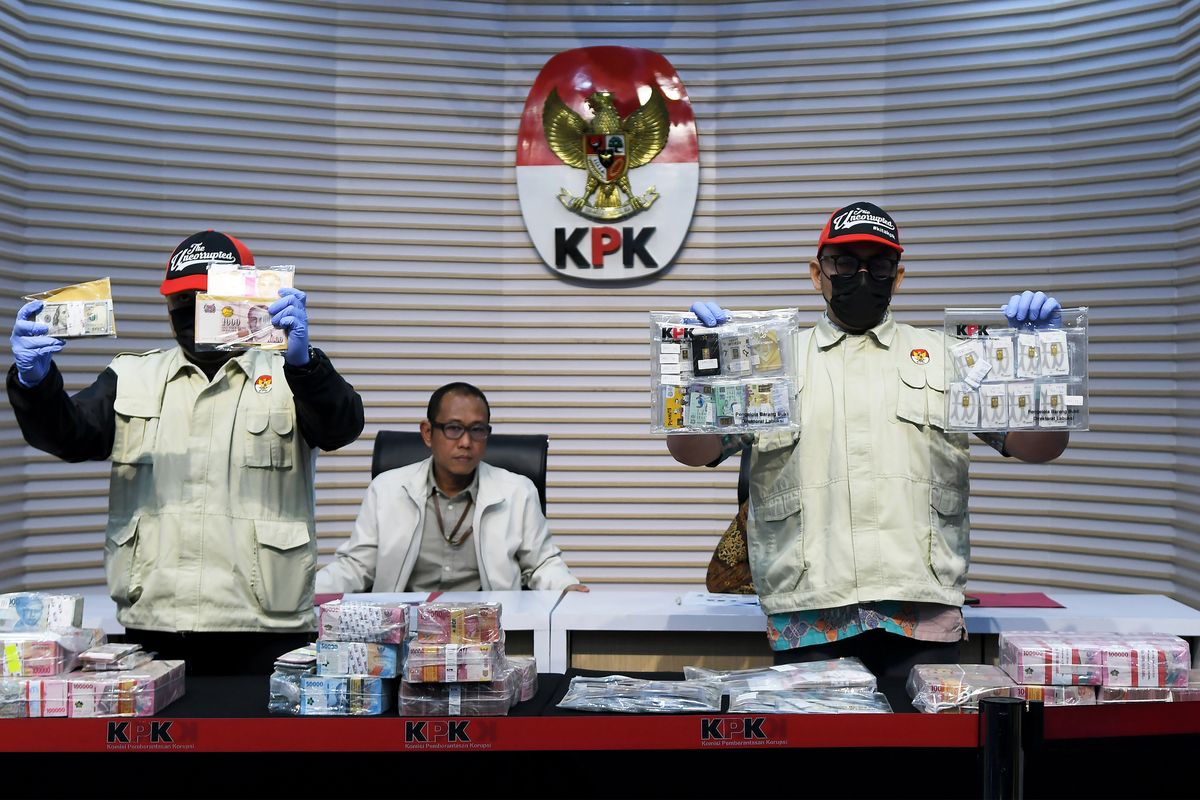
CORRUPTION is a common enemy. In this country, hardly anyone dares to openly defend corruption.
From civil society activists, academics, students, social media practitioners, religious leaders, to ordinary citizens, there is a consensus that corruptors must be punished.
In fact, prison sentences are often deemed insufficient. Corruptors must be impoverished. Their assets should be confiscated. The state must reclaim what has been stolen from the people.
Therefore, support for the Asset Forfeiture Law has grown significantly.
In public discourse, the demand for the state is no longer just to apprehend the culprits, but also to pursue the proceeds of their crimes.
The spirit is simple: Do not allow corruptors to enjoy their stolen money.
The issue arises when anger meets law; reality is often far more complicated than slogans suggest.
Many people imagine that the Asset Forfeiture Law is solely an instrument to seize the corruptor's wealth. Period. End of discussion. Nothing more to debate.
However, when reading various discussions and explanations regarding the bill, it becomes evident that the focus is not only on the perpetrators but also on the assets derived from criminal acts or linked to criminal activities.
Even discussions regarding non-conviction-based asset forfeiture indicate that legal attention can shift from punishing individuals to tracing assets.
Herein lies the paradox. Society has often perceived corruption as something distant, perpetrated by officials.
Corruption is conducted by elites. Corruption is perpetrated by those in power.
They are “them.” Not “us.” But money behaves differently than its perpetrators.
Corruptors can be identified. Their money does not always stand out. The proceeds of corruption can take forms—homes, vehicles, land, investments, grants, event sponsorships, organization aid, research funding, travel expenses, honoraria.
It may become campaign funds, donations, or even pocket money for demonstrations. It could translate into consultation payments, podcast production costs, or influencer contracts.
Money changes hands. Then it changes again. And once more.
At some point, its moral trace vanishes. What remains is merely transactions.
Thus, the truly intriguing question is no longer “Who is the corruptor?”
But rather:
Who has ever received funds from corruption without realizing it?
This question sounds unsettling. Yet, because it is unsettling, it deserves to be asked.
What if a community organization once received a grant from someone who was later found to have amassed wealth through corruption?
What if a foundation received funding for building development from money that turned out to be derived from criminal activities?
What if an advocacy group accepted sponsorship from a company that was later revealed to be a money-laundering vehicle?
What if an educational institution received operational assistance from a party that years later was found to have been misappropriating state finances?
This line of questioning does not end there. What about individuals who have long been vocal?
What about sources who appear in podcasts every week discussing democracy, transparency, and anti-corruption?
What about podcasters receiving sponsorship from certain parties without ever truly knowing the source of the funds?
What of influencers accepting promotional contracts? What about political buzzers paid to produce specific narratives?
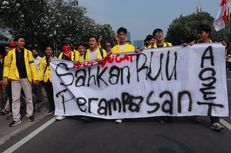
What about the masses attending demonstrations after receiving transportation allowances?
What if part of that fund flow is eventually discovered to come from corruption or other criminal acts?
These questions do not serve as accusations. They are intellectual experiments.
For therein lies the most interesting aspect of the Asset Forfeiture Law's paradox.
Everyone wants corruptors arrested. However, not everyone is prepared when the law starts to follow the money that has ever touched their lives.
We love the slogan “follow the money” as long as it points to others. We begin to feel uneasy when that money potentially leads back to our own environment.
Theoretically, this position is easy to understand. Practically, the situation is far more complex.
Imagine an activist who has consistently criticized corruption. He received an honorarium as a speaker at an event years ago.
It was later revealed that the event organizer was financed by proceeds of financial crimes.
Or consider a podcaster who accepted a sponsorship contract. The contract was administratively valid. Taxes were paid. Nothing suspicious.
Years later, it emerges that the sponsoring company was implicated in a series of corporate crimes.
Or a surveyor or researcher who obtained research funding from a support program. All procedures were duly followed.
However, it later became clear that the main source of that funding derived from corrupt practices that had not previously been known.
Are they corruptors? Certainly not.
But is the money they received free from legal issues? Here lies the room for debate.
The further we contemplate this issue, the blurrier the boundary between “corruptor” and “someone who has encountered corruption proceeds” becomes.
Corruptors may be but one person. Yet the economic benefits can reach dozens, hundreds, or even thousands who were never part of the original crime.
Ironically, many among them may actually stand at the forefront of the anti-corruption fight.
They condemn corruption, write anti-corruption articles, serve as anti-corruption speakers, partake in anti-corruption seminars, produce anti-corruption podcasts, and upload anti-corruption content.
However, as the legal framework shifts from pursuing perpetrators to pursuing assets, an unavoidable question emerges:
Could it be that the proceeds of corruption are actually much closer than we imagine?
Could it be that they reside not only in the corruptor's bank account and never appear in the form of sponsorship?
Of course, a rule of law cannot operate on prejudice.
Protection for good-faith parties must remain a primary principle.
Objection mechanisms, burden of proof, and judicial oversight are essential conditions to ensure that asset forfeiture does not turn into an instrument of arbitrariness.
The debate about third-party protection and the balance between the effectiveness of asset recovery and citizens' rights is indeed among the central issues in discussions surrounding this bill.
However, beyond this technical debate, there is one crucial lesson to be drawn.
The Asset Forfeiture Law forces us to view corruption from a different angle.
Corruption is not just about bad people stealing state money. It is also about how that money moves after it has been stolen.
Where it flows. Who enjoys it. Who has come into contact with it.
And to what extent the economic benefits of that crime have permeated our daily social lives.
Ultimately, the greatest paradox of the Asset Forfeiture Law may not lie in the clash between the state and corruptors.
The paradox lies within ourselves.
We want corruptors caught. We want the proceeds of corruption seized. We want the state to follow the money to the end.
Yet deep down, there may be a whisper never spoken aloud:
Arrest the corruptor, but don’t let the money trail point to me.
And that is precisely why the most important question of this entire debate is not whether corruptors should be punished.
The answer is clear.
The more difficult question is: If the state truly follows the money to its conclusion, how many of us might find ourselves not too far removed from the proceeds of that corruption?