

Block 700,000 Business Entities, Ministry of Law Ready to Unblock if Data is Updated
-
News
-
20 minutes ago
This article was translated by AI. Read the original article on Kompas.com. See Original
JAKARTA, KOMPAS.com - The designation of a suspect in a treason case is not a straightforward matter.
Law enforcement must ensure that each element of the crime is fulfilled, from the actions taken to the existence or absence of indications of conspiracy and preparations to carry out the act of treason.
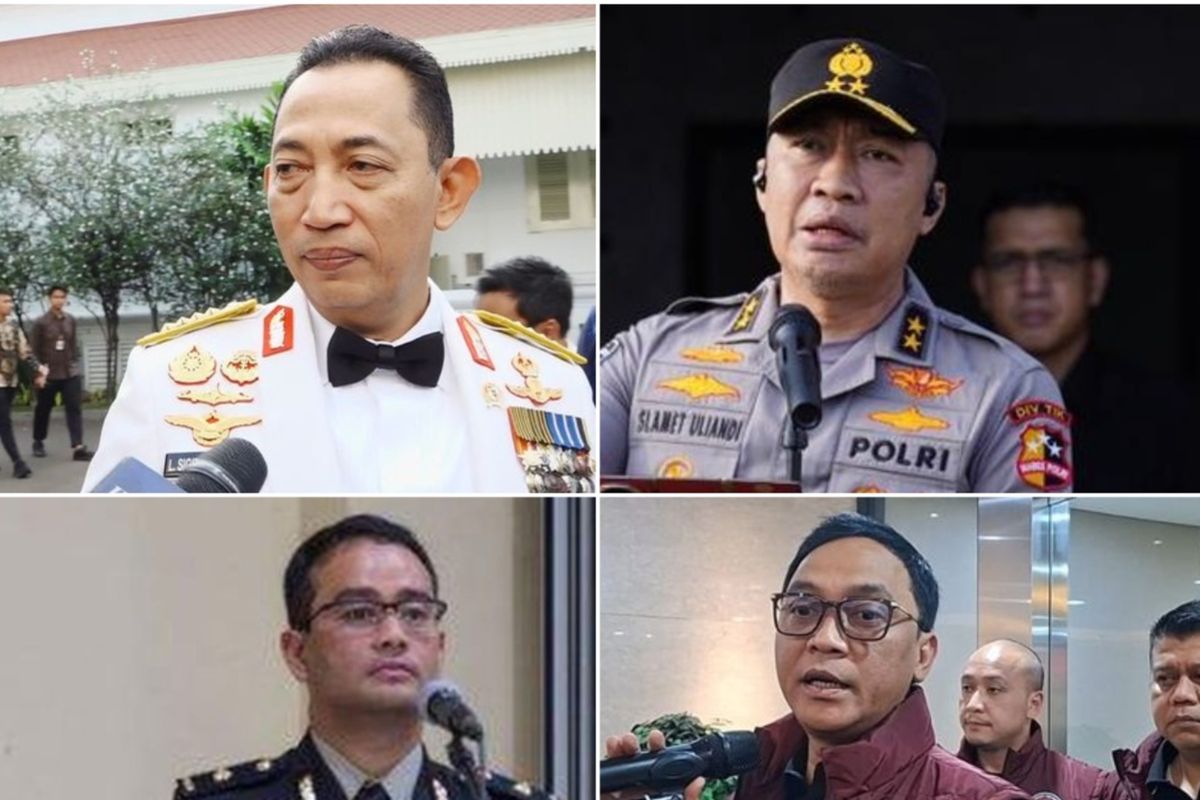
The handling of the case involving the eavesdropping on President Prabowo Subianto by four police generals, including former Chief of Police General Listyo Sigit, is now entering a critical phase.
The police held an internal case exposé on Thursday (19/11/2026), delving into three aspects: conspiracy, preparation, and initial actions.
Subsequently, the police plan to present the case construction to the Attorney General's Office.
Amidst this process, fundamental questions arise regarding the boundary at which an act can be classified as treason.
So, what elements must investigators prove before designating someone as a suspect in a treason case?
Criminal law expert from Trisakti University, Abdul Fickar Hadjar, stated that law enforcement must be able to identify significant elements related to the two crimes, encompassing eavesdropping previously developed in the context of treason.
The police, according to Fickar, must find a correlation between the two, determining whether the eavesdropping leads to plans for assassination, detention, or other actions that would prevent the president from performing his duties.
“The most significant element is the correlation between eavesdropping and efforts that end in actions to assassinate or detain or undertake other actions to incapacitate the president in managing the country,” Fickar told Kompas.com on Thursday (19/11/2026).
Fickar noted that this could involve hostage-taking against the president, through blackmail to force certain actions or inactions.
He explained that there is a burden of proof that investigators need to meet before naming a suspect.
Considering the heavy criminal penalties, investigators need evidence linking the actions to treason, including forms of hostage-taking.
“There are evidential elements connecting to hostage-taking. This evidence can be obtained from witness testimonies, expert statements, documentary evidence, and other indications,” he elaborated.
Regarding the case exposé, he suggested that the process should involve independent experts to sharpen the assembly of evidences supporting the claims.
According to Fickar, it is also crucial to involve public prosecutors.
“Ultimately, it is the prosecutor who will structure a solid indictment supported by convincing evidence of the crime,” Fickar clarified.
Meanwhile, legal expert from Dharma Andalas University, Desi Sommaliagustina, emphasized that treason has specific elements and objectives that must be proven.
Every act of eavesdropping, clandestine information gathering, or actions taken without proper procedure cannot automatically be classified as treason.
Article 191 of Law No. 1 of 2023 regulates treason against the President and/or Vice President with the intent to kill, remove freedom, or incapacitate the President and/or Vice President from governing.
Article 192 governs treason against the Unitary State of the Republic of Indonesia with the intention of transferring part or all of Indonesia's territory to foreign power or separating from the Republic.