Supreme Court Sentences 5 Years in Paniai Case: A New Direction in Human Rights Court?
-
News
-
1 minute ago
This article was translated by AI. Read the original article on Kompas.com. See Original
"Freedom is never given; it must be earned. Justice is never given; it must be demanded." (A. Philip Randolph)
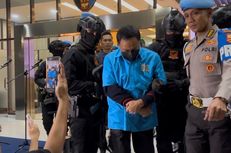
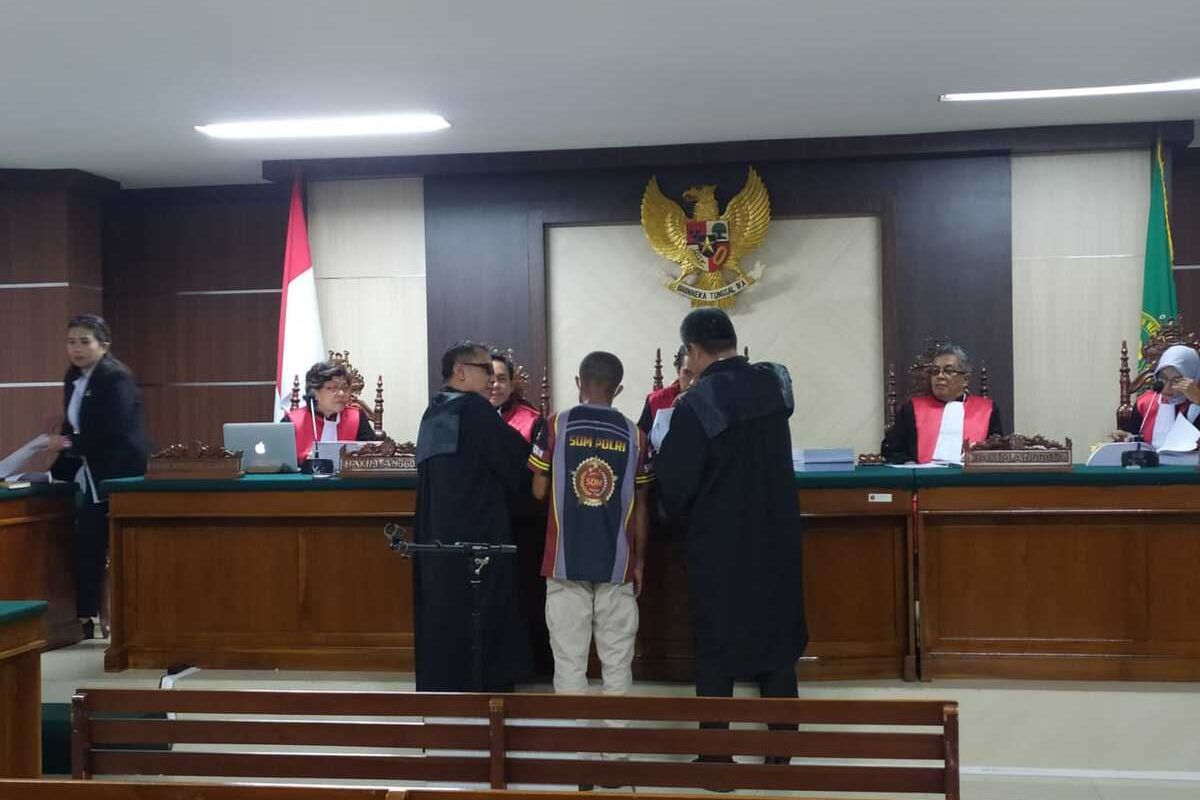
ON November 10, 2026, the Supreme Court (MA) granted the prosecutor's appeal and overturned the acquittal of former Major Inf. Isak Sattu, the sole defendant in a major human rights violation case in Paniai.
He was sentenced to 5 years in prison and required to pay compensation to the victims (Antara, 2026; Kumparan, 2026).
This marks the first time in the history of Indonesia's Human Rights Court that an initial acquittal was corrected to a guilty verdict at the final level. The question remains: is this a turning point or merely a pleasant exception?
The Bloody Paniai incident began on the night of December 7, 2014, in Pondok Natal, East Paniai, when a group of youths who confronted motorcyclists were instead assaulted; one of them, Yulianus Yeimo, was injured from being struck by a gun's butt (Hukumonline, 2014).
The next morning, December 8, 2014, residents protesting the violence gathered at Karel Gobai Field, Enarotali.
Security forces opened fire on the crowd. Four students aged 16 to 18 were killed: Apius Gobay, Alpius Youw, Simon Degei, and Yulianus Yeimo, while dozens of others were injured (Amnesty International, 2015).
The National Commission on Human Rights (Komnas HAM) recorded that 21 individuals were injured due to the assault (Tirto, 2020). The area is now part of Central Papua Province.
Komnas HAM designated this incident as a serious human rights violation on February 3, 2020, submitting the results of its investigation to the Attorney General on February 12, 2020 (Tirto, 2020; Monitor Indonesia, 2026).
The Attorney General only formed an investigatory team in December 2021. The case was then tried at the Human Rights Court in the Makassar District Court starting on September 21, 2022, with Isak Sattu as the sole defendant, who at the time served as a liaison officer (Pabung) of the 1705/Paniai Command.
He was charged with command responsibility under Article 42 paragraph (1) of Law No. 26 of 2000 for failing to prevent or stop the killings and abuses committed by troops under his command (Antara, 2022).
The prosecutor sought a ten-year prison sentence. However, on December 8, 2022, exactly eight years after the incident, the panel led by Sutisna Sawati acquitted Isak Sattu (Antara, 2022).
The decision was not unanimous: two out of the five judges expressed dissenting opinions, finding the defendant guilty (The Jakarta Post, 2023).
Interestingly, the panel maintained that crimes against humanity had indeed occurred; what was not established was who should be held accountable.
The panel determined that Isak, as a liaison officer, did not have effective control over the troops at the time of the shooting (UCA News, 2022).
This acquittal faced severe criticism from Komnas HAM, KontraS, Amnesty International Indonesia, and the victims' families.
The main point of contention was that with only one defendant, the Attorney General's office was seen as failing to uncover the command structure and accountability framework.
According to KontraS, witness testimonies during the trial also mentioned several names of executors who killed and abused the victims, yet they were not prosecuted (Hukumonline, 2022).