
Forestry Minister Raja Juli Ensures Ujung Kulon Remains the Main Habitat for the Javan Rhino
-
News
-
2 minutes ago
This article was translated by AI. Read the original article on Kompas.com. See Original
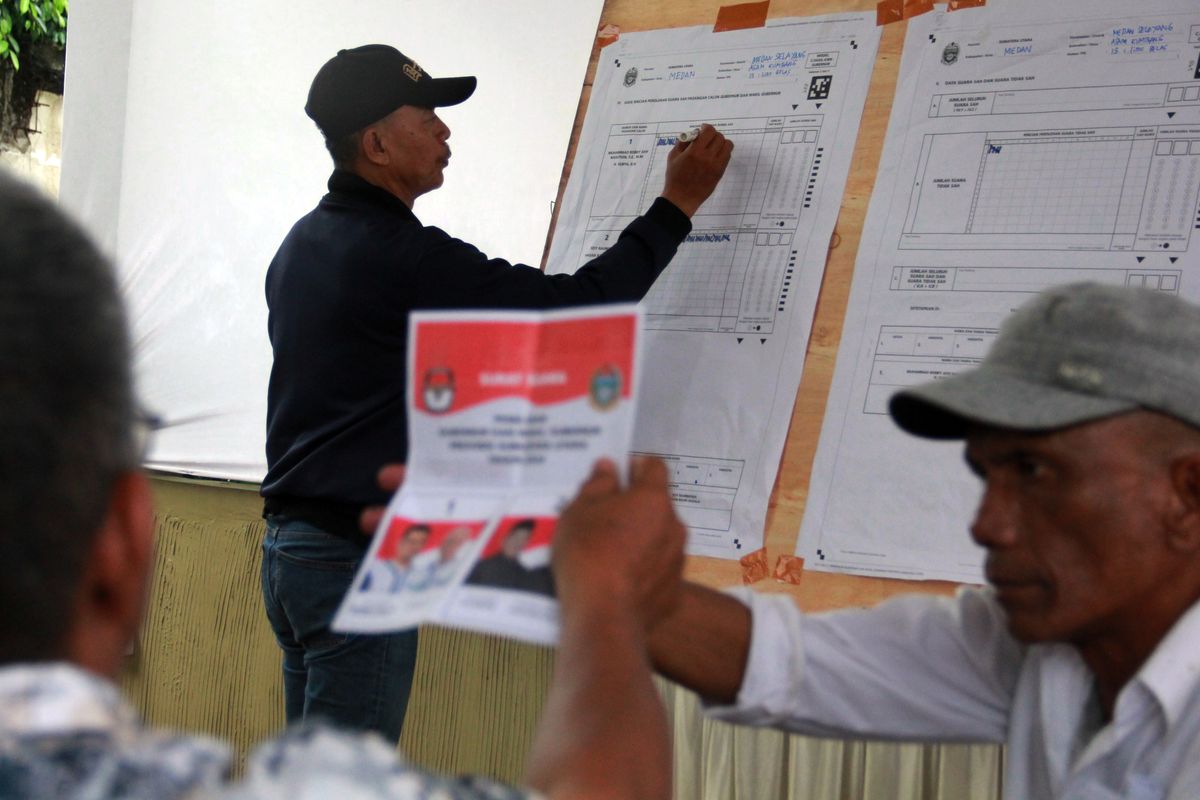
According to Haykal, some parties still see the requirement for female representation merely as a formality.
"For fulfilling the women's representation quota, the primary obstacle thus far has been the commitment of political parties," Haykal told Kompas.com on Wednesday.
"Parties still view this situation as a mere formality, so the implementation is only tokenistic, just enough to have a woman nominated," he added.
Political parties often claim difficulties in finding female candidates.
However, he argues that serious efforts to nurture female candidates, including through dedicated funding, have yet to be seen.
This experience serves as a crucial note if affirmation for disabled individuals is subsequently regulated in the General Election Law.
Neni believes that affirmation policies for both women and persons with disabilities should not be merely aimed at meeting candidate registration numbers.
Political parties must provide actual opportunities for affirmative groups to compete and secure seats in parliament.
Therefore, disability affirmation needs to be accompanied by regulations concerning transparent recruitment processes, placing candidates in competitive positions, fair campaign support, and accessibility throughout all stages of elections.
"The success of affirmation policies cannot only be gauged by how many disabled individuals are registered as legislative candidates. We need to assess how many receive political support, can campaign equally, and ultimately succeed in securing seats in parliament," Neni stated.
She added that the revision of the General Election Law should also regulate oversight mechanisms and legal consequences for political parties that fail to fulfill affirmation obligations.
The General Election Commission (KPU) needs to have clear verification authority, while the Election Supervisory Body (Bawaslu) must be able to monitor discriminatory practices and misuse of affirmation policies.
Moreover, strengthening capacity building, political education, nomination assistance, and accessibility support is also essential to ensure that groups benefiting from affirmation do not only fulfill political party requirements.
Neni reminds us that the form of affirmation for each group does not have to be the same.
The state needs to consider the characteristics of the barriers and representation needs of each group, including indigenous communities and others facing structural obstacles.
"The success of affirmation is not measured by how many vulnerable groups are listed as candidates but by how far the state and political parties can eliminate the structural barriers that have long limited their access to political power," Neni concluded.