Forestry Minister Raja Juli Ensures Ujung Kulon Remains the Main Habitat for the Javan Rhino
-
News
-
8 minutes ago
This article was translated by AI. Read the original article on Kompas.com. See Original

JAKARTA, KOMPAS.com - The opportunity to become a representative of the people should be open to every citizen.
However, in practice, not all social groups have the same chance to enter parliament.
The issue of women's representation is one example.
Although the minimum 30 percent affirmation rule for women's candidacy in legislative elections has been enacted, the representation of women in parliament has not yet reached that target.
Now, a similar push is emerging from the disabled community.
The Indonesian Disability Association (PPDI) has proposed that the revision of the General Election Law include a minimum 10 percent quota for disabled candidates in legislative nominations.
So, what is the progress of the existing affirmation quota for women, and how will it be applied to disabled individuals?
How important is affirmation policy for women and persons with disabilities in elections?
How can we ensure that these rules truly open opportunities for vulnerable groups to gain representation in parliament?
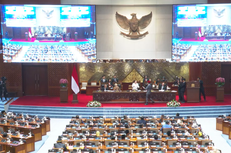
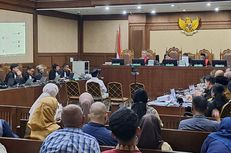
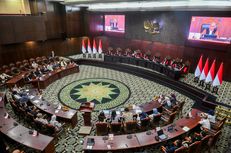
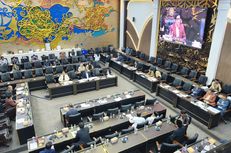
The proposal for a minimum 10 percent affirmation quota for disabled individuals was conveyed by PPDI Council Member Gufroni Sakaril during a Public Hearing with the General Election Bill Drafting Team and Commission II of the Indonesian Parliament on Tuesday (17/11/2026).
Gufroni assessed that the lack of affirmation regulations severely limits the chances for persons with disabilities to become legislative candidates and ultimately elected representatives.
He noted that there has not been a single disabled representative in the Indonesian Parliament to date.
"First of all, I must express my envy. I envy my female friends because they have achieved a 30 percent affirmation. But there’s already an established quota, right? There’s a quota, but for disabilities, there’s absolutely nothing," said Gufroni.
He believes that affirmation policies can open wider opportunities for disabled individuals to engage in politics, including running for legislative positions and enhancing their capacity to compete in elections.
The push for an affirmation quota for the disabled arises amid efforts by women’s groups to strengthen existing affirmation rules.
The civil society movement Maju Perempuan Indonesia (MPI), for example, has suggested that political parties failing to meet the minimum 30 percent female representation in electoral district candidate lists should be excluded from participating in those districts.
MPI member Titi Anggraini also proposed that for every three legislative candidates, there should be at least one woman.
Additionally, female candidates are expected to occupy the top position in at least 30 percent of electoral districts.
This proposal is based on Constitutional Court Decision No. 128/PUU-XXIV/2026, which mandates a minimum 30 percent representation of female candidates.
Director of Democracy and Electoral Empowerment Partnership (DEEP) Indonesia Neni Nur Hayati views the proposal for a 10 percent affirmation for disabled individuals as a critically important step to consider in the revision of the General Election Law.
Neni states that affirmation policy is necessary to correct the political representation imbalance that still exists.
Despite every citizen having the right to vote and be elected, the opportunity to enter the political arena is not yet fully equitable.
Persons with disabilities, she explains, face numerous obstacles, ranging from social stigma, limitations in political access infrastructure, financial support, to political party recruitment mechanisms that are not yet fully inclusive.
"Therefore, affirmation should not be understood as providing privileges to certain groups but rather as an effort by the state to create political equality that has yet to be realized," Neni told Kompas.com on Wednesday (18/11/2026).
However, Neni cautions that the experience of women's affirmation offers important lessons.
Although the policy mandating a minimum of 30 percent female representation has been implemented in legislative nominations, the representation of women in parliament has not reached that figure.
"This shows that increasing the number of candidates does not automatically change the structure of political power," she assesses.
Political parties still hold significant control over recruitment processes, electoral district determination, resource allocation, and support for candidates.
Similar views were shared by Perludem researcher Haykal.
He believes that one of the main obstacles to fulfilling the women's quota has been the lack of seriousness from political parties in implementing affirmation policies.
According to Haykal, some parties still see the requirement for female representation merely as a formality.
"For fulfilling the women's representation quota, the primary obstacle thus far has been the commitment of political parties," Haykal told Kompas.com on Wednesday.
"Parties still view this situation as a mere formality, so the implementation is only tokenistic, just enough to have a woman nominated," he added.
Political parties often claim difficulties in finding female candidates.
However, he argues that serious efforts to nurture female candidates, including through dedicated funding, have yet to be seen.
This experience serves as a crucial note if affirmation for disabled individuals is subsequently regulated in the General Election Law.
Neni believes that affirmation policies for both women and persons with disabilities should not be merely aimed at meeting candidate registration numbers.
Political parties must provide actual opportunities for affirmative groups to compete and secure seats in parliament.
Therefore, disability affirmation needs to be accompanied by regulations concerning transparent recruitment processes, placing candidates in competitive positions, fair campaign support, and accessibility throughout all stages of elections.
"The success of affirmation policies cannot only be gauged by how many disabled individuals are registered as legislative candidates. We need to assess how many receive political support, can campaign equally, and ultimately succeed in securing seats in parliament," Neni stated.
She added that the revision of the General Election Law should also regulate oversight mechanisms and legal consequences for political parties that fail to fulfill affirmation obligations.
The General Election Commission (KPU) needs to have clear verification authority, while the Election Supervisory Body (Bawaslu) must be able to monitor discriminatory practices and misuse of affirmation policies.
Moreover, strengthening capacity building, political education, nomination assistance, and accessibility support is also essential to ensure that groups benefiting from affirmation do not only fulfill political party requirements.
Neni reminds us that the form of affirmation for each group does not have to be the same.
The state needs to consider the characteristics of the barriers and representation needs of each group, including indigenous communities and others facing structural obstacles.
"The success of affirmation is not measured by how many vulnerable groups are listed as candidates but by how far the state and political parties can eliminate the structural barriers that have long limited their access to political power," Neni concluded.