Officially Ratified by the DPR, Asset Seizure Law Confirms Death Penalty for Corruptors
-
News
-
Just now
Writer
This article was translated by AI. Read the original article on Kompas.com. See Original

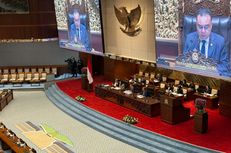
JAKARTA, KOMPAS.com - The Asset Seizure Law was officially ratified by the Indonesian House of Representatives (DPR) on Thursday (November 19, 2026), reiterating that perpetrators of corruption can face the death penalty.
This assertion is outlined in Article 4, paragraph 2 of the Asset Seizure Law, which can be accessed on the DPR's official website.
"Perpetrators of corruption may be sentenced to death, with the execution procedures governed by the laws regulating corruption offenses, criminal law, criminal procedure law, and other legal provisions," states the article.
In addition to reinforcing the death penalty for corrupt individuals, this law also specifies that the assets of corruptors can be seized with or without a court decision.
Paragraph 3 of the same article clarifies that asset seizure does not only apply to corruption offenses.
There are seven criminal offenses outlined for which assets can be seized, namely:
Corruption; narcotics and psychotropic substances; terrorism and terrorism financing; and human trafficking.
Additionally, it includes offenses related to the smuggling of weapons, ammunition, and hazardous materials; human trafficking (TPPO); and finally, fraud and/or embezzlement utilizing information technology that has a widespread impact on society.
Here is the complete text of Article 4 of the Asset Seizure Law:
(1) Asset seizure, based on or without a criminal sentence against the perpetrators of offenses as referred to in Article 3, is conducted for corruption offenses.
(2) Perpetrators of corruption can be sentenced to death, with the execution procedures governed by the laws regulating corruption offenses, criminal law, criminal procedure law, and other legal provisions.
(3) In addition to corruption offenses as referred to in paragraph (1), asset seizure as referred to in Article 3 is also applied to:
a. narcotics and psychotropic offenses;
b. terrorism and terrorism financing offenses;
c. human trafficking offenses;
d. smuggling offenses involving weapons, ammunition, and hazardous materials;
e. human trafficking; and/or
f. fraud and/or embezzlement using information technology and/or that impacts the broader economy.