



Preventing Recurrence of Illegal Eavesdropping, How Strong is the Oversight in the Bill?
-
News
-
8 minutes ago
This article was translated by AI. Read the original article on Kompas.com. See Original

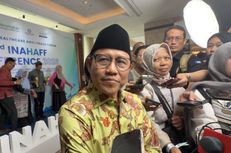
"If we then limit the number of ministries, there's no guarantee those agencies will become fewer. I believe there’s no assurance since, when it was limited to 34 before, there arose ideas to add agencies that were not termed ministries," he said.
Thus, Oce believes that the criteria for forming ministries should refer to two things: the conformity of the ministry's functions with the constitutional mandate and the state’s financial capacity.
He cited several matters that he believes still require special attention, such as border management, indigenous communities, taxation, and natural resources.
"It is crucial that each ministry handles specific affairs as stated in the constitution, related to the constitutional mandate. Secondly, this must take the government's financial capacity into account," Oce explained.
Meanwhile, Dudy Agung Trisna, a researcher from Themis Indonesia, refers to a study by the Constitutional Studies Center (PUSaKO) at Andalas University, suggesting that 26 ministries can accommodate governmental functions and duties.
Dudy stated that this figure can serve as a reference in structuring ministries while considering the distribution of functions and duties of each institution.
"If asked about the maximum number of ministries, I am more inclined to agree with the research results from PUSaKO at Andalas University, which suggest 26 ministries as the number that can maximize their functions and duties," Dudy told Kompas.com on Tuesday.
However, Dudy also sees 34 as the maximum limit that has been applied in government practice since the reform era to Jokowi’s administration.
"But if we consider its practice since the reform era, the number 34 is at its maximum position," he stated.
For Dudy, discussions on the number of ministries should not stop merely at determining the number of ministers.
He believes that the existence of coordinating ministers, deputy ministers, and other governmental agencies needs to be factored into bureaucratic structuring.
According to Dudy, the unrestricted number of deputy ministers could lead to increased budget demands and expand the structure of the ministry's organization.
He also highlights the role of several coordinating ministers who perform inter-ministerial coordination functions.
"The same goes for deputy ministers, whose unrestricted number contributes to the bloating of the ministry structure," he noted.
Dudy pointed out the existence of the Acceleration of Poverty Reduction Agency (BP Taskin), which he believes should reassess its division of duties with the Ministry of Social Affairs.
He argues that poverty alleviation functions could be maximized through the existing ministry without needing to form a new agency.
"The Acceleration of Poverty Reduction Agency (BP Taskin) should work through the Ministry of Social Affairs. The president does not need to create a new agency because, fundamentally, poverty alleviation can be maximized through the Ministry of Social Affairs alone," Dudy said.
Additionally, he believes there should be norms regulating the number of coordinating ministers, deputy ministers, and state agencies to provide clear limits to government structure formation.
He argues that without comprehensive regulation, the addition of ministries and agencies risks budgetary issues and overlaps in tasks and functions.
"Therefore, there should be limitations on the number of ministries/agencies, including Coordinating Ministers and the number of Deputy Ministers. Otherwise, a large number of ministries will create problems for the state budget and issues related to overlapping tasks and functions among Ministries/Agencies," he warned.