



Preventing Recurrence of Illegal Eavesdropping, How Strong is the Oversight in the Bill?
-
News
-
8 minutes ago
This article was translated by AI. Read the original article on Kompas.com. See Original
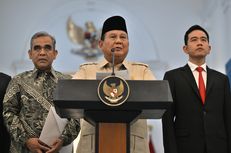
Prabowo compared the number of ministers in Indonesia to that of Timor Leste, which has around 1.1 million people but has 28 ministers.
"My cabinet was once said to be bloated and inefficient. Meanwhile, Timor Leste, with a population of just 1 million, is smaller than many provinces in Indonesia and many districts in Indonesia," Prabowo remarked.
He also reminded that Indonesia is a large country with a population approaching 300 million.
He noted that Indonesia’s size is comparable to that of Europe, which comprises many countries.
"We are very large. Due to democracy, I must form coalitions; coalitions are necessary to lead and govern a country of nearly 300 million people. The fourth largest country in the world cannot possibly be led by just one party," Prabowo stated.
Then, what is the expert analysis regarding the criteria for determining the number of state ministries?
In analyzing the number of ministries, the size of a country is not merely assessed by its territorial area and population.
The division of governmental affairs, the functions of each ministry, and the state’s financial capacity are also considerations.
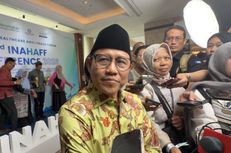
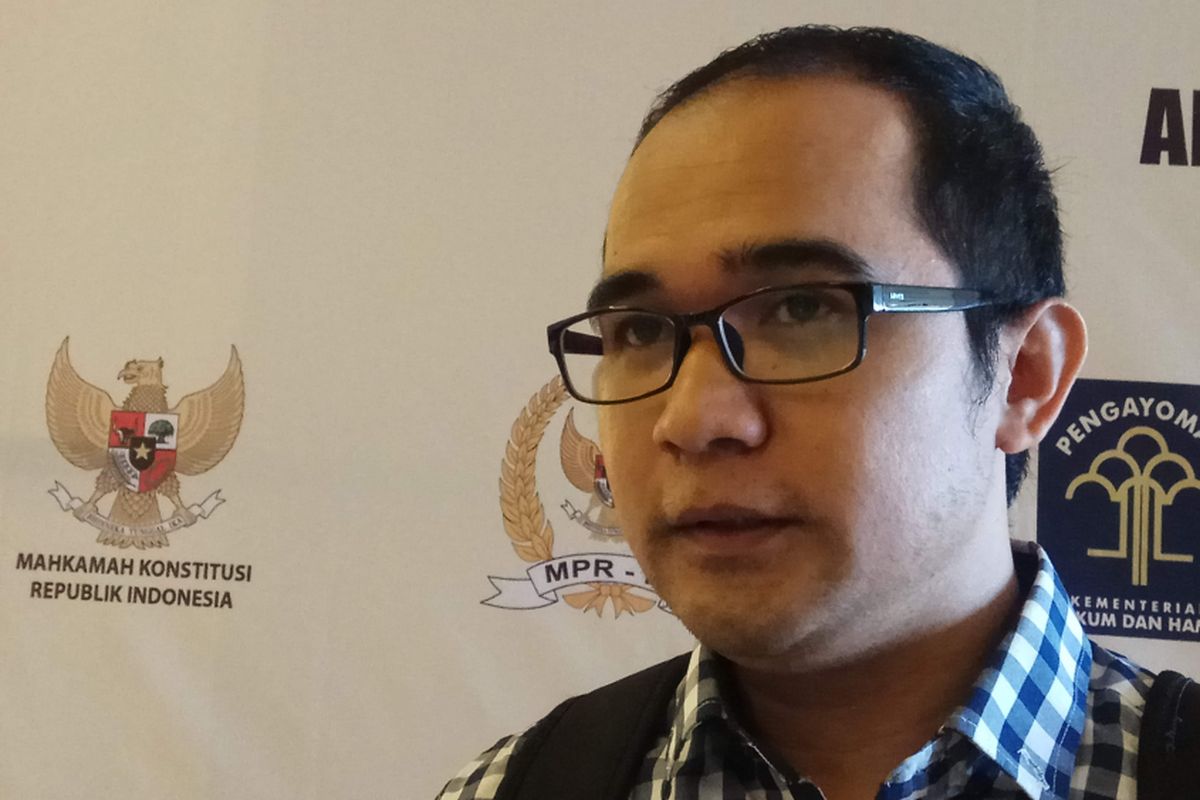
Oce Madril, an administrative law expert from Gadjah Mada University (UGM), mentioned that the constitution never specifies exactly how many ministries Indonesia should have.
According to him, the 1945 Constitution merely stipulates that every minister is responsible for specific governmental affairs.
Determining the number of ministries is thus part of the president's policy in administering the government.
"What is important in the Constitution is that ministers administer certain affairs," Oce said to Kompas.com on Tuesday (17/11/2026).
He explained that the constitution mandates the state to address several governmental affairs, ranging from domestic affairs, foreign affairs, defense, education, maritime issues, to border regions and remote areas.
Therefore, according to Oce, the need for ministries must be assessed based on the governmental affairs that need to be addressed, not solely based on a comparison with the number of ministries in other countries.
Regarding the ideal number of ministries, Oce believes that the law does not need to set a specific maximum number, be it 20, 34, or 40 ministries.
He believes that limiting the numbers could actually restrict the president’s authority as the holder of governmental power, as stipulated in Article 4 of the 1945 Constitution.
"It is crucial to grant the president the authority to establish ministries or agencies according to needs, his vision, his programs, and the development priorities he sets," Oce stated.
Oce also pointed out that the number of ministries cannot be separated from the existence of other government institutions.
Besides ministries, there are non-ministerial government institutions, public service bodies, state-owned enterprises (BUMN), and public legal entities also managing governmental affairs.
According to him, limiting the number of ministries does not necessarily simplify the overall government structure.
He provided the example that when the number of ministries is capped, the government can still form new agencies or bodies to perform specific functions not handled by ministries.