

Preventing Recurrence of Illegal Eavesdropping, How Strong is the Oversight in the Bill?
-
News
-
8 minutes ago
This article was translated by AI. Read the original article on Kompas.com. See Original
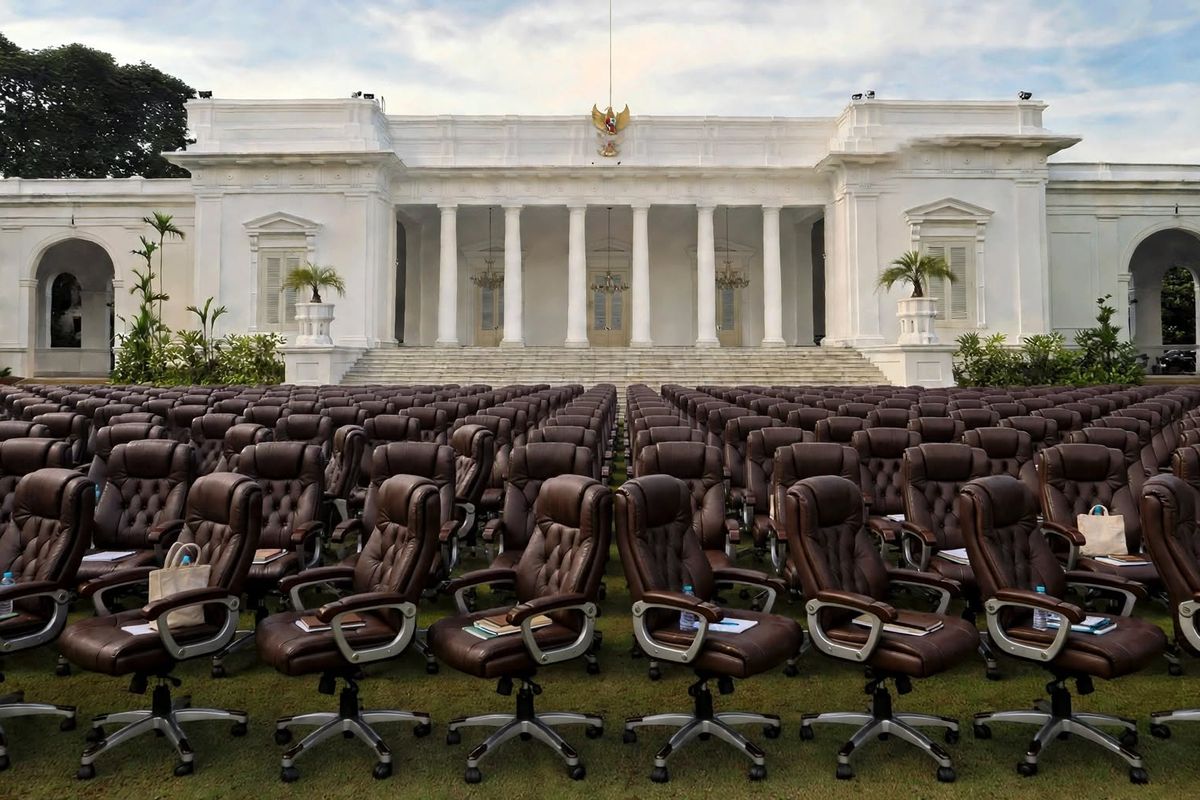
JAKARTA, KOMPAS.com - The article concerning the number of ministries has been challenged in the Constitutional Court (MK) due to its lack of clear limits. What is the ideal number of ministries for this country?
The article in question is Article 15 of Law Number 61 of 2024 on State Ministries, which removes the maximum limit on the number of ministries.
On the other hand, Indonesia's vast territory and diverse governmental affairs are among the considerations for determining the composition of state ministries.
With 38 provinces and a population nearing 300 million, the government requires a bureaucratic apparatus to manage various matters.
The petitioners in the judicial review at the MK are requesting that the number of ministers be limited again to a maximum of 34.
So, what is the ideal number of ministries to manage a country as large as Indonesia? Does the constitution regulate this?
In their request for judicial review of the State Ministry Law, the petitioners highlighted that Indonesia's number of ministries is significantly higher compared to several other countries applying a presidential system of governance.
Based on a comparison included in the petition document, Brazil has 31 ministries, the Philippines 22 executive departments, and South Korea 19 ministries.
Meanwhile, Mexico has 19 secretariats, Turkey 17 ministries, the United States 15 executive departments, and Argentina seven ministries.
As for Indonesia, it currently has 49 ministries.
"Based on the data in the table above, Indonesia can be considered one of the largest presidential cabinets in the world based on the presidential system," the petitioners wrote in their document, quoted on Monday (16/11/2026).
The petitioners also compared the number of ministries during President Prabowo Subianto’s administration with previous administrations.
During the presidencies of Susilo Bambang Yudhoyono (SBY) and Joko Widodo (Jokowi), the number of ministries was capped at 34.
This figure has become a reference for the petitioners to request the reinstatement of a limit on the number of ministers in the law.
In their petitions, the two petitioners, namely Syamsul Jahidin, a lawyer and doctoral student at Borobudur University, and Dimas Yoga Pratama, asked the MK to amend Article 15 of the State Ministry Law to impose a maximum number of 34 ministers.
The case is registered under receipt number 429/PUU-XXIV/2026 dated November 16, 2026.
In addition to discussing the number of ministries, the petitioners also highlighted the budgetary implications of an increasing number of ministers, deputy ministers, and new agencies and institutions.
The document states that the increase in government structure can raise routine and long-term bureaucratic expenditures.
"The impact of cabinet expansion on the state budget due to the increase in the number of ministers, deputy ministers, and new bodies within the government creates a long-term routine spending burden that affects the petitioners by depriving them of their constitutional rights," the petitioners stated.
On the other hand, the need for a certain number of ministries is also related to Indonesia's characteristics as an archipelagic nation with a vast area, a large population, and a variety of development issues.
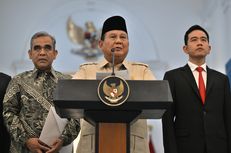
President Prabowo Subianto previously addressed this issue in a speech at the closing of the 35th Nahdlatul Ulama Congress in Jombang, East Java, on Monday (31/8/2026).
Prabowo compared the number of ministers in Indonesia to that of Timor Leste, which has around 1.1 million people but has 28 ministers.
"My cabinet was once said to be bloated and inefficient. Meanwhile, Timor Leste, with a population of just 1 million, is smaller than many provinces in Indonesia and many districts in Indonesia," Prabowo remarked.
He also reminded that Indonesia is a large country with a population approaching 300 million.
He noted that Indonesia’s size is comparable to that of Europe, which comprises many countries.
"We are very large. Due to democracy, I must form coalitions; coalitions are necessary to lead and govern a country of nearly 300 million people. The fourth largest country in the world cannot possibly be led by just one party," Prabowo stated.
Then, what is the expert analysis regarding the criteria for determining the number of state ministries?
In analyzing the number of ministries, the size of a country is not merely assessed by its territorial area and population.
The division of governmental affairs, the functions of each ministry, and the state’s financial capacity are also considerations.
Oce Madril, an administrative law expert from Gadjah Mada University (UGM), mentioned that the constitution never specifies exactly how many ministries Indonesia should have.
According to him, the 1945 Constitution merely stipulates that every minister is responsible for specific governmental affairs.
Determining the number of ministries is thus part of the president's policy in administering the government.
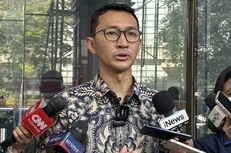
"What is important in the Constitution is that ministers administer certain affairs," Oce said to Kompas.com on Tuesday (17/11/2026).
 Researcher from the Anti-Corruption Study Center (Pukat) at Gadjah Mada University (UGM), Oce Madril, when interviewed at Aston Hotel Jember, East Java, Sunday (12/11/2017).
He explained that the constitution mandates the state to address several governmental affairs, ranging from domestic affairs, foreign affairs, defense, education, maritime issues, to border regions and remote areas.
Therefore, according to Oce, the need for ministries must be assessed based on the governmental affairs that need to be addressed, not solely based on a comparison with the number of ministries in other countries.
Regarding the ideal number of ministries, Oce believes that the law does not need to set a specific maximum number, be it 20, 34, or 40 ministries.
He believes that limiting the numbers could actually restrict the president’s authority as the holder of governmental power, as stipulated in Article 4 of the 1945 Constitution.
"It is crucial to grant the president the authority to establish ministries or agencies according to needs, his vision, his programs, and the development priorities he sets," Oce stated.
Oce also pointed out that the number of ministries cannot be separated from the existence of other government institutions.
Besides ministries, there are non-ministerial government institutions, public service bodies, state-owned enterprises (BUMN), and public legal entities also managing governmental affairs.
According to him, limiting the number of ministries does not necessarily simplify the overall government structure.
He provided the example that when the number of ministries is capped, the government can still form new agencies or bodies to perform specific functions not handled by ministries.
"If we then limit the number of ministries, there's no guarantee those agencies will become fewer. I believe there’s no assurance since, when it was limited to 34 before, there arose ideas to add agencies that were not termed ministries," he said.
Thus, Oce believes that the criteria for forming ministries should refer to two things: the conformity of the ministry's functions with the constitutional mandate and the state’s financial capacity.
He cited several matters that he believes still require special attention, such as border management, indigenous communities, taxation, and natural resources.
"It is crucial that each ministry handles specific affairs as stated in the constitution, related to the constitutional mandate. Secondly, this must take the government's financial capacity into account," Oce explained.
Meanwhile, Dudy Agung Trisna, a researcher from Themis Indonesia, refers to a study by the Constitutional Studies Center (PUSaKO) at Andalas University, suggesting that 26 ministries can accommodate governmental functions and duties.
Dudy stated that this figure can serve as a reference in structuring ministries while considering the distribution of functions and duties of each institution.
"If asked about the maximum number of ministries, I am more inclined to agree with the research results from PUSaKO at Andalas University, which suggest 26 ministries as the number that can maximize their functions and duties," Dudy told Kompas.com on Tuesday.
 The Red and White Cabinet during morning exercise on the third day of the retreat in Magelang, Central Java, Sunday (27/10/2024).
However, Dudy also sees 34 as the maximum limit that has been applied in government practice since the reform era to Jokowi’s administration.
"But if we consider its practice since the reform era, the number 34 is at its maximum position," he stated.
For Dudy, discussions on the number of ministries should not stop merely at determining the number of ministers.
He believes that the existence of coordinating ministers, deputy ministers, and other governmental agencies needs to be factored into bureaucratic structuring.
According to Dudy, the unrestricted number of deputy ministers could lead to increased budget demands and expand the structure of the ministry's organization.
He also highlights the role of several coordinating ministers who perform inter-ministerial coordination functions.
"The same goes for deputy ministers, whose unrestricted number contributes to the bloating of the ministry structure," he noted.
Dudy pointed out the existence of the Acceleration of Poverty Reduction Agency (BP Taskin), which he believes should reassess its division of duties with the Ministry of Social Affairs.
He argues that poverty alleviation functions could be maximized through the existing ministry without needing to form a new agency.
"The Acceleration of Poverty Reduction Agency (BP Taskin) should work through the Ministry of Social Affairs. The president does not need to create a new agency because, fundamentally, poverty alleviation can be maximized through the Ministry of Social Affairs alone," Dudy said.
Additionally, he believes there should be norms regulating the number of coordinating ministers, deputy ministers, and state agencies to provide clear limits to government structure formation.
He argues that without comprehensive regulation, the addition of ministries and agencies risks budgetary issues and overlaps in tasks and functions.
"Therefore, there should be limitations on the number of ministries/agencies, including Coordinating Ministers and the number of Deputy Ministers. Otherwise, a large number of ministries will create problems for the state budget and issues related to overlapping tasks and functions among Ministries/Agencies," he warned.