Jokowi Volunteers and the Cult of Personality
-
News
-
21 minutes ago
This article was translated by AI. Read the original article on Kompas.com. See Original
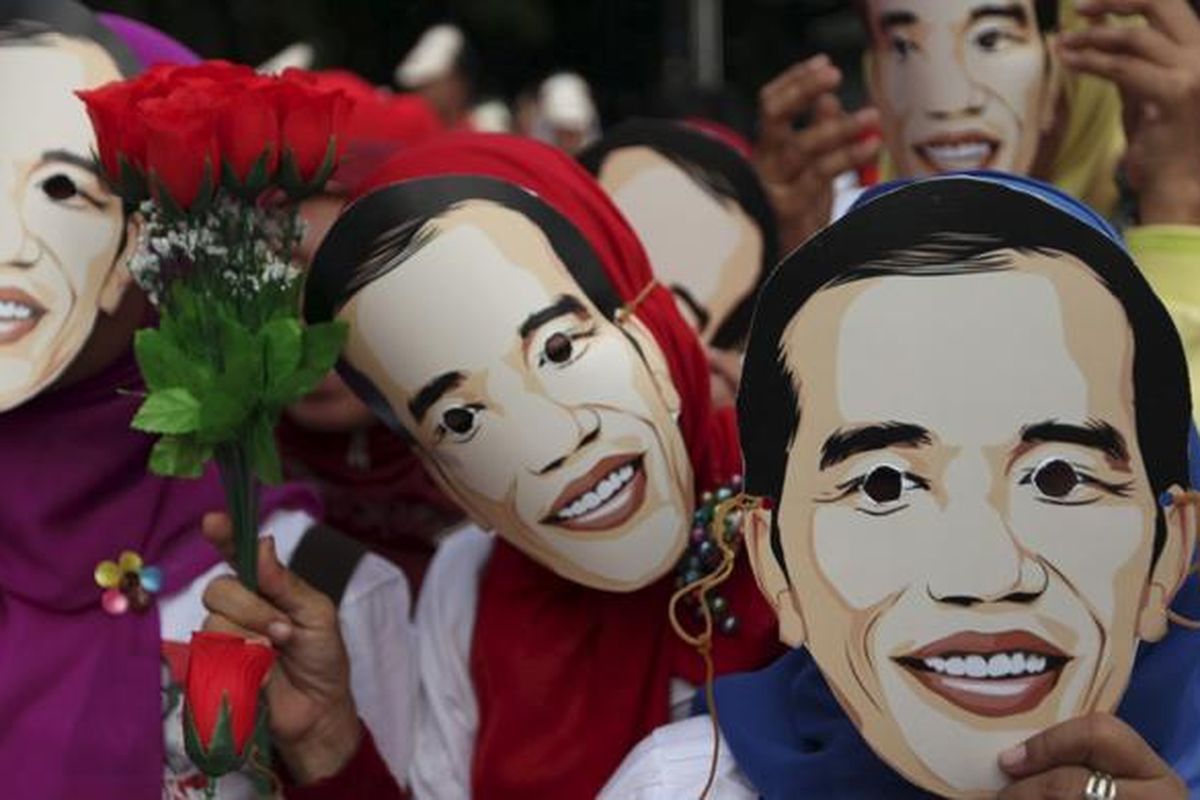
Charisma arises from the followers' belief that the leader possesses uniqueness and is thus fragile.
Charisma must continually be proved. As that proof fades, so too does belief.
Jokowi's charisma is built on one primary foundation: simplicity.
The white shirt, his habit of going down to the grassroots, and the story of a carpenter's son becoming president make him a symbol of hope that ordinary people can lead the nation.
Public admiration over the past decade largely derives from that image rather than from his work programs.
The problem is that this foundation is now cracking due to issues arising from his inner circle.
Scrutiny of the lifestyles of some family members, the diploma controversy involving two generations, and the political shortcuts that led his son to the vice-presidential seat are slowly eroding that simplicity image.
For a leader whose charisma relies on straightforwardness, luxury and dynasties are not merely minor blemishes. Both strike at the core of that charisma.
Nevertheless, Jokowi's charisma has not entirely vanished. A survey by the Indonesian Voting Agency in mid-2026 found that an average of 70.2 percent of respondents believe closeness to Jokowi can enhance a party's positive image (JPNN, 21/6/2026).
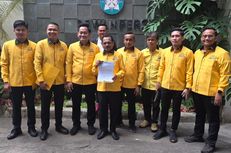
His volunteers still exude confidence, even expressing optimism that Gibran will be re-elected as a vice-presidential candidate in 2029 (Kompas TV, 7/2/2026).
What's happening is not the disappearance of charisma but its narrowing. Charisma that once had a national and cross-group character has now transformed into a base charisma, strong among loyal supporters but losing its appeal beyond that circle.
This type of narrowing holds danger.
When charisma only thrives within the base, it tends to harden into fanaticism.
Followers who feel their idol is attacked from the outside will rally closer in defense, and that defense can easily turn into idolization.
Here is where the symptoms of a cult find fertile ground, not when the leader is at the peak, but when they begin to be left behind.
A healthy democracy requires citizens who can admire as well as criticize.
Admiring a leader is human, but when admiration morphs into wailing and unconditional defense, citizens lose the critical distance that is the hallmark of mature citizenship.
Volunteers should ideally bridge the aspirations of the people to the leader, not serve as a fortress protecting the leader from public criticism.
Jokowi cannot certainly prohibit people from coming to his home. However, how he interprets the lines of people queuing outside his gate will determine how history remembers him.
Will he be remembered as a figure idolized by a select few volunteers, or as a statesman respected for daring to keep a distance from that very idolization?