Jokowi Volunteers and the Cult of Personality
-
News
-
21 minutes ago
This article was translated by AI. Read the original article on Kompas.com. See Original
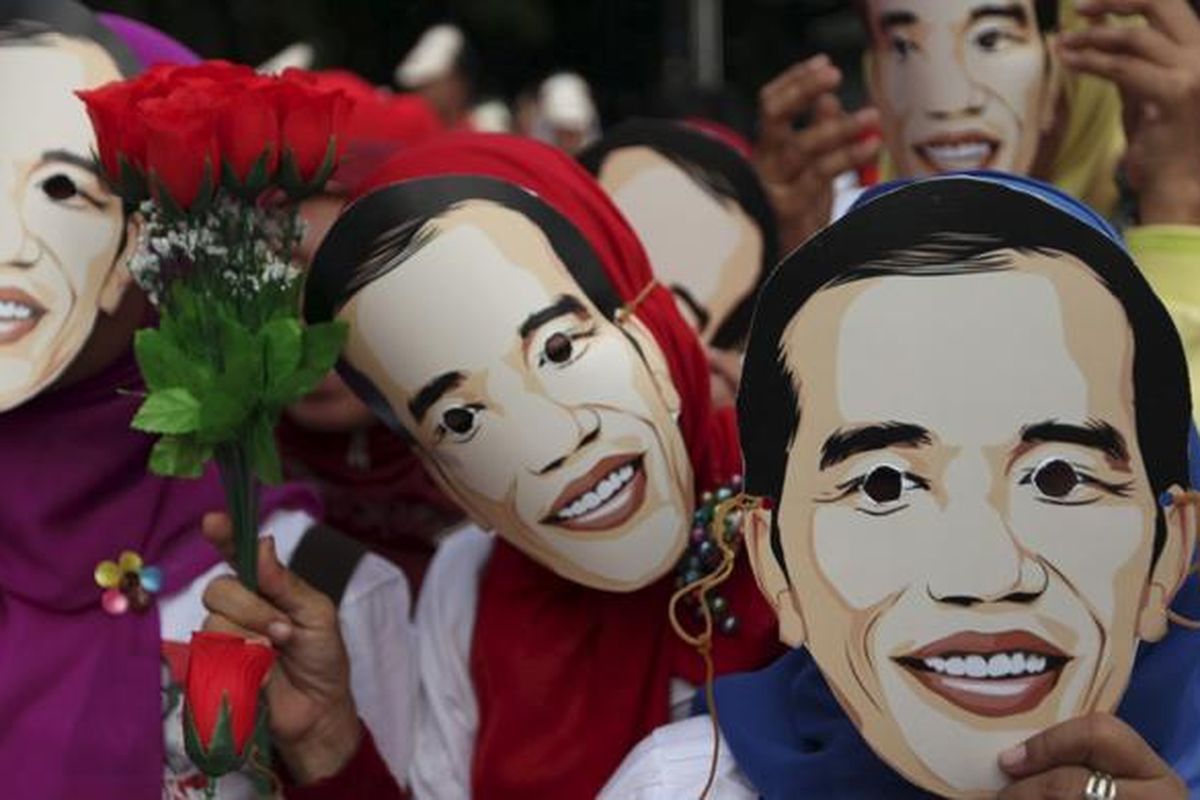
ALMOST every day, the narrow alley in the Sumber Subdistrict of Solo is crowded with visitors.
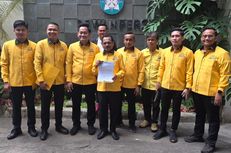
They come from various provinces, willing to wait for hours just to shake hands and take photos with the 7th President, Joko Widodo.
Security personnel estimate their numbers can reach 500 to 700 people daily.
Many shed tears of joy when finally standing before the figure they admire.
When Gibran Rakabuming Raka stepped back from the vice-presidency, several volunteers were reportedly engulfed in sorrow.
This scene birthed a stinging nickname. A Google Maps user renamed Jokowi's house to "Solo Weeping Wall," and the term quickly spread as satire in the digital space.
His supporters interpret the crowd as evidence of the people's love, while his critics view it as a symptom of deification.
Between these two interpretations lies a clearer question: Has the phenomenon of Jokowi's volunteers reached the level of a cult of personality?
The Indonesian dictionary defines a cult of personality as excessive veneration of an individual.
The verb, to deify, means to idolize or venerate. In political studies, this term refers to the symbolic elevation of one person above others.
The problem is that the label of cult is often applied too loosely, as if every popular leader is automatically deified.
Anne-Mette Holmgård Sundahl, in her study on cults of personality (2022), offers a useful distinction.
Popularity and cult are not two separate boxes, but rather two ends of a continuum.
On one end is ordinary admiration, while on the other end is full-blown cult. A leader begins to shift towards cult status when their image is supported by follower rituals and worshipful behavior that closes off space for criticism.
Using that measure, the phenomenon of Jokowi's volunteers sits in the middle ground. Some cult-like elements are indeed present.
There are repeated visitation rituals, near-religious tears of emotion, and unconditional defense of the leader's family.
When a court ruling questioned Gibran's educational credentials, some volunteers called for resistance against anyone pushing for impeachment.
Such a stance indicates loyalty that is no longer based on rational evaluation, but on emotional attachment to the figure.
However, another crucial element of a cult is absent. Classic personality cults thrive in countries that can monopolize information and silence criticism. Indonesia today is far from that condition.
Criticism of Jokowi and his family flows freely, even becoming a form of mass satire.
The emergence of the term "Weeping Wall" itself is evidence that the public sphere does not succumb to idolization.
Satire serves as a natural antidote to cults, as it lowers the exalted figure to the level of an ordinary human.
This phenomenon also needs to be viewed through a cultural lens. In Javanese tradition, visiting a respected figure is a normal practice, a form of respect and a request for blessings.
Many citizens visiting Sumber might not be worshiping, but simply wish to feel close to a leader who used to feel approachable to them.
The distinguishing line lies in critical reasoning. A visit honors without stifling judgment, while a cult honors while turning a blind eye to faults.
Social media adds a new layer to this phenomenon. Videos of citizens crying while shaking hands with Jokowi circulate widely and are viewed by many.
Each post reinforces the impression that meeting the leader is a special experience, inviting more people to come and capture similar moments.
What began as a spontaneous ritual is gradually changing into a reproduced spectacle. Idolization is not solely born from the hearts of followers but also from the logic of algorithms that favor emotion.
Therefore, the most accurate term may be an unfinished cult. Worship rituals thrive among core volunteers, but the wider society has entered a phase of demythologization.
Max Weber reminds us that charisma is not an inherent trait but a relationship between leaders and their followers.
Charisma arises from the followers' belief that the leader possesses uniqueness and is thus fragile.
Charisma must continually be proved. As that proof fades, so too does belief.
Jokowi's charisma is built on one primary foundation: simplicity.
The white shirt, his habit of going down to the grassroots, and the story of a carpenter's son becoming president make him a symbol of hope that ordinary people can lead the nation.
Public admiration over the past decade largely derives from that image rather than from his work programs.
The problem is that this foundation is now cracking due to issues arising from his inner circle.
Scrutiny of the lifestyles of some family members, the diploma controversy involving two generations, and the political shortcuts that led his son to the vice-presidential seat are slowly eroding that simplicity image.
For a leader whose charisma relies on straightforwardness, luxury and dynasties are not merely minor blemishes. Both strike at the core of that charisma.
Nevertheless, Jokowi's charisma has not entirely vanished. A survey by the Indonesian Voting Agency in mid-2026 found that an average of 70.2 percent of respondents believe closeness to Jokowi can enhance a party's positive image (JPNN, 21/6/2026).
His volunteers still exude confidence, even expressing optimism that Gibran will be re-elected as a vice-presidential candidate in 2029 (Kompas TV, 7/2/2026).
What's happening is not the disappearance of charisma but its narrowing. Charisma that once had a national and cross-group character has now transformed into a base charisma, strong among loyal supporters but losing its appeal beyond that circle.
This type of narrowing holds danger.
When charisma only thrives within the base, it tends to harden into fanaticism.
Followers who feel their idol is attacked from the outside will rally closer in defense, and that defense can easily turn into idolization.
Here is where the symptoms of a cult find fertile ground, not when the leader is at the peak, but when they begin to be left behind.
A healthy democracy requires citizens who can admire as well as criticize.
Admiring a leader is human, but when admiration morphs into wailing and unconditional defense, citizens lose the critical distance that is the hallmark of mature citizenship.
Volunteers should ideally bridge the aspirations of the people to the leader, not serve as a fortress protecting the leader from public criticism.
Jokowi cannot certainly prohibit people from coming to his home. However, how he interprets the lines of people queuing outside his gate will determine how history remembers him.
Will he be remembered as a figure idolized by a select few volunteers, or as a statesman respected for daring to keep a distance from that very idolization?