
Gibran Not a Political Party Cadre, Prabowo Has More Freedom in Choosing His Successor
-
News
-
37 minutes ago
This article was translated by AI. Read the original article on Kompas.com. See Original
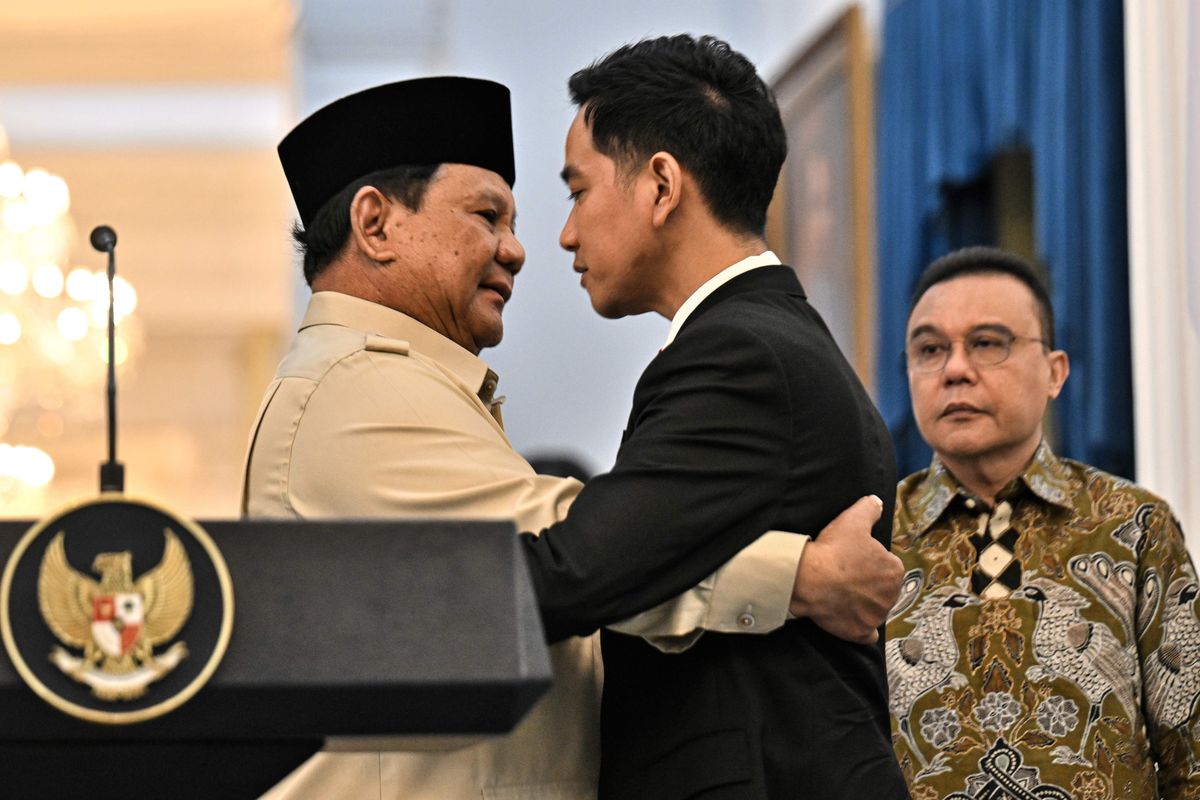
While in government, Gibran could have been one of the institutional channels for Jokowi's political influence.
Loss of this position may narrow Jokowi's access to the government, although it does not automatically eliminate his popularity, network, and political capacity.
For Prabowo, this situation may strengthen the consolidation of power.
The coalition that persists despite Gibran losing support shows that party loyalty is more tied to sustaining government access than solidarity with a specific figure.
However, presidential power consolidation is not synonymous with strengthening democracy.
The more fundamental issue lies in the consequences for Indonesian democracy.
If Gibran's positional change does not spur changes in coalition structure, then the turnover of political actors does not lead to significant changes in the power configuration.
Elites can abandon one another, renegotiate, and form new compromises without necessarily fostering healthier political competition.
This phenomenon indeed has a precedent not far from Jokowi's own political experience.
Jokowi built his political career through PDI Perjuangan, gaining organizational support, networks, and party legitimacy until he became president.
However, that relationship fractured when political interests heading into the 2024 election were no longer aligned.
Jokowi then distanced himself from the party that raised his political career and built a different support configuration.
Of course, Jokowi's experience and Gibran's situation are not entirely identical. Jokowi is a political actor with much larger popularity, networks, and electoral mobilization capacity.
Gibran occupies a different institutional position.
However, both illustrate how political relationships can shift when interests no longer converge.
Jokowi leaves PDI Perjuangan, Gibran is abandoned by the coalition, yet the parties maintain access to power.
Here lies the political irony of Indonesia becoming increasingly evident.
The history of solidarity, personal closeness, and organizational relations does not always outweigh elite interest calculations.
Political loyalty can end when interests change.
The issue for democracy is when the interest in maintaining power persists, while loyalty to ideologies, organizations, and political commitments becomes increasingly negotiable.
In such a situation, Indonesian democracy risks becoming an arena for elite turnover without a strong opposition, without consistent programmatic competition, and without guarantees that power is genuinely overseen.