
Gibran Not a Political Party Cadre, Prabowo Has More Freedom in Choosing His Successor
-
News
-
37 minutes ago
This article was translated by AI. Read the original article on Kompas.com. See Original
Gibran exemplifies that in elite politics, a person can be an asset when needed and turn into a burden when interests shift.
Loyalty is not something permanent; it is part of a political calculation that is constantly updated.
This phenomenon is inseparable from the tendency toward party cartelization in Indonesian politics.
Dan Slater, in his study of Indonesian politics, explains how parties can build wide coalitions to access and maintain state power.
Electoral competition continues, but the line between government and opposition becomes increasingly blurred as almost all political forces have an interest in joining the government.
In a cartel configuration, parties do not have to maintain ideological consistency after elections. Competition can shift to power access distribution.
A party that previously criticized the government can join the cabinet, while a party that was part of the coalition can distance itself from specific individuals without changing its political orientation toward the government.
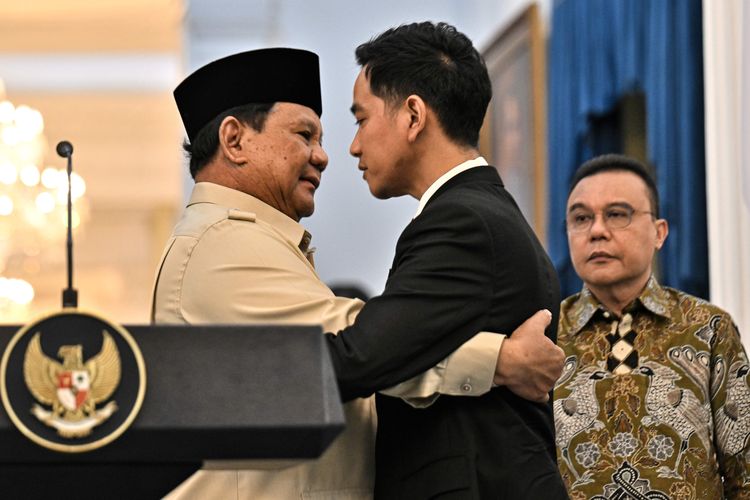
Gibran's resignation highlights this mechanism. Parties can abandon a figure without leaving the power structure that supports them.
They do not need to build an alternative government, formulate an opposition agenda, or offer programmatic contradictions against Prabowo.
What is needed is simply to adjust their positions to changing political interests.
The consequence is a structural weakening of the opposition. The opposition does not always die because it has been silenced or formally banned.
It can also weaken when parties lose their incentives to stay outside the government.
When access to power is more beneficial than political consistency, opposition becomes a costly and less attractive position for party elites.
Democracy ultimately faces a paradoxical situation. Elections continue, parties compete, and changes in figures occur.
However, this competition does not always evolve into meaningful battles of ideas, programs, and substantial policy alternatives.
Procedural democracy persists, while competitive democracy loses its political depth.
When nearly all parties have an interest in the government, who will oversee power?
Who consistently questions presidential policies? Who offers alternatives when the government makes mistakes?
A healthy opposition is not just a group without cabinet seats.
The opposition needs political courage, ideological consistency, and the ability to build alternative agendas.
Without that, democracy risks becoming an elite negotiation arena, trading positions and influence without presenting meaningful political competition to society.
Gibran's resignation also has the potential to change the power dynamic between Prabowo and Jokowi.