
KPK Examines Former Seskab During SBY Era as Witness in Gratuity Case Involving Former Tax Official
-
News
-
8 minutes ago
This article was translated by AI. Read the original article on Kompas.com. See Original
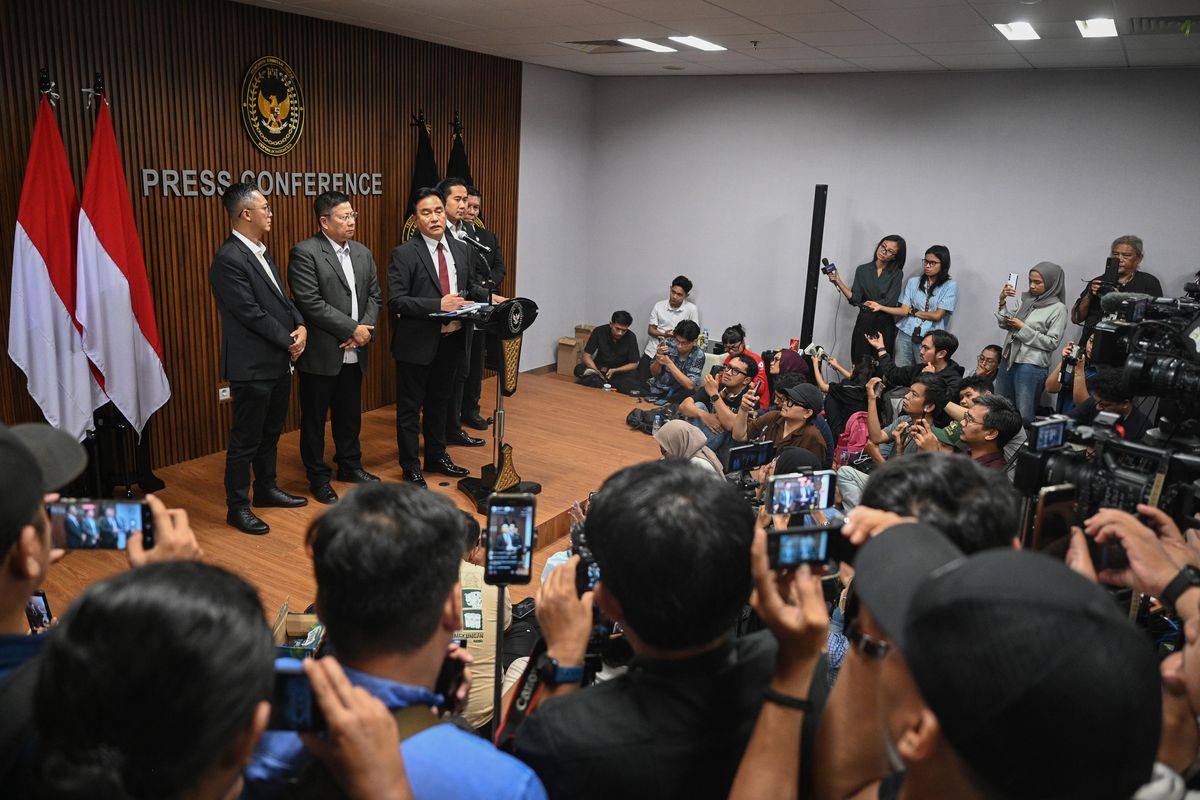
THE REVELATION of alleged illegal wiretapping against President Prabowo Subianto, several state officials, political figures, and civil society members raises serious issues in Indonesia's governance.
According to police reports, the targeted individuals also include journalists, leaders of societal organizations, nonprofit organizations, and business circles.
The broad scope of targeted groups raises concerns about potential state abuse of power while also protecting the constitutional rights of citizens.
The allegation of wiretapping against the President carries its own level of seriousness. In Indonesia's governance system, the President is the holder of governmental power as stipulated in Article 4, paragraph (1) of the 1945 Constitution of the Republic of Indonesia.
The exercise of this authority involves communication and decision-making that may relate to strategic policies, international relations, and national security.
Therefore, unlawful wiretapping of presidential communications could have significant implications for the security and continuity of government operations.
At the same time, the allegation of wiretapping against civil society highlights the importance of protecting the right to personal safety and privacy, as guaranteed by the constitution.
This matter requires serious, thorough, and transparent investigation. The revelation must not stop at identifying the wiretappers but should also seek to uncover who gave the orders, the motives behind it, and who benefited from or exploited the wiretapped information.
All of this must be validated through a fair legal process. Thus, the handling of this case becomes a crucial test for the state in safeguarding the integrity of the presidential institution, protecting citizens' rights, and ensuring that all state apparatus powers are exercised within constitutional limits.
The public deserves clear explanations regarding the developments and results of this investigation.
This transparency must take into account the confidentiality of state information, the privacy of victims, the interests of evidence collection, and the presumption of innocence.
The 1945 Constitution of the Republic of Indonesia emphasizes that Indonesia is a rule-of-law state as stated in Article 1, paragraph (3).
This principle implies that every governmental authority must have a legal basis, be carried out according to legitimate procedures, and be accountable.
This includes the authority to conduct wiretapping held by state officials for law enforcement and national security purposes.
In the context of protecting constitutional rights, Article 28G, paragraph (1) of the 1945 Constitution guarantees protection for personal safety, family, honor, dignity, and a sense of security.
This guarantee applies to every individual without distinction of status or position.
The constitution also provides grounds for the limitation of rights under certain circumstances. Article 28J, paragraph (2) states that such limitations must be established by law and aimed at fulfilling interests justified in a democratic society.
The Constitutional Court has affirmed the need for regulations governing the procedures for wiretapping through legislation to prevent abuses of power.
A fundamental issue arises when the tools and powers of wiretapping entrusted to state institutions are allegedly misused beyond legal procedures.
In fact, the state is obligated to ensure the existence of authority limits, oversight mechanisms, and clear accountability.