

Testing the Readiness of Districts/Cities to Manage C Mining Permits, from Supervision to Potential PAD
-
News
-
18 minutes ago
This article was translated by AI. Read the original article on Kompas.com. See Original
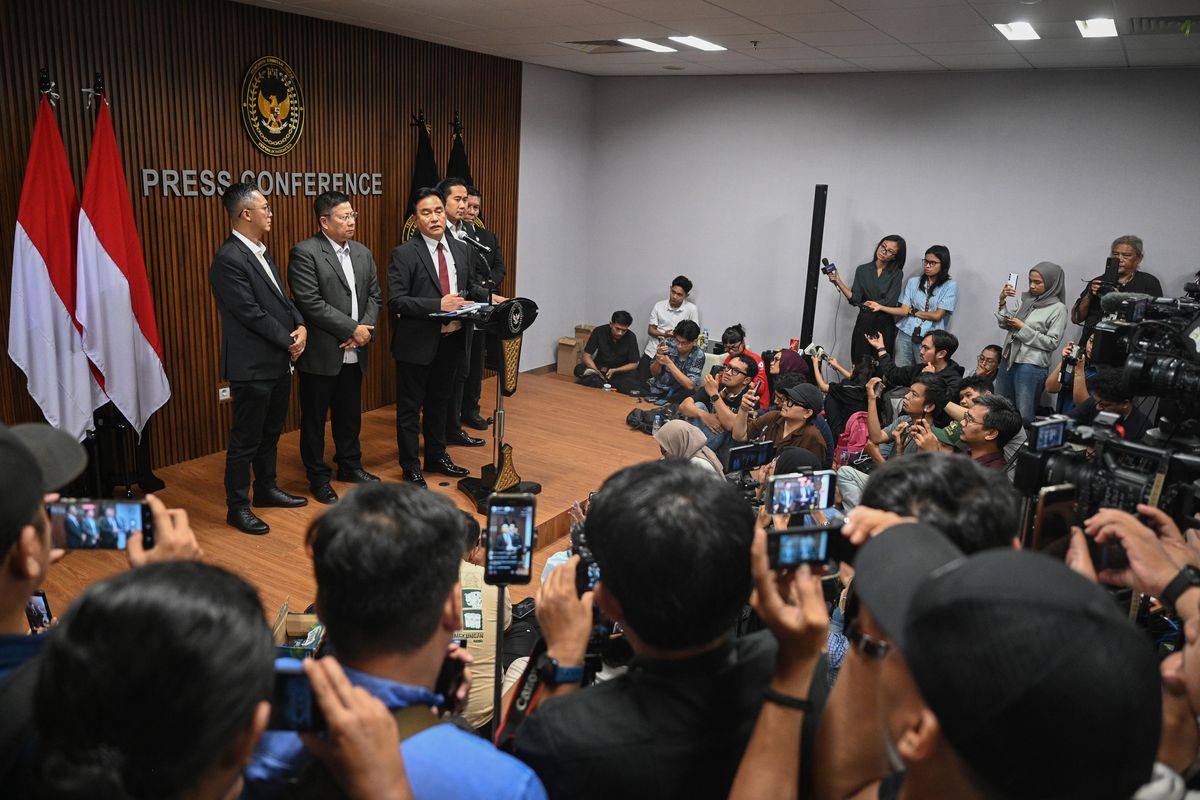
THE REVELATION of alleged illegal wiretapping against President Prabowo Subianto, several state officials, political figures, and civil society members raises serious issues in Indonesia's governance.
According to police reports, the targeted individuals also include journalists, leaders of societal organizations, nonprofit organizations, and business circles.
The broad scope of targeted groups raises concerns about potential state abuse of power while also protecting the constitutional rights of citizens.
The allegation of wiretapping against the President carries its own level of seriousness. In Indonesia's governance system, the President is the holder of governmental power as stipulated in Article 4, paragraph (1) of the 1945 Constitution of the Republic of Indonesia.
The exercise of this authority involves communication and decision-making that may relate to strategic policies, international relations, and national security.
Therefore, unlawful wiretapping of presidential communications could have significant implications for the security and continuity of government operations.
At the same time, the allegation of wiretapping against civil society highlights the importance of protecting the right to personal safety and privacy, as guaranteed by the constitution.
This matter requires serious, thorough, and transparent investigation. The revelation must not stop at identifying the wiretappers but should also seek to uncover who gave the orders, the motives behind it, and who benefited from or exploited the wiretapped information.
All of this must be validated through a fair legal process. Thus, the handling of this case becomes a crucial test for the state in safeguarding the integrity of the presidential institution, protecting citizens' rights, and ensuring that all state apparatus powers are exercised within constitutional limits.
The public deserves clear explanations regarding the developments and results of this investigation.
This transparency must take into account the confidentiality of state information, the privacy of victims, the interests of evidence collection, and the presumption of innocence.
The 1945 Constitution of the Republic of Indonesia emphasizes that Indonesia is a rule-of-law state as stated in Article 1, paragraph (3).
This principle implies that every governmental authority must have a legal basis, be carried out according to legitimate procedures, and be accountable.
This includes the authority to conduct wiretapping held by state officials for law enforcement and national security purposes.
In the context of protecting constitutional rights, Article 28G, paragraph (1) of the 1945 Constitution guarantees protection for personal safety, family, honor, dignity, and a sense of security.
This guarantee applies to every individual without distinction of status or position.
The constitution also provides grounds for the limitation of rights under certain circumstances. Article 28J, paragraph (2) states that such limitations must be established by law and aimed at fulfilling interests justified in a democratic society.
The Constitutional Court has affirmed the need for regulations governing the procedures for wiretapping through legislation to prevent abuses of power.
A fundamental issue arises when the tools and powers of wiretapping entrusted to state institutions are allegedly misused beyond legal procedures.
In fact, the state is obligated to ensure the existence of authority limits, oversight mechanisms, and clear accountability.
Protection of national security must go hand-in-hand with respect for citizens' privacy rights. Both are constitutional responsibilities that cannot be separated.
Experiences of various countries indicate that threats of wiretapping against government leaders are issues also faced by democratic nations.
In 2013, Brazilian President Dilma Rousseff raised objections to alleged wiretapping activities by the U.S. intelligence agency targeting the communication of the Brazilian government and public.
In her speech at the United Nations General Assembly, Rousseff framed the issue within the scope of privacy protection, human rights, and respect for national sovereignty.
Brazil subsequently pushed for stronger legal and technological frameworks to protect communications and data.
A similar experience occurred in Spain. In 2022, the Spanish government revealed that the mobile phones of Prime Minister Pedro Sánchez, the Minister of Defense, and the Minister of the Interior had been infected by the Pegasus spyware.
This finding resulted from an investigation by government cybersecurity agencies and was subsequently brought to trial. The Spanish government also announced steps to reform oversight of intelligence activities.
These two experiences occur within different contexts than the current investigation in Indonesia.
The Brazilian case involves allegations of foreign intelligence activities, while the Spanish case involves attacks on the communication devices of high-ranking officials.
In Indonesia, the focus of the investigation is on allegations of wiretapping conducted outside legal procedures using systems within the state apparatus.
The relevant lesson from both cases is the need for the state to have the capability to protect the communications of government leaders, uncover violations through legal mechanisms, and address weaknesses in its security systems.
Such protection must also extend to the wider society, as the threat of illegal wiretapping can reach anyone.
Thus, strengthening national security must go hand-in-hand with enhancing the protection of citizens' constitutional rights.
In light of this matter, President Prabowo Subianto has requested that the legal process be carried out objectively, transparently, and in accordance with legal regulations.
This direction, as conveyed by the Minister of State Secretary on November 4, 2026, must serve as a guide to ensure that the investigation proceeds thoroughly and is not influenced by interests outside of law enforcement.
This case provides a lesson on the importance of reforming the governance of wiretapping authority.
The availability of increasingly sophisticated technological devices must be matched with systems to prevent abuse.
Institutions authorized to conduct wiretapping must also have strong internal control systems and be open to legitimate oversight.
This reform should aim to maintain a balance between the state's need for information for legitimate purposes and its obligation to protect citizens' privacy rights.
Wiretapping authority remains necessary for modern state administration, but its use must be measured, overseen, and should not allow room for arbitrary actions.
This alleged case also raises questions about the readiness of the presidential security system to face evolving technology-based threats.
So far, the protection of the President is more recognizable to the public through the presence of the Presidential Security Forces (Paspampres), especially in providing direct physical protection.
However, advances in communication technology pose threats that can reach the President without requiring perpetrators to be near the site of presidential activities.
Legally, Government Regulation Number 59 of 2013 on the Security of the President and Vice President states that presidential security is carried out by the Commander of the National Defense Forces in coordination with the Minister of State Secretary, the Chief of Police, the Head of the National Intelligence Agency, and relevant agency leaders according to their authorities.
Meanwhile, the National Cyber and Crypto Agency (BSSN) has governmental duties in cybersecurity and cryptography.
This division of authority shows that presidential security requires inter-agency cooperation, including in protecting systems and means of communication used to carry out government duties.
This case also raises more fundamental questions about the resilience of the national security system.
If these allegations of wiretapping are proven true, how prepared is Indonesia to face similar threats from foreign parties?
This question becomes crucial given that intelligence activities and the mastery of wiretapping technology have become increasingly complex.
Therefore, this case must be seen as a momentum to strengthen the system for protecting presidential communications from threats arising from both domestic and foreign sources.
The government needs to conduct a comprehensive evaluation of the security of communication devices, cryptography systems, information access control, as well as early detection capabilities for espionage activities.
Coordination among the National Defense Forces, National Intelligence Agency, BSSN, Police, and presidential support elements must be strengthened in accordance with their respective authorities.
This step is essential to ensure that the President can carry out his constitutional mandate safely, including when communicating about national strategic interests.
The state's ability to protect its leaders' communications is a vital component in maintaining security, independence, and national sovereignty.
Allegations of illegal wiretapping against the President and various societal groups need to be a serious concern for all state organizers. A thorough investigation must be conducted.
This case also serves as a reminder that protection of the presidential institution and the protection of citizens' privacy rights are two constitutional responsibilities that must be executed concurrently.
The state is obliged to ensure the President's security in carrying out governmental mandates, just as it is also obligated to protect society from abuses of authority that exceed legal bounds.
Ultimately, the authority of the state is determined by its ability to uphold the law fairly and ensure that the powers entrusted to state apparatus are used for legitimate interests.
Protecting the President, safeguarding citizens' rights, and thoroughly investigating abuses of power are all part of our shared responsibility to uphold the constitution.