

Testing the Readiness of Districts/Cities to Manage C Mining Permits, from Supervision to Potential PAD
-
News
-
18 minutes ago
This article was translated by AI. Read the original article on Kompas.com. See Original
Protection of national security must go hand-in-hand with respect for citizens' privacy rights. Both are constitutional responsibilities that cannot be separated.
Experiences of various countries indicate that threats of wiretapping against government leaders are issues also faced by democratic nations.
In 2013, Brazilian President Dilma Rousseff raised objections to alleged wiretapping activities by the U.S. intelligence agency targeting the communication of the Brazilian government and public.
In her speech at the United Nations General Assembly, Rousseff framed the issue within the scope of privacy protection, human rights, and respect for national sovereignty.
Brazil subsequently pushed for stronger legal and technological frameworks to protect communications and data.
A similar experience occurred in Spain. In 2022, the Spanish government revealed that the mobile phones of Prime Minister Pedro Sánchez, the Minister of Defense, and the Minister of the Interior had been infected by the Pegasus spyware.
This finding resulted from an investigation by government cybersecurity agencies and was subsequently brought to trial. The Spanish government also announced steps to reform oversight of intelligence activities.
These two experiences occur within different contexts than the current investigation in Indonesia.
The Brazilian case involves allegations of foreign intelligence activities, while the Spanish case involves attacks on the communication devices of high-ranking officials.
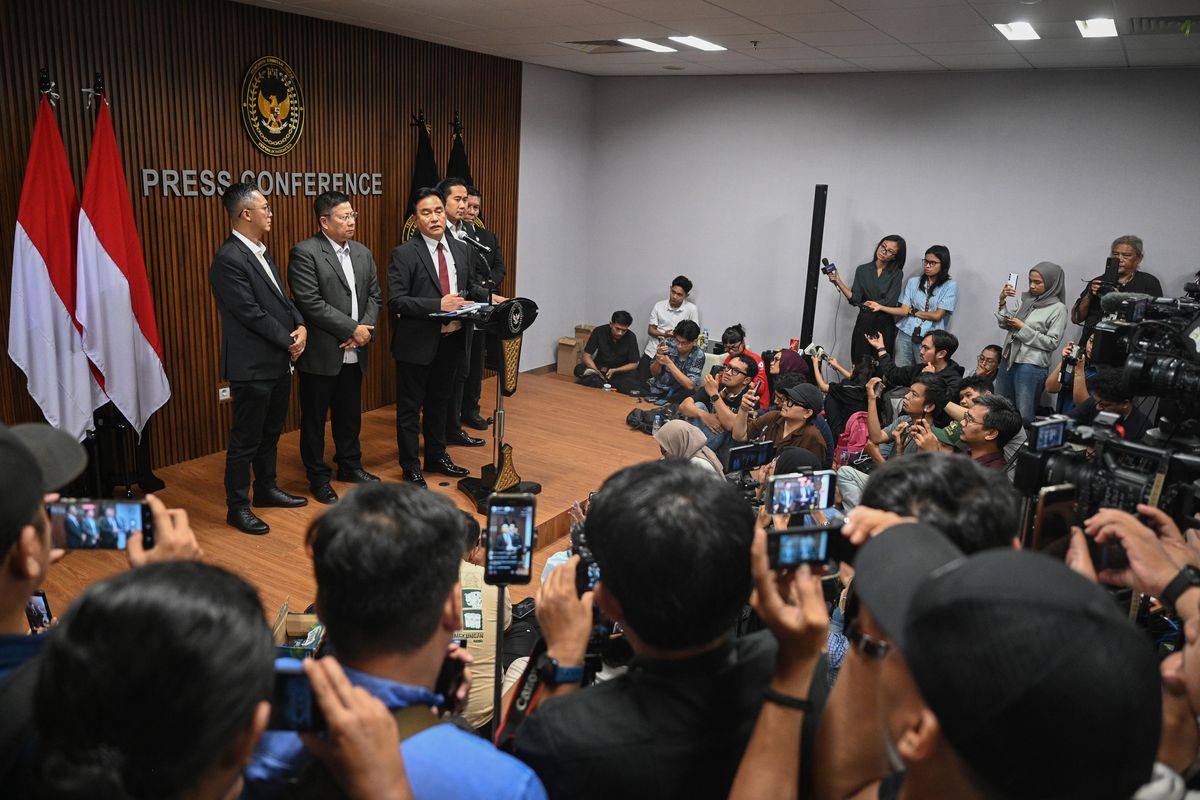
In Indonesia, the focus of the investigation is on allegations of wiretapping conducted outside legal procedures using systems within the state apparatus.
The relevant lesson from both cases is the need for the state to have the capability to protect the communications of government leaders, uncover violations through legal mechanisms, and address weaknesses in its security systems.
Such protection must also extend to the wider society, as the threat of illegal wiretapping can reach anyone.
Thus, strengthening national security must go hand-in-hand with enhancing the protection of citizens' constitutional rights.
In light of this matter, President Prabowo Subianto has requested that the legal process be carried out objectively, transparently, and in accordance with legal regulations.
This direction, as conveyed by the Minister of State Secretary on November 4, 2026, must serve as a guide to ensure that the investigation proceeds thoroughly and is not influenced by interests outside of law enforcement.
This case provides a lesson on the importance of reforming the governance of wiretapping authority.
The availability of increasingly sophisticated technological devices must be matched with systems to prevent abuse.
Institutions authorized to conduct wiretapping must also have strong internal control systems and be open to legitimate oversight.
This reform should aim to maintain a balance between the state's need for information for legitimate purposes and its obligation to protect citizens' privacy rights.
Wiretapping authority remains necessary for modern state administration, but its use must be measured, overseen, and should not allow room for arbitrary actions.