

General Suyudi Seen as Needing Structural and Cultural Reform of the Police
-
News
-
4 minutes ago
This article was translated by AI. Read the original article on Kompas.com. See Original
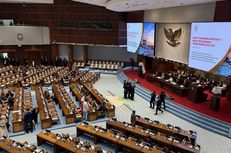
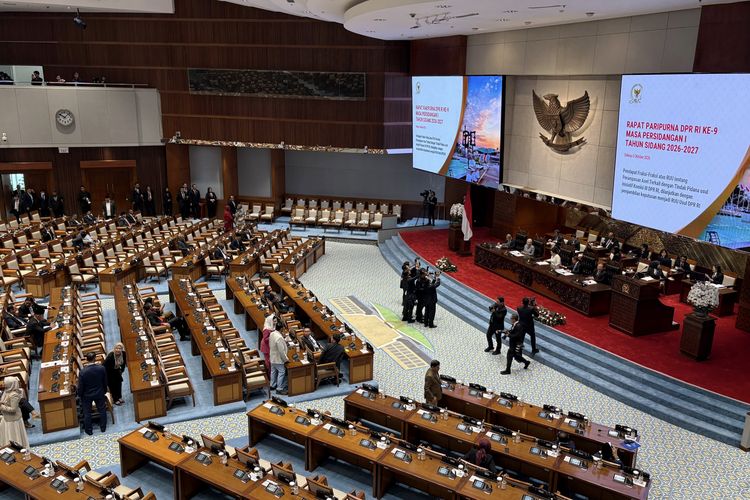
"The proposal as referred to in paragraph (1) becomes the right to express opinions of the DPR upon approval by the DPR's plenary session attended by at least 2/3 (two thirds) of the total DPR members, and the decision is made with the approval of at least 2/3 (two thirds) of the attending DPR members," according to Article 210 paragraph (3) of the MD3 Law.
The proposal for the right to express opinions is submitted by the proposer to the House leadership. Then, the proposal is announced by the House leadership in a plenary meeting.
After that, the Deliberative Body (Bamus) will discuss and schedule the plenary session of the DPR and give the proposer the opportunity to explain their proposal.
"While the proposal for the right to express opinions as referred to in paragraph (1) has not been approved by the plenary session of the DPR, the proposer may make amendments and withdraw the proposal," states Article 211 paragraph (4) of the MD3 Law.
"In the event that the number of signatories for the proposal has fallen below the number as referred to in Article 210 paragraph (1) prior to the Stage I discussion, additional signatures must be obtained to meet the required number," states Article 211 paragraph (5) of the MD3 Law.
If the required number of signers is not met within two consecutive sessions, the proposal will be deemed null and void.
If the DPR receives the proposal for the right to express opinions, it will form a special committee comprising all party factions of the DPR by the DPR's decision.
"The special committee as referred to in Article 212 paragraph (2) reports its task execution to the DPR's plenary session no later than 60 (sixty) days after the committee's formation," states Article 213 paragraph (1) of the MD3 Law.
Furthermore, according to Article 214 paragraph (1) of the MD3 Law, the DPR will report the results of the special committee to the government if the DPR accepts the report.
Then, the DPR must also submit the report of the special committee to the Constitutional Court (MK) for a ruling.
"In the event that the DPR plenary session as referred to in Article 213 paragraph (2) decides to accept the report of the special committee stating that the President and/or Vice President has committed legal violations such as treason, corruption, bribery, serious criminal offenses, or other dishonorable actions, or no longer meets the requirements to be President and/or Vice President, the DPR submits a decision regarding the right to express opinions to the Constitutional Court for a ruling," states Article 214 paragraph (2) of the MD3 Law.
"The DPR's decision regarding the proposal to express opinions as referred to in paragraph (2) is submitted to the President," states Article 214 paragraph (5) of the MD3 Law.
If the MK decides that the DPR's right to express an opinion is substantiated, the DPR will hold a plenary session to forward the proposal for the dismissal of the President and/or Vice President to the MPR.
"In the event that the Constitutional Court decides that the DPR's opinion as referred to in Article 214 paragraph (2) is substantiated, the DPR will hold a plenary session to forward the proposal for the dismissal of the President and/or Vice President to the MPR," states Article 215 paragraph (2) of the MD3 Law.