
General Suyudi Seen as Needing Structural and Cultural Reform of the Police
-
News
-
4 minutes ago
This article was translated by AI. Read the original article on Kompas.com. See Original
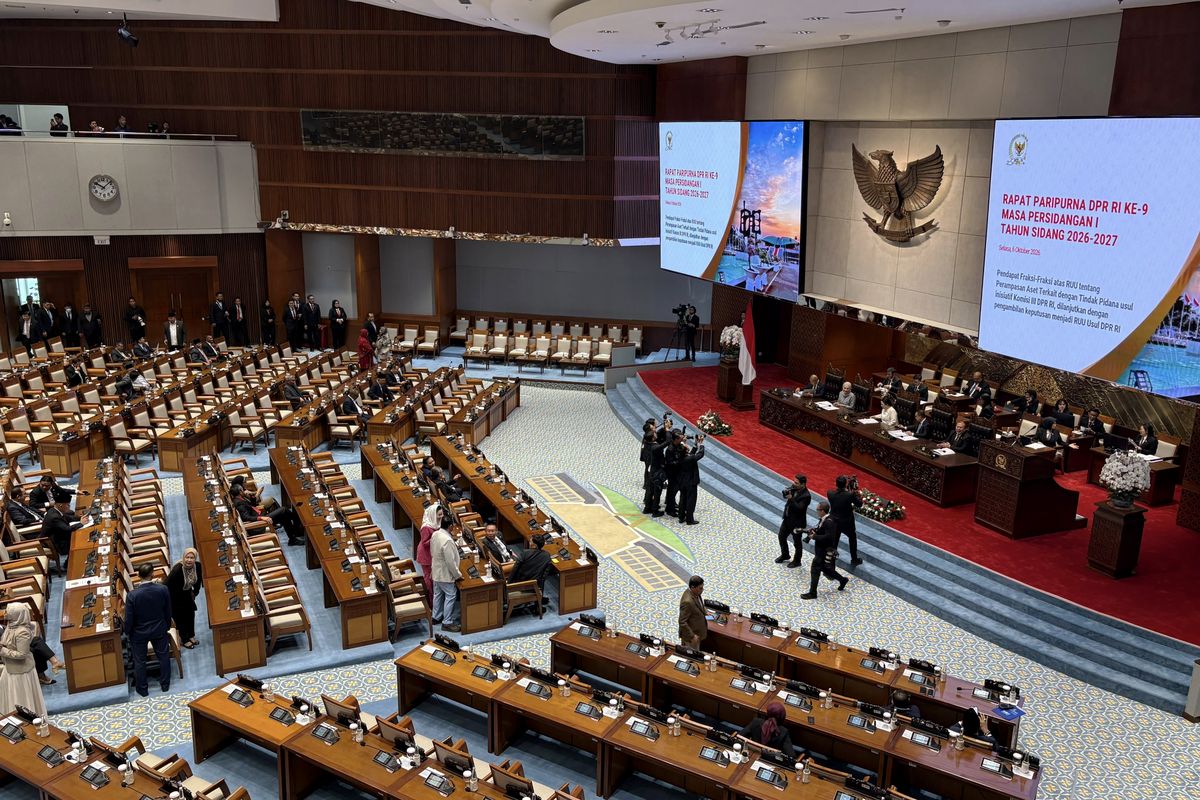
JAKARTA, KOMPAS.com - Deputy Speaker of the House of Representatives Saan Mustopa stated that the House leadership will examine the arguments and legal basis related to the proposal for the right to express opinions (HMP) put forward by several members of the council regarding the diploma controversy of Vice President Gibran Rakabuming Raka.
Saan mentioned that the House leadership will follow up on every proposal made by parliament members once the requirements are met.
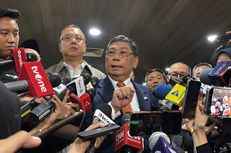
"We will look at the arguments of those proposing the right to express opinions. We will assess their reasoning, the legal foundations, and so on," Saan said at the Parliament Complex in Jakarta on Tuesday (10/11/2026).
The House leadership will also verify whether the number of members and the distribution of factions proposing the HMP fulfill the necessary requirements.
If all criteria are satisfied, the leadership will present the analysis results at the leadership meeting (Rapim) and refer it to the Deliberative Body (Bamus).
"It will depend on how the Rapim and Bamus respond if there is indeed a proposal from the members to suggest the HMP," Saan concluded.
In a separate opportunity, DPR member Mardani Ali Sera stated that almost 50 members of the House have signed the proposal for the right to express opinions.
"Yes (48 signatures), almost 50," Mardani told Kompas.com on Tuesday (10/11/2026).
Mardani explained that 12 members of the DPR are from the Prosperous Justice Party (PKS).
Furthermore, there are about 36 members from other parties who have signed the proposal for the right to express opinions.
"PKS has 12, some have 13, and there are 4 and 4. I’ve seen the documents," Mardani stated.
Under Law Number 17 of 2014 concerning the MPR, DPR, DPD, and DPRD (MD3), the right to express opinions is one of the DPR's rights if there are state officials who do not fulfill their duties.
The right to express opinions can be proposed by a minimum of 25 DPR members, as stipulated in Article 210 paragraph (1) of the MD3 Law.
"The right to express opinions as referred to in Article 79 paragraph (1) letter c is proposed by at least 25 (twenty-five) DPR members," states Article 210 paragraph (1) of the MD3 Law.
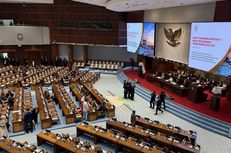
 Illustration of the DPR. The educational background of the members of the DPR RI.
Furthermore, Article 210 paragraph (2) of the MD3 Law requires that the proposal for the right to express opinions be accompanied by a document that minimally contains:
"The proposal as referred to in paragraph (1) becomes the right to express opinions of the DPR upon approval by the DPR's plenary session attended by at least 2/3 (two thirds) of the total DPR members, and the decision is made with the approval of at least 2/3 (two thirds) of the attending DPR members," according to Article 210 paragraph (3) of the MD3 Law.
The proposal for the right to express opinions is submitted by the proposer to the House leadership. Then, the proposal is announced by the House leadership in a plenary meeting.
After that, the Deliberative Body (Bamus) will discuss and schedule the plenary session of the DPR and give the proposer the opportunity to explain their proposal.
"While the proposal for the right to express opinions as referred to in paragraph (1) has not been approved by the plenary session of the DPR, the proposer may make amendments and withdraw the proposal," states Article 211 paragraph (4) of the MD3 Law.
"In the event that the number of signatories for the proposal has fallen below the number as referred to in Article 210 paragraph (1) prior to the Stage I discussion, additional signatures must be obtained to meet the required number," states Article 211 paragraph (5) of the MD3 Law.
If the required number of signers is not met within two consecutive sessions, the proposal will be deemed null and void.
If the DPR receives the proposal for the right to express opinions, it will form a special committee comprising all party factions of the DPR by the DPR's decision.
"The special committee as referred to in Article 212 paragraph (2) reports its task execution to the DPR's plenary session no later than 60 (sixty) days after the committee's formation," states Article 213 paragraph (1) of the MD3 Law.
Furthermore, according to Article 214 paragraph (1) of the MD3 Law, the DPR will report the results of the special committee to the government if the DPR accepts the report.
Then, the DPR must also submit the report of the special committee to the Constitutional Court (MK) for a ruling.
"In the event that the DPR plenary session as referred to in Article 213 paragraph (2) decides to accept the report of the special committee stating that the President and/or Vice President has committed legal violations such as treason, corruption, bribery, serious criminal offenses, or other dishonorable actions, or no longer meets the requirements to be President and/or Vice President, the DPR submits a decision regarding the right to express opinions to the Constitutional Court for a ruling," states Article 214 paragraph (2) of the MD3 Law.
"The DPR's decision regarding the proposal to express opinions as referred to in paragraph (2) is submitted to the President," states Article 214 paragraph (5) of the MD3 Law.
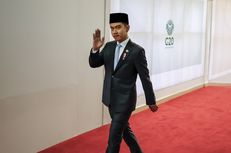
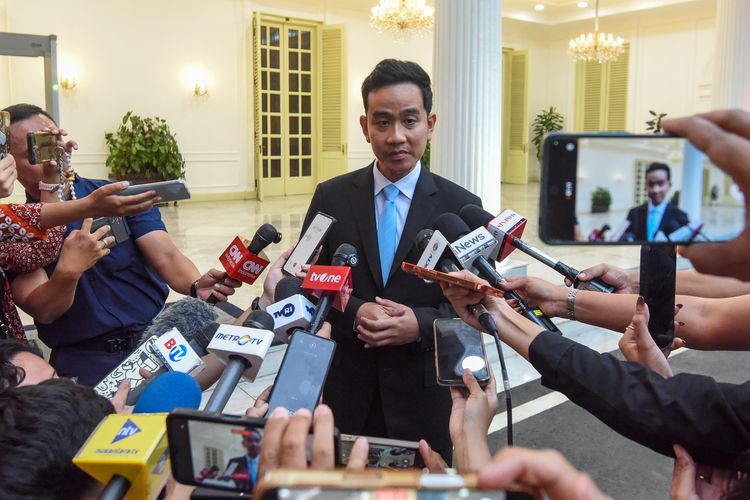 Vice President Gibran Rakabuming Raka (center) provides a statement during a press conference at the Vice Presidential Palace, Jakarta, Tuesday (10/11/2026). During the press conference, the vice president addressed his response regarding the controversy surrounding the validity of his educational documents. ANTARA FOTO/Indrianto Eko Suwarso/nym.
If the MK decides that the DPR's right to express an opinion is substantiated, the DPR will hold a plenary session to forward the proposal for the dismissal of the President and/or Vice President to the MPR.
"In the event that the Constitutional Court decides that the DPR's opinion as referred to in Article 214 paragraph (2) is substantiated, the DPR will hold a plenary session to forward the proposal for the dismissal of the President and/or Vice President to the MPR," states Article 215 paragraph (2) of the MD3 Law.