

Jakarta PTUN to Hear Gibran Rakabuming Raka's High School Certificate Lawsuit This Thursday
-
News
-
5 minutes ago
This article was translated by AI. Read the original article on Kompas.com. See Original
These four dimensions are relevant for assessing PSI. Does the party have a succession mechanism that ensures leadership continuity?
Are the members committed to the organization’s ideas and identity, or are they more bound by personal relationships and political positions?
How independent are the party’s strategic decisions from external power networks? And, equally important, is the public able to recognize PSI through its own political platform?
Angelo Panebianco, in his work “Political Parties: Organization and Power” (1988), explains that a party must evolve from one that relies on its founder and elites to one with mechanisms for its own sustainability.
Meanwhile, Max Weber referred to the transformation of charismatic authority into established rules and procedures as the “routinization of charisma.”
The crux is that the popularity of leaders must be converted into institutional strength. If not, the departure of a leader could potentially destabilize the organization they leave behind.
Herein lies the intriguing issue for PSI. The three resignations do not automatically signify a failure of institutionalization.
However, this event serves as a test to see if the organization is capable of replacing figures without losing continuity.
After all, a strong party should not make the presence of specific individuals a prerequisite for its organizational sustainability.
PSI’s electoral journey provides additional context. In the 2019 elections, PSI garnered approximately 1.89 percent of the national vote. Five years later, its vote tally increased to 4,260,169 votes, or 2.81 percent.
Despite this growth, the figure remains below the parliamentary threshold of 4 percent, meaning PSI has yet to secure a seat in the House of Representatives through the 2024 elections.
This vote growth illustrates that popularity and support expansion do not automatically result in institutional strength or political representation.
Popularity can be cultivated through figures, media coverage, and electoral momentum. Conversely, institutionalization demands a long-term effort involving cadre development, structural consolidation, identity strengthening, and the capacity to retain a relatively stable social base.
Robert Michels, in his classic work “Political Parties” (1911), introduced the concept of the “iron law of oligarchy,” which highlights the tendency of large organizations to be dominated by elite groups controlling resources and decision-making.
This theory serves as a reminder that the presence of an organizational structure does not necessarily reflect a democratic distribution of power.
For PSI, the challenge lies in ensuring regeneration is not merely a swap of individuals within the elite circle but a process that expands leadership capacity and participation among the members.
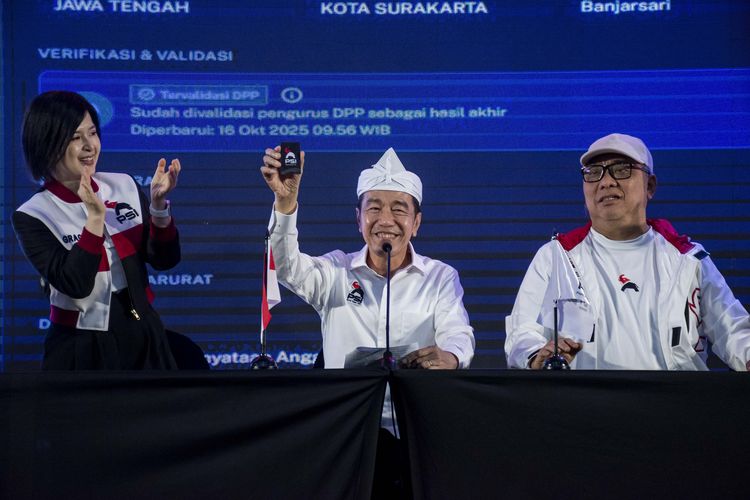
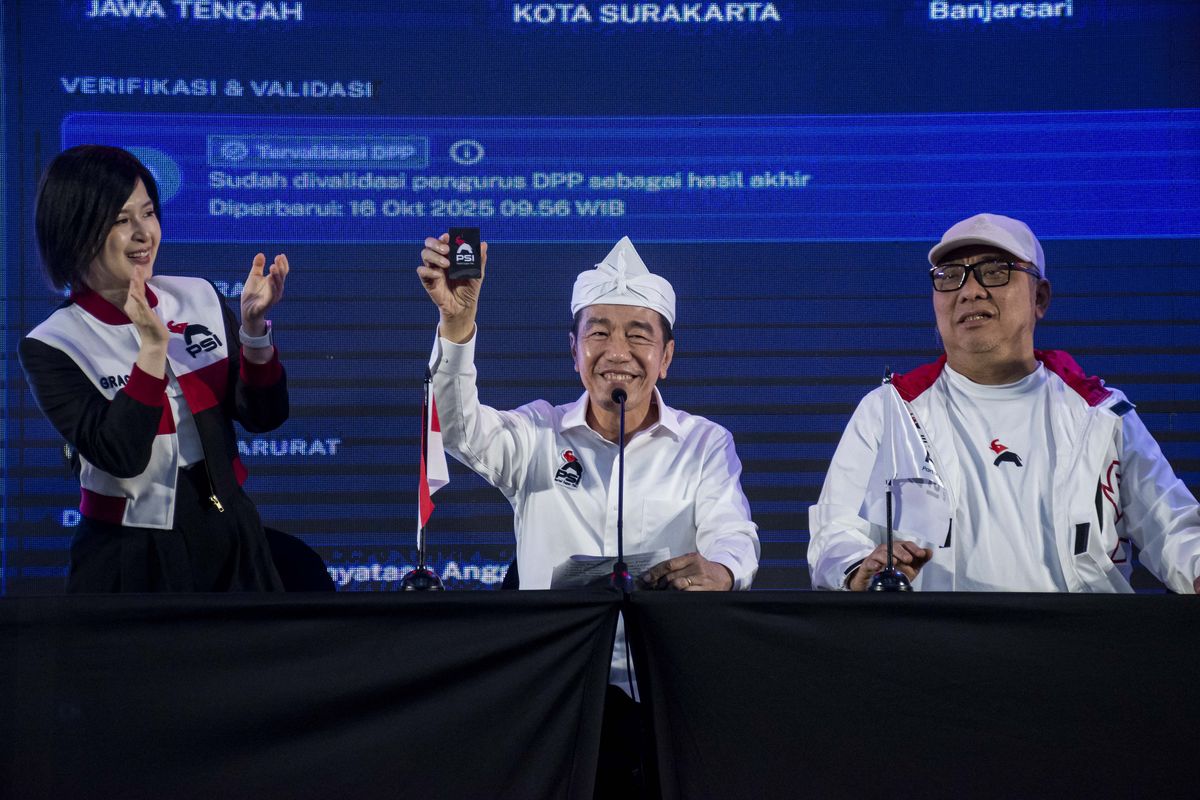
Another issue at hand is the relationship between the party and power. PSI’s proximity to Joko Widodo’s political network and the involvement of some of its cadres in the Prabowo-Gibran administration raise questions about the organization’s autonomy.
Public office can indeed broaden a cadre's political experience and influence. However, the party must still maintain its identity and decision-making mechanisms that do not solely cater to the interests of a few figures or power networks.