

Jakarta PTUN to Hear Gibran Rakabuming Raka's High School Certificate Lawsuit This Thursday
-
News
-
5 minutes ago
This article was translated by AI. Read the original article on Kompas.com. See Original
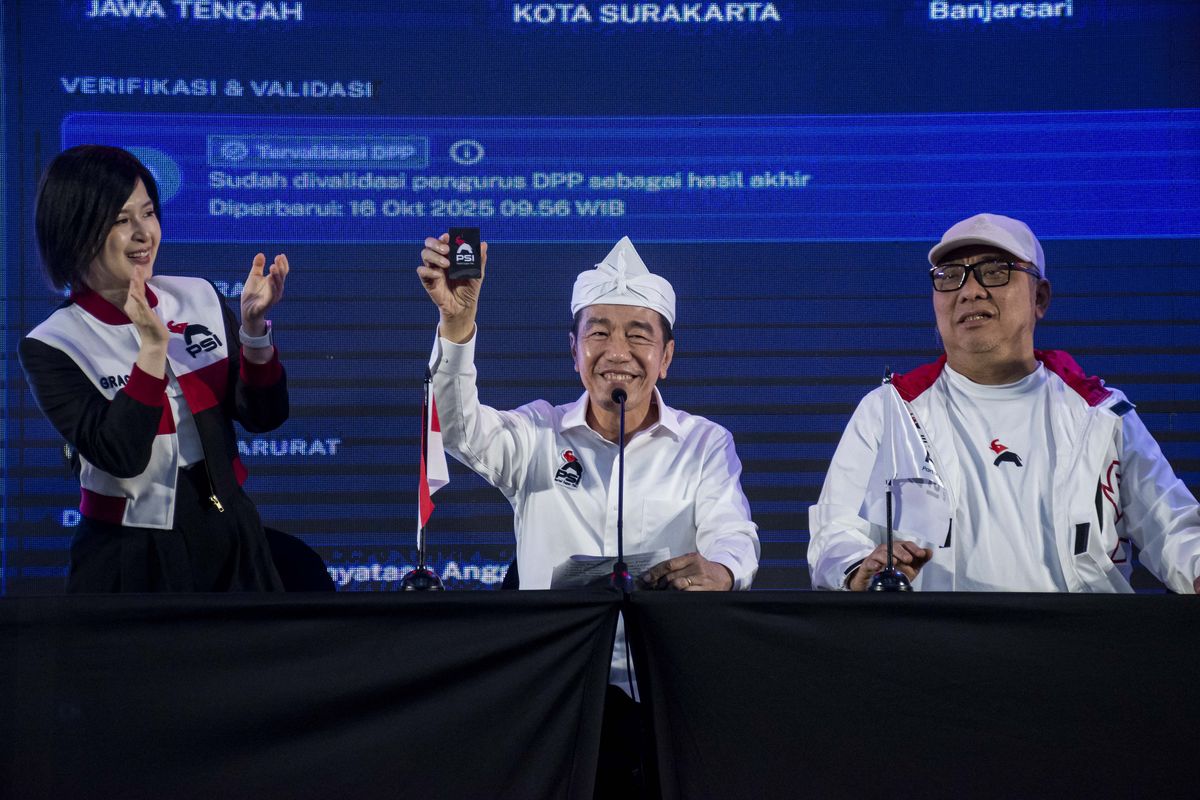
MONDAY, November 9, 2026, was an unusual day for the Indonesian Solidarity Party (PSI). Three key figures who have held strategic positions within the organization—Giring Ganesha, Raja Juli Antoni, and Isyana Bagoes Oka—officially resigned.
Giring is a former Chairman of PSI, Raja Juli served as Secretary General, and Isyana was the Vice Chairperson.
The three are not just ordinary members but have been integral to PSI's political journey since the party established its identity and expanded its influence.
Their resignations stem from different backgrounds. Giring expressed that there were elements no longer aligned with his political struggles from the outset.
Raja Juli chose to resign from his role as Secretary General and all party activities in order to concentrate on his duties as Minister of Forestry.
Meanwhile, Isyana also stepped down from the administration to focus more on her responsibilities as Deputy Minister for Population and Family Development.
PSI Chairman Kaesang Pangarep stated that he has accepted the resignations. He emphasized that service to the country must be prioritized over the interests of any group or party.
This statement reflects the organization's formal stance, accepting the decisions of its cadres without revealing any internal conflict.
However, politics does not always pause for the formal reasons given by its actors. When three significant figures leave the organization nearly simultaneously, a more pressing question arises—one larger than merely who will fill the vacant positions.
Does PSI possess a strong enough organizational system to maintain leadership continuity, identity, and direction?
This question is crucial because PSI has consistently built an image as a reformist party, offering renewal and promising an alternative to conventional political practices.
However, a party must do more than present progressive ideas and new faces. It must also create an institution that endures beyond the political lifespan of its prominent figures.
In political science, this issue is often termed party institutionalization.
Samuel P. Huntington, in his book “Political Order in Changing Societies” (1968), explains that the maturity of an institution is not solely measured by the presence of formal structures.
An organization must exhibit adaptability, complexity, autonomy, and internal consistency. In other words, a mature institution does not lose its direction just because its leaders change.
This framework was further clarified by Vicky Randall and Lars Svåsand in their research titled “Party Institutionalization in New Democracies” (2002).
They identify four dimensions of party institutionalization: systemness, value infusion, decisional autonomy, and reification.
Simply put, a party needs to have a functioning organizational system, a strong bond of values among its members, independence in decision-making, and a recognizable identity in society.
These four dimensions are relevant for assessing PSI. Does the party have a succession mechanism that ensures leadership continuity?
Are the members committed to the organization’s ideas and identity, or are they more bound by personal relationships and political positions?
How independent are the party’s strategic decisions from external power networks? And, equally important, is the public able to recognize PSI through its own political platform?
Angelo Panebianco, in his work “Political Parties: Organization and Power” (1988), explains that a party must evolve from one that relies on its founder and elites to one with mechanisms for its own sustainability.
Meanwhile, Max Weber referred to the transformation of charismatic authority into established rules and procedures as the “routinization of charisma.”
The crux is that the popularity of leaders must be converted into institutional strength. If not, the departure of a leader could potentially destabilize the organization they leave behind.
Herein lies the intriguing issue for PSI. The three resignations do not automatically signify a failure of institutionalization.
However, this event serves as a test to see if the organization is capable of replacing figures without losing continuity.
After all, a strong party should not make the presence of specific individuals a prerequisite for its organizational sustainability.
PSI’s electoral journey provides additional context. In the 2019 elections, PSI garnered approximately 1.89 percent of the national vote. Five years later, its vote tally increased to 4,260,169 votes, or 2.81 percent.
Despite this growth, the figure remains below the parliamentary threshold of 4 percent, meaning PSI has yet to secure a seat in the House of Representatives through the 2024 elections.
This vote growth illustrates that popularity and support expansion do not automatically result in institutional strength or political representation.
Popularity can be cultivated through figures, media coverage, and electoral momentum. Conversely, institutionalization demands a long-term effort involving cadre development, structural consolidation, identity strengthening, and the capacity to retain a relatively stable social base.
Robert Michels, in his classic work “Political Parties” (1911), introduced the concept of the “iron law of oligarchy,” which highlights the tendency of large organizations to be dominated by elite groups controlling resources and decision-making.
This theory serves as a reminder that the presence of an organizational structure does not necessarily reflect a democratic distribution of power.
For PSI, the challenge lies in ensuring regeneration is not merely a swap of individuals within the elite circle but a process that expands leadership capacity and participation among the members.
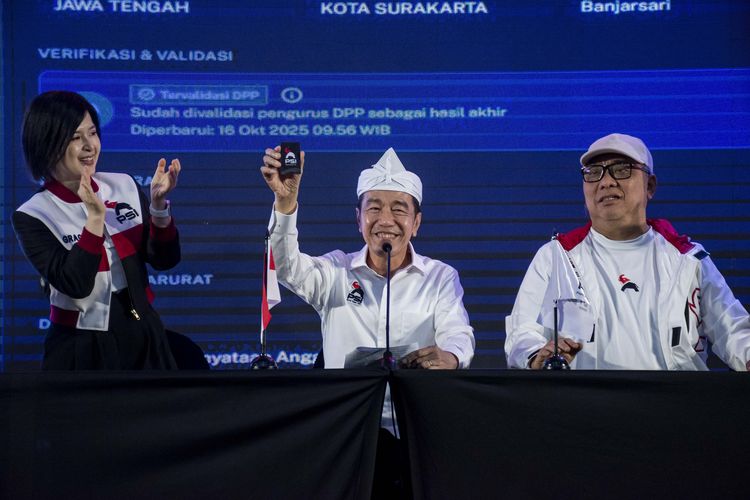
Another issue at hand is the relationship between the party and power. PSI’s proximity to Joko Widodo’s political network and the involvement of some of its cadres in the Prabowo-Gibran administration raise questions about the organization’s autonomy.
Public office can indeed broaden a cadre's political experience and influence. However, the party must still maintain its identity and decision-making mechanisms that do not solely cater to the interests of a few figures or power networks.
Raja Juli’s and Isyana’s resignations, citing the need to focus on government duties, also highlight the dilemma of balancing party loyalty with national responsibility.
Public officials should prioritize the interests of the state and society. Yet, for a party, this situation poses a test in building a cadre system and leadership that does not rely solely on members in executive positions.
In other words, the issue for PSI lies not just in the loss of three figures, but in how the organization maintains autonomy and continuity as the relationship between the party, its elite, and governance becomes increasingly complex.
For a mature party must differentiate between institutional interests and the personal interests of its leaders.
The challenges facing PSI reflect broader issues within Indonesian political parties. Many political organizations have grown reliant on the popularity of their founders, elite network strength, and closeness to centers of power.
However, this growth is not always accompanied by adequate institutionalization. Research by Ulla Fionna and Dirk Tomsa on factionalism within Indonesian parties demonstrates how patronage and elite relationships shape the internal dynamics of political organizations.
Therefore, the three departures from PSI should be viewed as a test of institutional resilience, rather than a sentence on the party’s future.
The organization can use this moment to strengthen cadre development, expand leadership, and clarify its political identity.
However, this is only possible if internal mechanisms genuinely function and do not merely replace names in the organizational structure.
Herein lies a broader perspective on the issue. The parameters for institutionalization extend beyond a party's ability to win elections or recruit popular figures; they also include its ability to uphold collective goals when these figures leave.
There is a fundamental difference between institutional succession and figure replacement. The former ensures that the organization continues based on systems and values, while the latter merely swaps one person for another.
For PSI, the current challenge is to prove that its political identity is not tied to a handful of figures, that cadre development can foster new leadership, and that organizational decisions remain rooted in its interests and internal mechanisms.
If not, the narrative of renewal will become merely a slogan stripped of its institutional strength.
The history of a party is not solely determined by who founded it, led it, or brought it close to power.
History is also shaped by its ability to endure after those individuals have left. After all, a mature institution is not built for a particular person to remain within it, but to keep its ideas and collective objectives alive long after its founders have exited the political stage.
The departure of these three figures does not test who is most loyal to PSI, but whether PSI has been sufficiently loyal to its own ideas.
Ultimately, PSI is not being abandoned by its leaders; rather, it is being tested to see if it has become an institution or remains merely a stage for individuals.