

Jakarta PTUN to Hear Gibran Rakabuming Raka's High School Certificate Lawsuit This Thursday
-
News
-
5 minutes ago
This article was translated by AI. Read the original article on Kompas.com. See Original
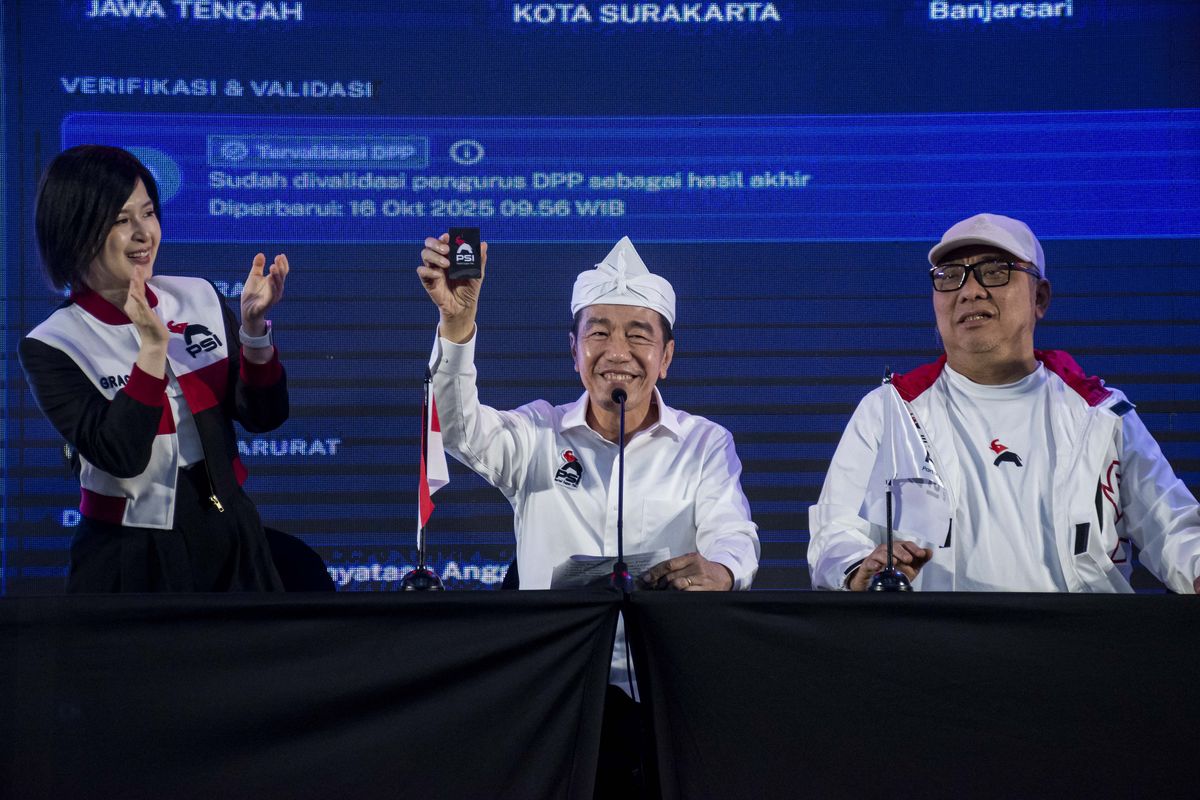
MONDAY, November 9, 2026, was an unusual day for the Indonesian Solidarity Party (PSI). Three key figures who have held strategic positions within the organization—Giring Ganesha, Raja Juli Antoni, and Isyana Bagoes Oka—officially resigned.
Giring is a former Chairman of PSI, Raja Juli served as Secretary General, and Isyana was the Vice Chairperson.
The three are not just ordinary members but have been integral to PSI's political journey since the party established its identity and expanded its influence.
Their resignations stem from different backgrounds. Giring expressed that there were elements no longer aligned with his political struggles from the outset.
Raja Juli chose to resign from his role as Secretary General and all party activities in order to concentrate on his duties as Minister of Forestry.
Meanwhile, Isyana also stepped down from the administration to focus more on her responsibilities as Deputy Minister for Population and Family Development.
PSI Chairman Kaesang Pangarep stated that he has accepted the resignations. He emphasized that service to the country must be prioritized over the interests of any group or party.
This statement reflects the organization's formal stance, accepting the decisions of its cadres without revealing any internal conflict.
However, politics does not always pause for the formal reasons given by its actors. When three significant figures leave the organization nearly simultaneously, a more pressing question arises—one larger than merely who will fill the vacant positions.
Does PSI possess a strong enough organizational system to maintain leadership continuity, identity, and direction?
This question is crucial because PSI has consistently built an image as a reformist party, offering renewal and promising an alternative to conventional political practices.
However, a party must do more than present progressive ideas and new faces. It must also create an institution that endures beyond the political lifespan of its prominent figures.
In political science, this issue is often termed party institutionalization.
Samuel P. Huntington, in his book “Political Order in Changing Societies” (1968), explains that the maturity of an institution is not solely measured by the presence of formal structures.
An organization must exhibit adaptability, complexity, autonomy, and internal consistency. In other words, a mature institution does not lose its direction just because its leaders change.
This framework was further clarified by Vicky Randall and Lars Svåsand in their research titled “Party Institutionalization in New Democracies” (2002).
They identify four dimensions of party institutionalization: systemness, value infusion, decisional autonomy, and reification.
Simply put, a party needs to have a functioning organizational system, a strong bond of values among its members, independence in decision-making, and a recognizable identity in society.