


2 Climbers Missing on Semeru, BNPB: Do Not Recklessly Enter Disaster Areas and Mounts Under Alert Status
-
News
-
1 minute ago
This article was translated by AI. Read the original article on Kompas.com. See Original
"As long as the proposal for the right to express opinions as referred to in paragraph (1) has not been approved by the DPR plenary session, the proposer may amend and withdraw their proposal," states Article 211 paragraph (4) of the MD3 Law.
"If the number of signatories to the opinion proposal that has not entered the first level discussion is less than the number referred to in Article 210 paragraph (1), additional signatures must be obtained to meet the required number," states Article 211 paragraph (5) of the MD3 Law.
If, by the end of two sessions, the required number of signatories is not met, the proposal becomes null and void.
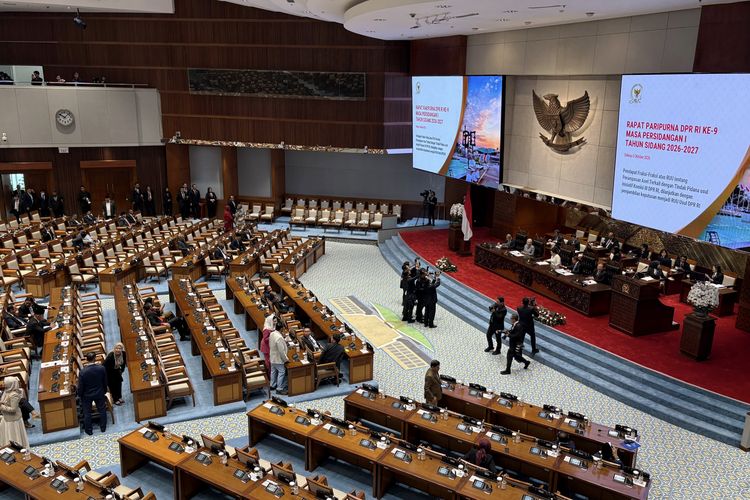
If the DPR accepts the proposal for the right to express opinions, the institution will form a special committee (pansus) consisting of all elements of the DPR factions by DPR decision.
"The special committee referred to in Article 212 paragraph (2) reports its activities to the DPR plenary session no later than 60 (sixty) days from the establishment of the special committee," states Article 213 paragraph (1) of the MD3 Law.
Furthermore, according to Article 214 paragraph (1) of the MD3 Law, the DPR will report the results of this committee to the government if it receives the committee’s report.
After that, the DPR must also submit the committee's report to the Constitutional Court (MK) for a ruling.
"If the DPR plenary session as referred to in Article 213 paragraph (2) decides to accept the report of the special committee that states that the President and/or Vice President has committed legal violations in the form of treason against the state, corruption, bribery, other serious crimes, or disgraceful acts, or no longer meets the requirements as President and/or Vice President, the DPR submits its decision on the right to express opinions to the Constitutional Court for a ruling," states Article 214 paragraph (2) of the MD3 Law.
"The DPR's decision regarding the proposal to express opinions as referred to in paragraph (2) is submitted to the President," states Article 214 paragraph (5) of the MD3 Law.
If the Constitutional Court determines that the DPR's right to express opinions is valid, the DPR will hold a plenary session to forward the proposal for the dismissal of the President and/or Vice President to the MPR.
"If the Constitutional Court decides that the DPR's opinion as referred to in Article 214 paragraph (2) is valid, the DPR shall hold a plenary session to forward the proposal for the dismissal of the President and/or Vice President to the MPR," states Article 215 paragraph (2) of the MD3 Law.