
KPAI Calls for Parents and Schools to Share Responsibility for Child Violence
-
News
-
24 minutes ago
This article was translated by AI. Read the original article on Kompas.com. See Original
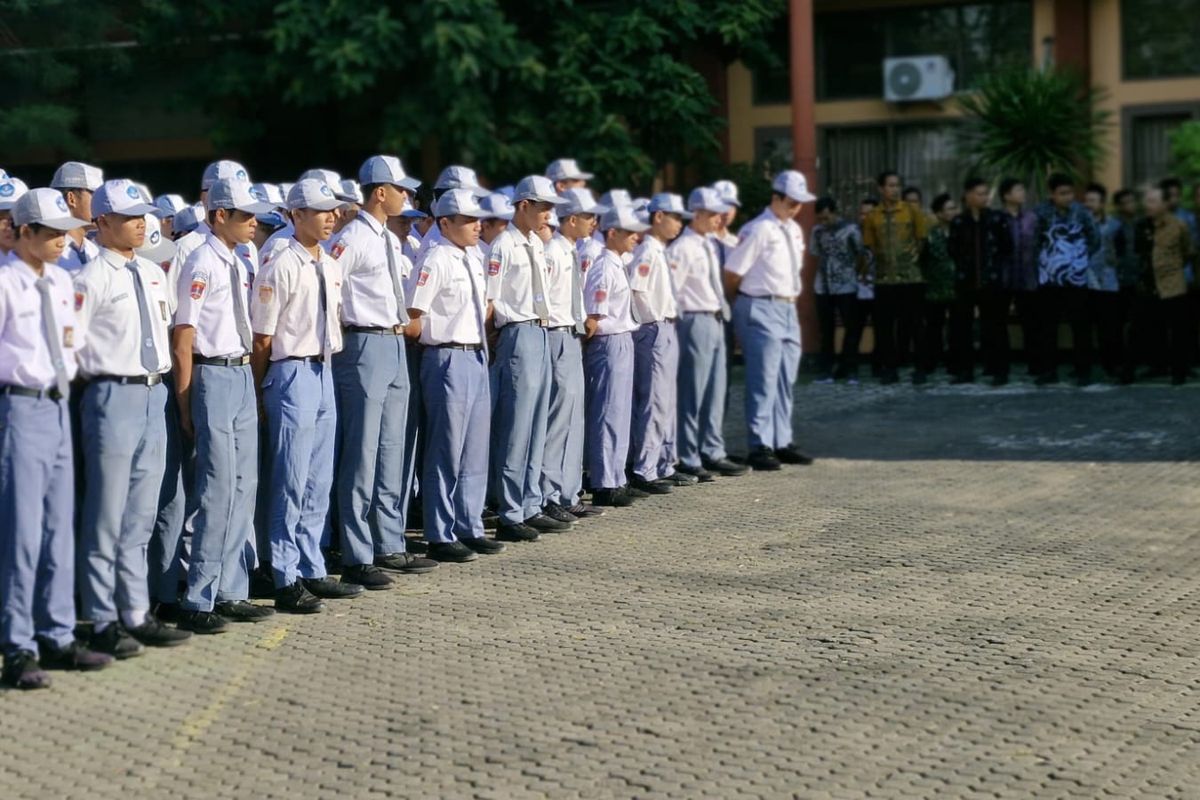
JAKARTA, KOMPAS.com - The educational track system in high schools, which was previously abolished under the Merdeka Curriculum, will be reinstated.
Starting from the 2027/2028 academic year, high school students will once again be able to choose between the natural sciences (IPA), social sciences (IPS), and language tracks, after having been given the freedom to select subjects based on their interests and future educational plans.
Minister of Basic and Secondary Education Abdul Mu'ti stated that returning to the track system is necessary to strengthen students' foundational knowledge before entering higher education.
"What we will implement starting in the 2027/2028 school year is the reopening of the tracks," Mu'ti said in Jakarta on Thursday (November 5, 2026).
So, what issues arose during the implementation of a system without tracks under the Merdeka Curriculum that led the government to decide to reinstate the IPA, IPS, and language tracks? How has the evaluation of this policy been conducted?
The track-less system was introduced during the tenure of Minister of Education, Culture, Research, and Technology Nadiem Makarim through the Merdeka Curriculum.
In this scheme, students in classes XI and XII were given the flexibility to choose subjects based on their interests, talents, abilities, and aspirations for further education or careers.
This system allows students who wish to pursue studies in technical programs, for example, to choose advanced mathematics and physics without needing to take biology.
Conversely, students with aspirations to enter medical schools can select biology and chemistry without having to take advanced mathematics.
However, the implementation of this system did not always align with the designed concept.
Education observer Totok Amin Soefijanto argues that theoretically, the free subject selection through the scientific group system is an ideal concept.
This system provides space for students to determine learning according to their needs and future plans.
However, according to Totok, its implementation in the field faces several obstacles.
"But in practice on the ground, this system encounters significant barriers," Totok said to Kompas.com on Friday (November 6, 2026).
One of these is the readiness of teachers and school facilities, which are not evenly distributed to support flexibility in subject selection.
Moreover, the freedom to choose subjects does not necessarily ensure that students make decisions based on their academic needs and career plans.
Totok points out a tendency for students to select subjects based on perceived difficulty or the notion that a particular subject is easier, rather than on the essential scientific knowledge needed to support their ambitions.
"Students choose subjects based on their 'easiness,' not the scientific essence that supports their career goals," said Totok, who holds a doctoral degree in education, curriculum, and pedagogy from Boston University.
As a result, the subjects chosen by students may not align with the fields of study they will pursue in higher education.