

KPAI Calls for Parents and Schools to Share Responsibility for Child Violence
-
News
-
24 minutes ago
This article was translated by AI. Read the original article on Kompas.com. See Original
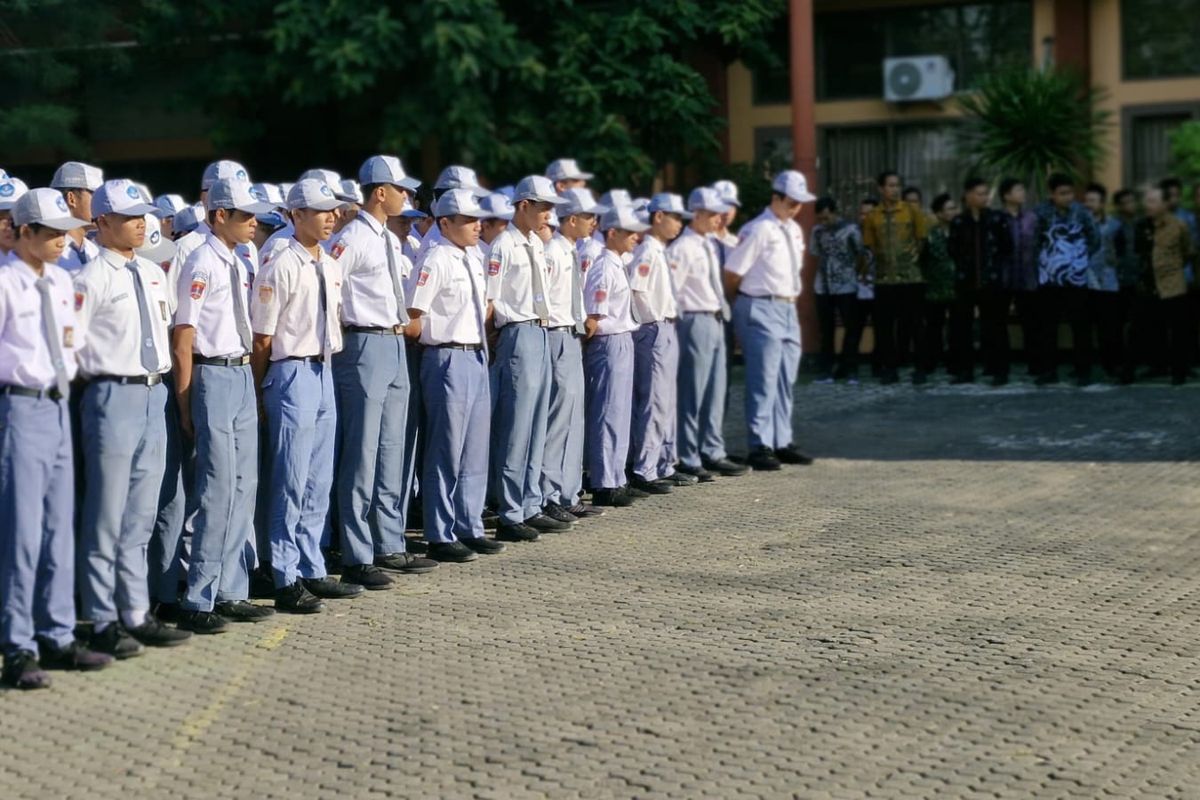
JAKARTA, KOMPAS.com - The educational track system in high schools, which was previously abolished under the Merdeka Curriculum, will be reinstated.
Starting from the 2027/2028 academic year, high school students will once again be able to choose between the natural sciences (IPA), social sciences (IPS), and language tracks, after having been given the freedom to select subjects based on their interests and future educational plans.
Minister of Basic and Secondary Education Abdul Mu'ti stated that returning to the track system is necessary to strengthen students' foundational knowledge before entering higher education.
"What we will implement starting in the 2027/2028 school year is the reopening of the tracks," Mu'ti said in Jakarta on Thursday (November 5, 2026).
So, what issues arose during the implementation of a system without tracks under the Merdeka Curriculum that led the government to decide to reinstate the IPA, IPS, and language tracks? How has the evaluation of this policy been conducted?
The track-less system was introduced during the tenure of Minister of Education, Culture, Research, and Technology Nadiem Makarim through the Merdeka Curriculum.
In this scheme, students in classes XI and XII were given the flexibility to choose subjects based on their interests, talents, abilities, and aspirations for further education or careers.
This system allows students who wish to pursue studies in technical programs, for example, to choose advanced mathematics and physics without needing to take biology.
Conversely, students with aspirations to enter medical schools can select biology and chemistry without having to take advanced mathematics.
However, the implementation of this system did not always align with the designed concept.
Education observer Totok Amin Soefijanto argues that theoretically, the free subject selection through the scientific group system is an ideal concept.
This system provides space for students to determine learning according to their needs and future plans.
However, according to Totok, its implementation in the field faces several obstacles.
"But in practice on the ground, this system encounters significant barriers," Totok said to Kompas.com on Friday (November 6, 2026).
One of these is the readiness of teachers and school facilities, which are not evenly distributed to support flexibility in subject selection.
Moreover, the freedom to choose subjects does not necessarily ensure that students make decisions based on their academic needs and career plans.
Totok points out a tendency for students to select subjects based on perceived difficulty or the notion that a particular subject is easier, rather than on the essential scientific knowledge needed to support their ambitions.
"Students choose subjects based on their 'easiness,' not the scientific essence that supports their career goals," said Totok, who holds a doctoral degree in education, curriculum, and pedagogy from Boston University.
As a result, the subjects chosen by students may not align with the fields of study they will pursue in higher education.
He also highlighted issues concerning the academic foundation of high school graduates.
According to him, some graduates are assessed as lacking adequate foundations in mathematics and science because they did not take supporting subjects that align linearly with their intended fields of study.
This issue needs to be considered when the government decides to reinstate the track system.
Therefore, the new policy must not only rename the scientific groups to tracks but also address the obstacles that emerged during the previous system's implementation.
While acknowledging the hurdles in the implementation of the scientific group system, Totok cautioned the government against hastily reinstating tracks solely to dismantle the previous minister's policy.
He states that changes in the education system should be based on careful considerations and accountable evaluations, rather than simply reverting to an older, seemingly more practical model.
"Policies that reinstate the track system should be made with thoughtful consideration. Do not do it just to erase the legacy of the previous minister or out of nostalgia for an old system that seems more pragmatic," said Totok.
He believes that this plan gives the impression that the direction of education policy can easily change every time there is a change in leadership within the ministry.
On one hand, the current government can act pragmatically by recognizing the gap between the ideals of the Merdeka Curriculum and the schools' readiness to implement it.
However, on the other hand, rapid policy changes can disrupt educational continuity.
Totok reminds that the education sector should not continuously become an 'experimental laboratory' every time there is a change in ministry leadership.
"The impression of changing ministers and changing regulations is only getting stronger," he said.
According to Totok, the inconsistency of policies can have direct impacts on school principals and teachers.
They must continually adapt to administrative changes, undergo retraining, and reorganize teaching schedules.
This situation can lead to fatigue or burnout among educators.
The energy that should be utilized to improve classroom learning quality is instead consumed by the need to adjust to policy changes.
Students and parents may also feel the impact.
Repeated changes in the learning system necessitate continuous adjustments to learning directions and requirements for continuing education to higher institutions.
Further, Totok highlighted the repercussions of curriculum changes on educational quality evaluations.
Frequent policy changes make it challenging for researchers to assess the longitudinal effects of a particular curriculum.
Such evaluations are necessary to ascertain whether the implemented policies actually enhance learning quality and are commensurate with the state budget spent through the central and regional budgets.
"The quality of learning is not measured by the speed of curriculum changes, but by the depth of the process," emphasized Totok, the Rector of the Emtek Institute of Digital Media in Jakarta.
He assesses that curriculums that continue to change within three to five years make their long-term impacts difficult to measure validly.
Thus, educational policies need to be sustained to avoid excessive dependence on changes in government regimes or ministerial appointments.
From a legislative perspective, Deputy Chairperson of Commission X of the DPR, Lalu Hadrian Irfani, stated they have yet to specifically discuss the government's plan to reinstate the IPA, IPS, and language tracks.
However, Commission X views every effort to refine educational policies as something that needs comprehensive attention.
This includes the government's plan to reinstate the track system that was previously eliminated through the Merdeka Curriculum.
Lalu Hadrian Irfani hopes that the government will openly explain the background, objectives, and evaluation results that formed the basis of this decision.
According to him, changes in educational policy must be based on thorough, objective, and measurable evaluations.
The government must not simply assume that the previous approach was inadequate without sufficient data and research.
Several indicators should serve as the basis for evaluation.
These include students' mastery of basic competencies, literacy and numeracy skills, mastery of science, social studies, and language, and students' readiness for higher education.
Moreover, the government needs to assess the alignment of high school graduates' competencies with the needs of university programs.
"If the evaluation results show that reinforcing tracks is necessary to enhance the quality and academic readiness of students, then such steps should be supported," said Lalu Hadrian Irfani to Kompas.com on Saturday (November 7, 2026).
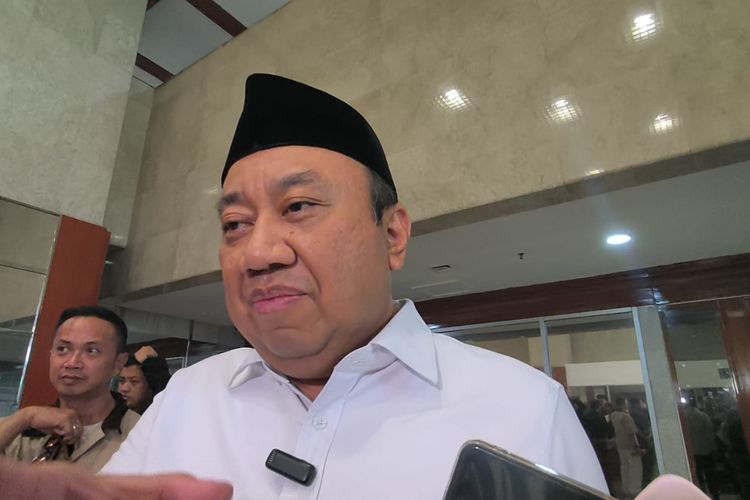 Deputy Chairperson of Commission X of the DPR RI Lalu Hadrian Irfani at the Palace Complex, Jakarta, Monday (October 12, 2026).
He emphasized that the government must have clear academic arguments and data so that reinstating the tracks genuinely addresses educational issues rather than merely replacing an existing system.
Lalu also noted that Commission X of the DPR will monitor this policy through its oversight functions.
However, before that, the government is expected to provide comprehensive explanations regarding the evaluation results of the Merdeka Curriculum, the urgency of reinstating the tracks, the policy design to be implemented, and the readiness of schools and educators.
"We certainly have an interest in ensuring that every change in educational policy has a clear purpose, does not create new problems on the ground, and genuinely benefits learners," he concluded.