

Prabowo Gathers Gerindra Cadres in Hambalang, Dasco and KDM Attend
-
News
-
2 hours ago
This article was translated by AI. Read the original article on Kompas.com. See Original
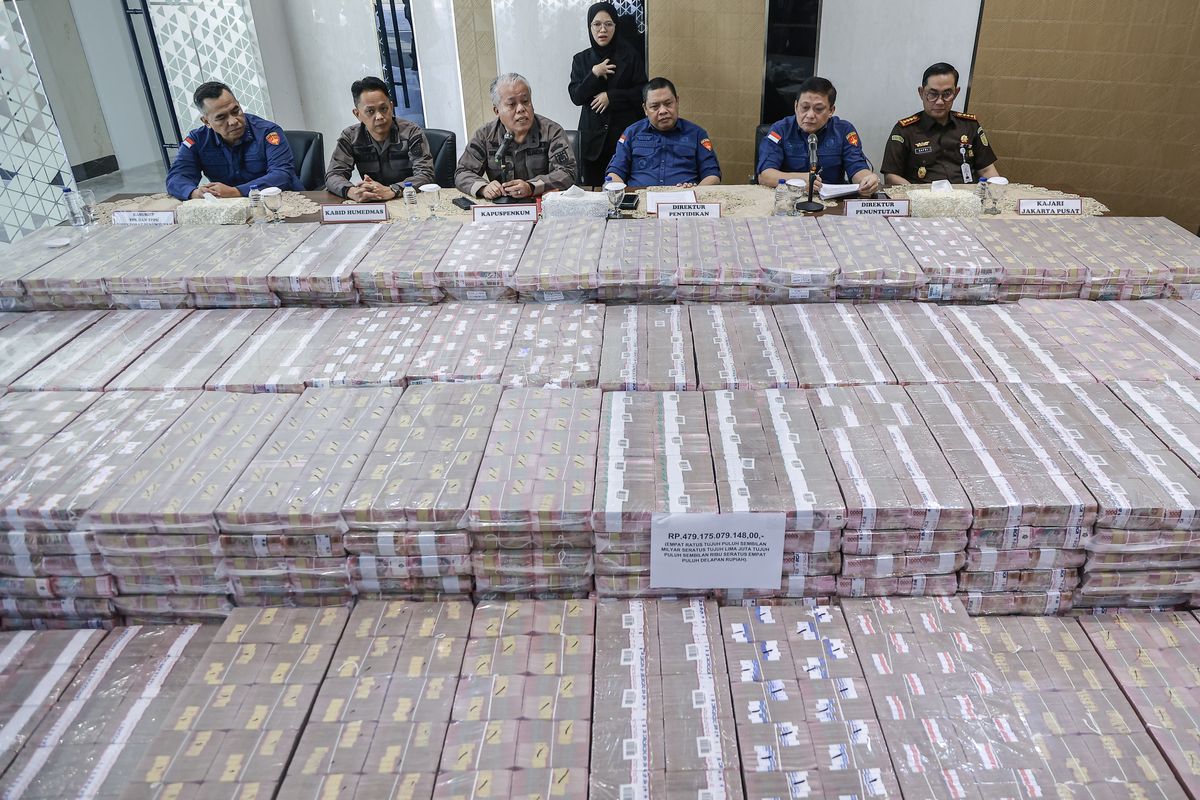
THE GOVERNMENT'S PLAN to review the definition of corruption is indeed urgent. Ideally progressive, it should not stall in narrow debates about whether or not there is state loss.
This redefinition should be a participatory legislative effort to respond to a painful fact: our Corruption Perception Index is declining, as is our Rule of Law Index.
The World Justice Project's Rule of Law Index 2026 ranks Indonesia 75th out of 143 countries, down six places from the previous year. Its score dropped from 0.52 to 0.51.
More concerning figures are present within that data. The criminal justice score is only 0.37, absence of corruption stands at 0.42, the civil justice score is 0.44, and fundamental rights score is 0.45.
Transparency International's 2025 Corruption Perception Index also fell, from a score of 37 to 34, ranking Indonesia 109th out of 182 countries.
While these two indices employ different methodologies and cannot be concluded as having a direct cause-and-effect relationship, they both send a similar warning: the integrity of our governance and the quality of our justice are in trouble.
Why is a country with extensive legal tools and anti-corruption institutions still unable to build a stronger rule of law?
The likely answer is that our understanding of corruption has not kept pace with the evolving ways that power is abused.
Corruption does not always start from hands that embezzle state funds. Often, it begins with power crafting rules to protect its own interests.
Political decisions being traded, public policies hijacked by networks of power and economy. In this form, corruption not only violates the law but also undermines the very purpose of the law.
This is the face of modern corruption that demands we redefine it. Corruption should not be understood merely as a financial crime. It must be viewed as a deviation of the mandate of power that threatens justice, democracy, and constitutional integrity.
The biggest challenge today is what we call legal corruption. This term does not imply that corruption is legally justified; it describes the abuse of influence and decision-making processes to gain undue advantages through actions that may not necessarily violate criminal law.
Formal legality does not always reflect substantive integrity. A policy can pass all official procedures but remains problematic if the process is controlled by hidden conflicts of interest or grants undue advantages to those with political access.
Hellman, Jones, and Kaufmann explain state capture in their work, Seize the State, Seize the Day (2000).
Corruption no longer occurs when someone breaks the rules. A more fundamental risk emerges when the regulatory formation process itself is hijacked.