Indonesia-China Signs MoU Worth Rp 1,300 Trillion on Smart Cities and Job Creation
-
News
-
5 minutes ago
This article was translated by AI. Read the original article on Kompas.com. See Original

This examination is not easy because the opposing argument also carries weight.
Gerindra emphasizes that the court's decision is final and binding. The KPU has verified the nominations, and prolonged polemics risk disrupting legal certainty and market trust. That argument cannot be dismissed with labels.
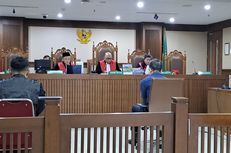
On the other hand, the court's considerations state that it did not find equivalent documents to a high school diploma, although its ruling indicated the petition was inadmissible (Constitutional Court Decision No. 01/PHPU.PRES-XXIV/2026). The gap between the ruling and the considerations is now being filled by politics.
Seat calculations make this art of possibility even more realistic. PDIP and PKS together control 163 out of 580 seats in the House of Representatives (KPU, 2024).
That number is sufficient to propose an inquiry but far from the two-thirds support required to pursue constitutional channels under Article 7B of the 1945 Constitution.
Thus, the greatest value of this dialogue may not lie in the vote count but in its ability to transform a simple question of the existence of a document into a legitimate public question.
Golkar politician Ahmad Doli Kurnia succinctly summed it up: if it exists, just show it.
The danger arises when the art of possibility descends into the art of bargaining. If the issue of the diploma merely becomes a card exchanged for positions, budgets, or concessions ahead of 2029, the public's cynicism toward the parties will deepen.
Politics as the art of the possible does not mean everything can be exchanged. The boundary lies in the willingness to bear the consequences of every step, including the step to stop.
This meeting of the bull and the crescent moon ultimately holds the potential that is more valuable than a new coalition.
It can serve as an example that sharp ideological differences need not hinder joint constitutional work, as long as the direction and limits are clear to the public.
This possibility only holds meaning if it is maintained until completion, not interrupted midway like the 2024 inquiry.
If two parties that often oppose each other can sit at the same table for a piece of paper, why has the state institution holding it yet to reveal it?
And if this dialogue ends up at the bargaining table, who will bear the collapse of public confidence that politics is still the art of the possible, not the art of forfeiture?