Indonesia-China Signs MoU Worth Rp 1,300 Trillion on Smart Cities and Job Creation
-
News
-
5 minutes ago
This article was translated by AI. Read the original article on Kompas.com. See Original

TWO parties that have rarely aligned during presidential elections are now sitting together at the same table.
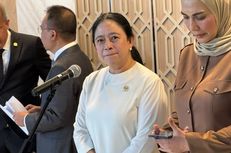
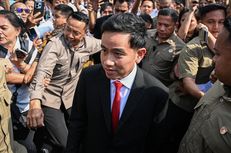
Secretary General of the PDIP, Hasto Kristiyanto, welcomed the invitation from Secretary General of PKS, Muhammad Kholid, to discuss the implications of the Constitutional Court's consideration regarding the educational qualifications of Vice President Gibran Rakabuming Raka (Kompas.com, 25/10/2026).
It is understandable that the public is surprised. Since when could the bull and the crescent moon converse without suspicion?
This astonishment has a long historical foundation. In the 2004 presidential election, PKS backed Amien Rais and then switched to Susilo Bambang Yudhoyono, while PDIP supported Megawati Soekarnoputri.
In 2009, PKS allied with Yudhoyono again while PDIP paired Megawati with Prabowo.
In 2014 and 2019, PKS was aligned with Prabowo against Joko Widodo, who was supported by PDIP, and in 2024, PKS endorsed Anies Baswedan while PDIP supported Ganjar Pranowo.
Apart from the presidential elections, they have frequently clashed ideologically, most notably when PKS opposed the Pancasila Ideology Guideline Bill championed by PDIP in 2020.
However, interpreting this meeting as an anomaly would be mistaken. It reveals the true nature of our party politics, where ideology functions as an electoral identity, while interests become the daily language in the parliament.
Otto von Bismarck's classic saying that politics is the art of the possible finds its evidence in Senayan.
The more important question is not why they are meeting, but what the art of possibility is being used for: to pave the way for accountability or merely to enhance bargaining power ahead of 2029?
The ideological wall between the two parties is actually thinner than it appears on the national stage.
During the 2010 Surakarta mayoral election, PDIP and PKS jointly endorsed Joko Widodo, a fact that was recalled by PKS faction chair Jazuli Juwaini when opening up the possibility of a coalition with PDIP (Jawa Pos, 12/6/2024).
In several regional elections, from Kulon Progo to Boyolali, they have also shared a boat.
The irony is sharp. Two parties that once helped Joko Widodo launch his executive career are now jointly questioning the legitimacy of his son.
So why has the wall at the center hardened?
Polarization since the 2017 DKI Jakarta gubernatorial election and the subsequent two presidential elections has made both parties symbols of two poles, with nationalists and pluralists on one side and political Islam on the other.
Grassroots movements are formed on mutual suspicion, and the elites harvest loyalty from that suspicion.
As a result, every encounter between the elites of these two parties appears odd to constituents, although such encounters have long been commonplace in parliamentary lobbies.
Political scientist Dan Slater describes this pattern as promiscuous power-sharing, a tendency for parties in Indonesia to share power with almost anyone. In this pattern, the line between government and opposition becomes blurred.
This case illustrates it clearly. PKS is now part of President Prabowo's governing coalition, while PDIP has chosen a balancing position outside the cabinet.
Nevertheless, both parties freely discuss issues concerning the vice president from the same coalition.
This fluidity has an aspect rarely discussed: the art of possibility also includes the art of letting go.
In early 2024, PDIP, PKS, PKB, and Nasdem all raised the idea of an inquiry into alleged electoral fraud. This discourse faded within weeks after PKS and Nasdem accepted the outcome of the presidential election (Bisnis.com, 21/3/2024).
This precedent reminds us that political dialogue in this country can easily begin and just as easily stop, often without explanation to a public that has already invested hope.
At this point, Max Weber is relevant. In his lecture *Politics as a Vocation*, he portrays politics as the work of drilling hard boards with both passion and precision.
Weber distinguishes between an ethics of conviction that holds to pure intentions and an ethics of responsibility that weighs consequences.
PDIP and PKS are two parties most fluent in the language of conviction, one in the name of Pancasila and nationalism, the other in the name of religious morality.
Their meeting is now being tested by another measure: accountability for the outcomes.
Ethics of responsibility demands at least two things. First, transparency of the agenda so the public knows whether this dialogue aims for clarification of documents, improving the governance of candidate verification, or a pathway to dismissal.
Second, consistency of standards, as the criteria used today to challenge opponents must also be applied to their own cadres in the future. Without both, the dialogue is easily read as mere maneuvering.
This examination is not easy because the opposing argument also carries weight.
Gerindra emphasizes that the court's decision is final and binding. The KPU has verified the nominations, and prolonged polemics risk disrupting legal certainty and market trust. That argument cannot be dismissed with labels.
On the other hand, the court's considerations state that it did not find equivalent documents to a high school diploma, although its ruling indicated the petition was inadmissible (Constitutional Court Decision No. 01/PHPU.PRES-XXIV/2026). The gap between the ruling and the considerations is now being filled by politics.
Seat calculations make this art of possibility even more realistic. PDIP and PKS together control 163 out of 580 seats in the House of Representatives (KPU, 2024).
That number is sufficient to propose an inquiry but far from the two-thirds support required to pursue constitutional channels under Article 7B of the 1945 Constitution.
Thus, the greatest value of this dialogue may not lie in the vote count but in its ability to transform a simple question of the existence of a document into a legitimate public question.
Golkar politician Ahmad Doli Kurnia succinctly summed it up: if it exists, just show it.
The danger arises when the art of possibility descends into the art of bargaining. If the issue of the diploma merely becomes a card exchanged for positions, budgets, or concessions ahead of 2029, the public's cynicism toward the parties will deepen.
Politics as the art of the possible does not mean everything can be exchanged. The boundary lies in the willingness to bear the consequences of every step, including the step to stop.
This meeting of the bull and the crescent moon ultimately holds the potential that is more valuable than a new coalition.
It can serve as an example that sharp ideological differences need not hinder joint constitutional work, as long as the direction and limits are clear to the public.
This possibility only holds meaning if it is maintained until completion, not interrupted midway like the 2024 inquiry.
If two parties that often oppose each other can sit at the same table for a piece of paper, why has the state institution holding it yet to reveal it?
And if this dialogue ends up at the bargaining table, who will bear the collapse of public confidence that politics is still the art of the possible, not the art of forfeiture?