
Why Are Coalition Parties Not Competing for the Vice Presidential Seat?
-
News
-
24 minutes ago
This article was translated by AI. Read the original article on Kompas.com. See Original
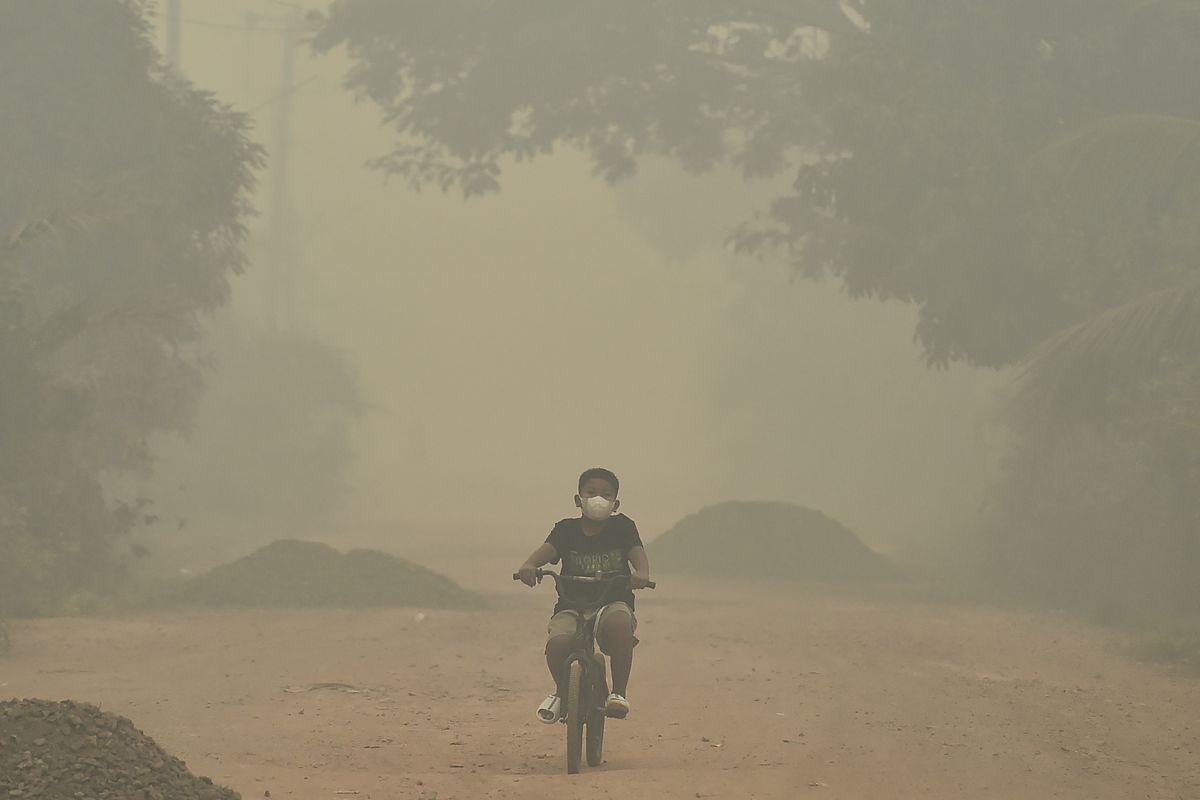
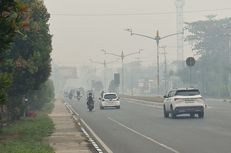
Singapore was even named the most polluted city in the world for several days in October by IQAir, a Swiss-based air quality monitoring organization.
The city-state recorded 18 consecutive days of unhealthy air quality starting October 5, surpassing the previous record of 15 days set in 2015.
The highest 24-hour Pollutant Standards Index (PSI) was recorded at 230 in the western region at 10 AM on October 18, which falls into the very unhealthy category.
Conditions somewhat improved on the afternoon of October 22 when the PSI returned to the good to moderate range. However, this improvement is suspected to be due to wind factors, as satellite maps still show active hot spots in Sumatra and Kalimantan.
Dicky Budiman, a Public Health and Environmental Expert from Griffith University Australia, explained that the long-lasting effects of prolonged smoke exposure will lead to long-term health risks.
He stated that the impact will not disappear or cease once the smoke clears. In children, repeated exposure can potentially affect lung function into adulthood.
“Indeed, it is true that the impact of this smoke does not stop when the smoke dissipates. Repeated exposure in children has the potential to affect lung function through adulthood, as well as their learning abilities and mental health,” Dicky told Kompas.com on Saturday (October 24, 2026).
Dicky emphasized that these risks need to be studied further, partly to anticipate their onset proactively.
He expressed concern that the quality of Indonesia's younger generation could decline if not addressed, especially as the country strives toward building a Golden Generation by 2045.
“I propose a cohort study examining the impacts on children now and looking ahead 10 to 20 years, especially considering that these fires happen almost annually,” he suggested.
Similarly, Fifi Sofiah, a member of the Coordination Working Unit (UKK) for Respiratory Medicine of the Indonesian Pediatric Association (IDAI), pointed out that repeated exposure to smoke from karhutla can lead to chronic lung diseases and deteriorate the quality of life for children into adulthood.
Children's respiratory systems are particularly vulnerable to smoke because coarse particles (PM10) irritate the upper respiratory tract, while ultrafine PM2.5 particles cause problems in the lower respiratory tract.
Furthermore, children are more susceptible to polluted air as their airway diameter is significantly smaller than that of adults, in addition to their immune systems still being immature.
Children's ventilation per kilogram of body weight is also higher.
“They breathe faster and more often through their mouths. Moreover, children engage in more outdoor activities, increasing their exposure to pollutants at their height—close to the ground and stroller height,” she explained.
Consultant oncology surgeon Dr. Sonar Soni Panigoro further explained that smoke from burning can contain substances that have the potential to cause cancer.
However, the correlation between exposure to smoke from karhutla and cancer cannot be concluded solely based on short-term health impacts.
Cancer takes time to develop, so the effects of exposure to carcinogenic substances need to be observed over the long term.
Further research is necessary to determine whether communities living in areas affected by karhutla see an increase in specific cancer cases, such as lung cancer.
“If we look at people in Kalimantan, we might want to see the duration of exposure and whether there is an increase in lung cancer rates in Kalimantan or Sumatra, areas experiencing fires,” Sonar stated.
Sonar acknowledges that the growth of normal body cells is regulated by mechanisms within the cells, including DNA.
Cancer can develop when changes disrupt the regulation of cell growth.
Factors that can trigger such changes include smoke, carbon, unhealthy food such as junk food, bacteria, and sun radiation.