
Why Are Coalition Parties Not Competing for the Vice Presidential Seat?
-
News
-
24 minutes ago
This article was translated by AI. Read the original article on Kompas.com. See Original
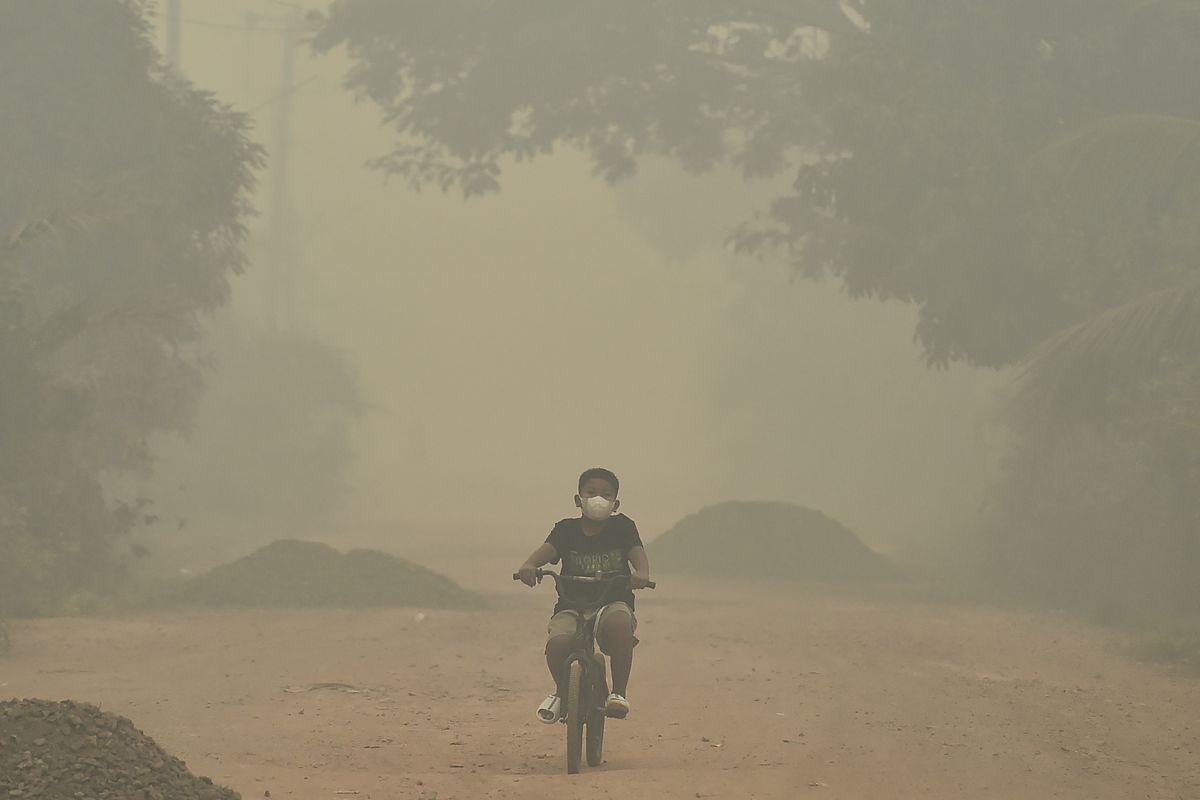
JAKARTA, KOMPAS.com - Acute Respiratory Infections (ARI) continue to loom over communities living near areas of forest and land fires (karhutla).
The Ministry of Health has reported that cases of ARI have surged to 333,470 from August 18 to October 21, 2026.
This number has increased from the previously reported 314,124 cases as of October 20, 2026.
Then Suyanti, the Director of Environmental Health at the Ministry of Health, stated that of the total ARI cases, 258,298 were recorded among individuals aged over five years.
The remaining 75,172 cases were reported in children aged between zero to five years.
“The distribution of ARI cases spans 68 districts/cities across seven provinces. This drastic increase in ARI cases aligns with the thick smoke that has polluted the air,” said Then Suyanti.
The Ministry of Health's data also highlights that South Sumatra and South Kalimantan are the two provinces with the highest number of cases among the seven provinces affected by karhutla. The most vulnerable group in these provinces is children aged 0–5 years.
More specifically, South Sumatra recorded 63,430 cases in the over five age group and 18,747 cases in the 0–5 age group.
In South Kalimantan, there were 60,734 cases in the over five age group and 18,160 cases in the 0–5 age group.
The other five provinces are not far behind. In South Kalimantan, cases among females reached 43,753, while males accounted for 35,141 cases.
A similar pattern is observed in West Kalimantan, with 29,848 cases in females and 25,838 in males.
Riau reported 19,195 cases in females and 17,238 in males.
In East Kalimantan, there were 14,980 cases in females and 12,708 in males.
Meanwhile, in Central Kalimantan, the number of cases for females was 14,496, against 12,244 for males.
The high incidence of ARI has also been highlighted by the Indonesian Private Hospital Association (ARSSI).
The association reports that outpatient visits related to ARI have surged in various regions across the country.
"Indeed, we acknowledge that outpatient visits concerning ARI cases are quite high," said ARSSI Chairman, Iing Ichsan Hanafi, on Saturday.
However, he assured that private hospitals within ARSSI can manage the situation well amidst these increasing cases.
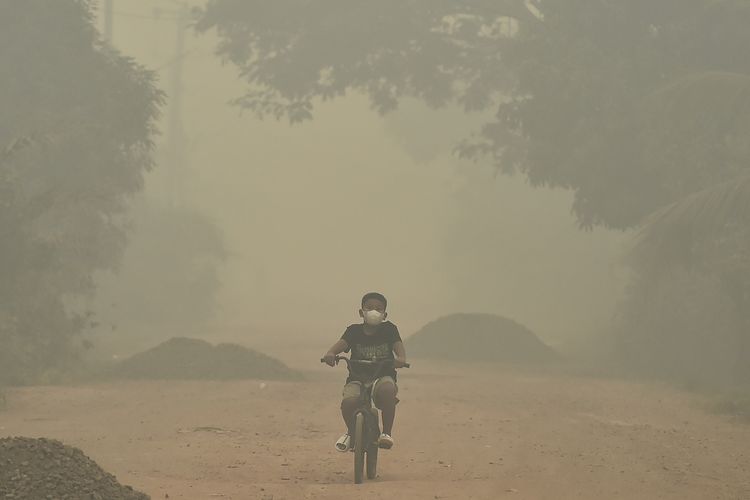
The rise in ARI cases among the population is not without cause. The events occurring throughout 2026 have been recorded as the worst smoke crisis in over a decade.
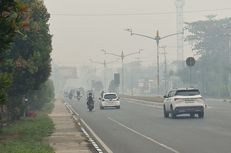
Smoke pollution from forest fires in Indonesia has even been detected as far away as the Philippines. From late August to early September, air quality in Metro Manila plummeted to very unhealthy levels.
The impact has been extensive. Schools have been closed, and flights suspended in various regions across Malaysia and Indonesia.
In some areas of Kalimantan, the skies turned orange.
NASA satellite imagery has shown a blanket of high levels of carbon monoxide covering Southeast Asia due to the fires.
Singapore was even named the most polluted city in the world for several days in October by IQAir, a Swiss-based air quality monitoring organization.
The city-state recorded 18 consecutive days of unhealthy air quality starting October 5, surpassing the previous record of 15 days set in 2015.
The highest 24-hour Pollutant Standards Index (PSI) was recorded at 230 in the western region at 10 AM on October 18, which falls into the very unhealthy category.
Conditions somewhat improved on the afternoon of October 22 when the PSI returned to the good to moderate range. However, this improvement is suspected to be due to wind factors, as satellite maps still show active hot spots in Sumatra and Kalimantan.
Dicky Budiman, a Public Health and Environmental Expert from Griffith University Australia, explained that the long-lasting effects of prolonged smoke exposure will lead to long-term health risks.
He stated that the impact will not disappear or cease once the smoke clears. In children, repeated exposure can potentially affect lung function into adulthood.
“Indeed, it is true that the impact of this smoke does not stop when the smoke dissipates. Repeated exposure in children has the potential to affect lung function through adulthood, as well as their learning abilities and mental health,” Dicky told Kompas.com on Saturday (October 24, 2026).
Dicky emphasized that these risks need to be studied further, partly to anticipate their onset proactively.
He expressed concern that the quality of Indonesia's younger generation could decline if not addressed, especially as the country strives toward building a Golden Generation by 2045.
“I propose a cohort study examining the impacts on children now and looking ahead 10 to 20 years, especially considering that these fires happen almost annually,” he suggested.
Similarly, Fifi Sofiah, a member of the Coordination Working Unit (UKK) for Respiratory Medicine of the Indonesian Pediatric Association (IDAI), pointed out that repeated exposure to smoke from karhutla can lead to chronic lung diseases and deteriorate the quality of life for children into adulthood.
Children's respiratory systems are particularly vulnerable to smoke because coarse particles (PM10) irritate the upper respiratory tract, while ultrafine PM2.5 particles cause problems in the lower respiratory tract.
Furthermore, children are more susceptible to polluted air as their airway diameter is significantly smaller than that of adults, in addition to their immune systems still being immature.
Children's ventilation per kilogram of body weight is also higher.
“They breathe faster and more often through their mouths. Moreover, children engage in more outdoor activities, increasing their exposure to pollutants at their height—close to the ground and stroller height,” she explained.
Consultant oncology surgeon Dr. Sonar Soni Panigoro further explained that smoke from burning can contain substances that have the potential to cause cancer.
However, the correlation between exposure to smoke from karhutla and cancer cannot be concluded solely based on short-term health impacts.
Cancer takes time to develop, so the effects of exposure to carcinogenic substances need to be observed over the long term.
Further research is necessary to determine whether communities living in areas affected by karhutla see an increase in specific cancer cases, such as lung cancer.
“If we look at people in Kalimantan, we might want to see the duration of exposure and whether there is an increase in lung cancer rates in Kalimantan or Sumatra, areas experiencing fires,” Sonar stated.
Sonar acknowledges that the growth of normal body cells is regulated by mechanisms within the cells, including DNA.
Cancer can develop when changes disrupt the regulation of cell growth.
Factors that can trigger such changes include smoke, carbon, unhealthy food such as junk food, bacteria, and sun radiation.
“It could be smoke, carbon, food, bacteria, radiation—everything really,” he remarked.
Changes in DNA can disrupt the control mechanisms in cells, leading to uncontrolled cell growth and division.
However, exposure to carcinogenic substances does not guarantee that everyone exposed will develop cancer.
Dicky suggests that the government should not wait for case numbers to spike. According to him, the response to infectious outbreaks should not be reactive but should be based on air quality.
If air quality indicates an unhealthy category, the government should quickly provide services and treatment to the community.
Dicky advises creating smoke-free isolation spaces for vulnerable groups, including infants, pregnant women, the elderly, and those with chronic diseases.
“And distribute properly fitting N95 masks—not surgical masks. Also ensure the availability of oxygen, nebulizers, and pneumonia medications at community health centers (Puskesmas),” he emphasized.
He warned that the burden on health facilities may not be immediate but will almost certainly rise. Typically, the peak in ARI-related hospital visits occurs 1 to 3 weeks after the peak of smoke exposure.
Diseases caused by ARI vary, ranging from pneumonia, lung inflammation, asthma exacerbations, to Chronic Obstructive Pulmonary Disease (COPD).
“Therefore, services in affected areas must be prepared to face this second wave, not just the first wave,” Dicky stressed.
At the family level, management can be done in several ways.
Dimas Dwi Saputro, Secretary of the IDAI Disaster Preparedness Task Force, stated that one method is to reduce outdoor activities.
Creating cleaner air spaces inside homes (by closing windows and doors, using exhaust fans, wet curtains, and aquariums) is also important.
“Use masks if it’s necessary to go outside, drink plenty of water, implement clean and healthy living behaviors, and wash fruits and vegetables before consumption,” he stated.
Additionally, families should prepare disaster response kits, understand evacuation routes, gathering points, and family preparedness plans.
If signs of severity arise—such as severe shortness of breath, retractions in the chest wall, bluish lips, decreased consciousness, or inability to drink—seek medical facilities immediately.
Recognizing deteriorating air pollution conditions, smoke entering homes, or fires threatening settlements is as crucial as recognizing a child’s condition.
“For infants, seek medical facilities if their breathing quickens or appears labored, lips turn blue, they refuse to drink, or experience convulsions. In adults, chest pain or weakness on one side of the body are emergency signs,” Dicky firmly advised.
He emphasized that the most important thing is to stop the source of the fire. Dicky recognizes that tackling forest and land fires, especially in peatland areas, is quite challenging and presents its own set of obstacles.
However, public health also needs to be prioritized.
“Healthcare services can only mitigate impacts, not solve the problem. Smoke from karhutla is not just an ISPA issue; it can also trigger asthma attacks, irritate eyes and skin, worsen heart disease, and pose risks to pregnant women,” Dicky concluded.