
BNPB: 588 Houses Damaged Due to Extreme Weather in West Bandung
-
News
-
4 minutes ago
This article was translated by AI. Read the original article on Kompas.com. See Original
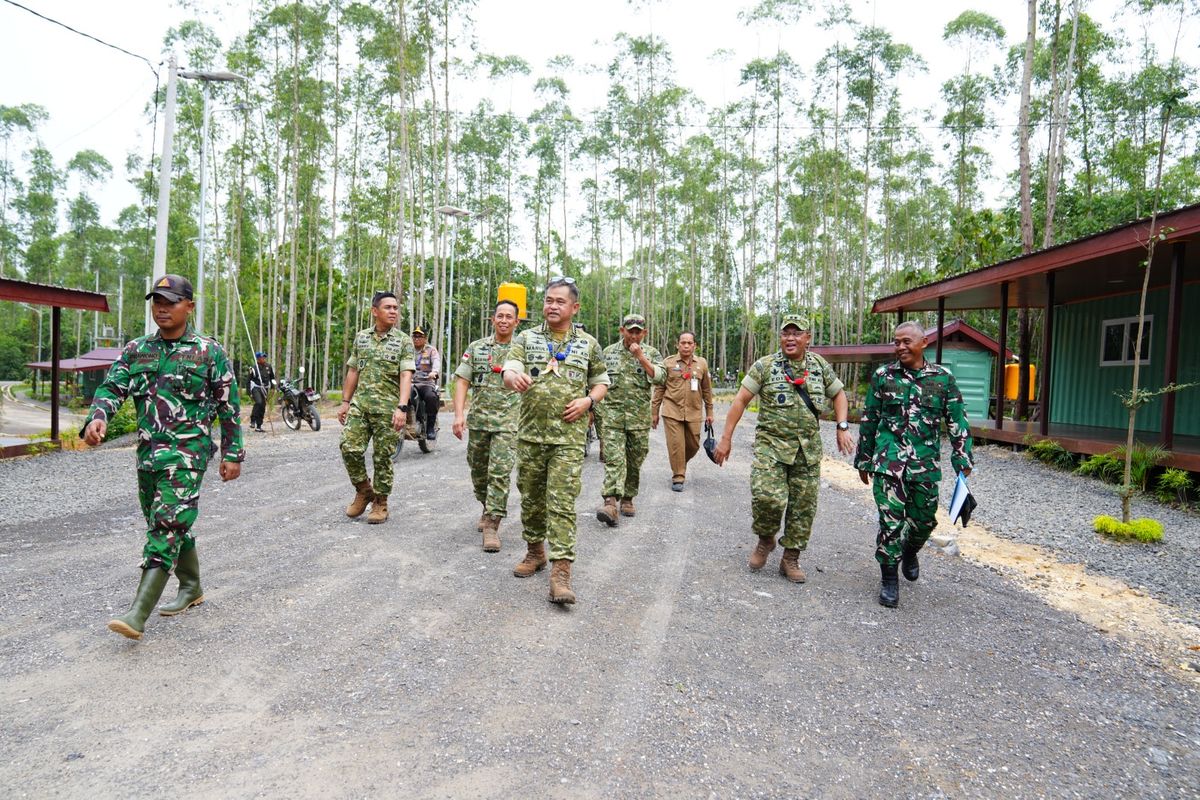
MANAGING borders is not just about maintaining territorial lines; it also involves coordinating dozens of institutions with different mandates, resources, and operational methods.
In hard-to-reach areas, national success depends on the ability of defense personnel, technical ministries, local governments, and public service agencies to work together seamlessly.
However, as more institutions are involved, the need for clear authority, shared responsibilities, and accountability for every decision also increases.
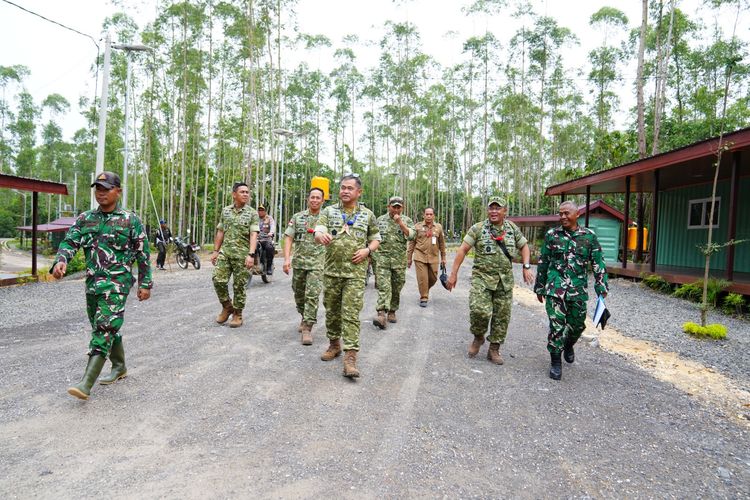
The appointment of TNI General Maruli Simanjuntak as Deputy Commander of the TNI and head of the National Border Management and Remote Areas Agency (BNPPDT) on 15 October 2026, presents a moment to test this governance design.
This assignment comes at a time when the government is expanding its focus on border and remote area management.
The strategic question is not whether the military or civilians should lead, but how to combine their capacities without blurring institutional mandates and principles of governmental accountability.
The need for coordination is no small matter. In discussions by the Working Committee of Commission II of the DPR in January 2026, there was a push for the BNPP to draft a roadmap for border management involving around 40 ministries and agencies, as well as governors in border regions.
This discussion also highlighted the necessity to sharpen authorities, strengthen budgetary support, and establish cross-institution control mechanisms to prevent program overlaps.
This fact demonstrates that fundamental challenges are not merely about a lack of institutions but about how to unify the work of various institutions within a single accountability framework.
In this context, the involvement of the TNI provides numerous opportunities. The military organization possesses experience in logistics management, communication, mobility, and operations in challenging terrains.
This capability can assist in task execution in areas that face transportation access or supporting infrastructure limitations.
In certain situations, military personnel and resources can also enhance responses to security disturbances and emergencies, as long as this is executed in accordance with mandates and applicable legal provisions.
However, operational capacity does not equate to governmental authority. The ability to mobilize resources quickly doesn't automatically mean that an institution is best suited to make decisions regarding all aspects of development, trade, population administration, or public services.
Each field has its own legal basis, technical standards, and oversight mechanisms.
Thus, the benefits of synergy depend on the ability to distinguish supporting functions from the authority that must remain under the purview of the legitimate institution.
This is where Samuel P. Huntington's theory of civil-military relations becomes relevant. In “The Soldier and the State”, Huntington emphasizes the importance of military professionalism and the regulation of relationships between defense institutions and civilian political authorities.
This perspective helps explain that military capabilities can be harnessed for the state's benefit without turning all governance issues into military affairs.
Professionalism encompasses not only operational skills but also an understanding of mandates, task limits, and institutional relationships.
In border governance, this principle needs to translate into clear role divisions.
The TNI carries out defense duties and provides support in accordance with the legal basis and specified needs.