JK Believes National Progress Does Not Depend on Natural Resource Wealth
-
News
-
6 hours ago
This article was translated by AI. Read the original article on Kompas.com. See Original

The term survival is at the heart of such speech acts. Once the problem is framed as a matter of life and death for the nation, extraordinary measures become legitimized, and the scope for debate narrows.
Securitization can be productive when it disciplines a sluggish bureaucracy. It becomes dangerous when criticism is perceived as disloyalty and domestic issues are framed as the work of external parties.
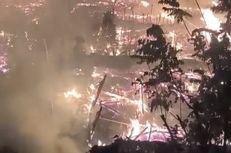
This danger is apparent in the haze issue. At the same forum, the President called forest burning environmental terrorism and vowed to revoke permits from violating companies, while also implying certain countries that he sees as eager to insult Indonesia.
The government indeed works hard, and the President claims that the area affected by forest fires in six provinces has decreased to 639.23 hectares (Kompas.com, 14/10/2026).
However, smoke has blanketed Singapore, disrupting flights between Kuala Lumpur and Singapore, and Malaysia is determined to bring this issue to discussions ahead of the ASEAN Summit in Manila (Kompas.com, 14/10/2026).
The irony is clear. The leakage crossing national borders is not only our wealth but also smoke from our own land.
In Manila, Indonesia does not face wealth thieves, but neighbors who are victims.
Threats to halt gas exports simultaneously complicate diplomacy that has long been guided by the principle that having a thousand friends is too few, and having one enemy is too many.
If leakage is the diagnosis, the next question is who opened the tap. Indonesia's paradox itself provides a clue.
The natural wealth extracted and then parked abroad is not stolen by foreigners, but channeled by concession holders within the country.
Hashim Djojohadikusumo, the President's brother, has even mentioned that the leakage of state revenue stems from oil palm plantations, a sector that has never been free from the shadow of forest fires.
The oligarchy theory by Jeffrey Winters explains why this issue is complex. Winters interprets oligarchy as a politics of wealth defense by a few individuals who control resources in extraordinary quantities.
Oligarchy does not depend on the type of regime. It can thrive under both authoritarianism and democracy, adapting to whoever is in power.
Therefore, measuring success in combating it is not about the turnover of conglomerates but about weakening the capacity of wealth to purchase immunity in the face of the law.
In these two years, Prabowo has demonstrated seriousness in changing policy orientation. Evaluating national strategic projects, regulating forest areas, and programs targeting the people have led some of his former critics to acknowledge a shift from elite interests toward those of the populace.