

JK Believes National Progress Does Not Depend on Natural Resource Wealth
-
News
-
6 hours ago
This article was translated by AI. Read the original article on Kompas.com. See Original
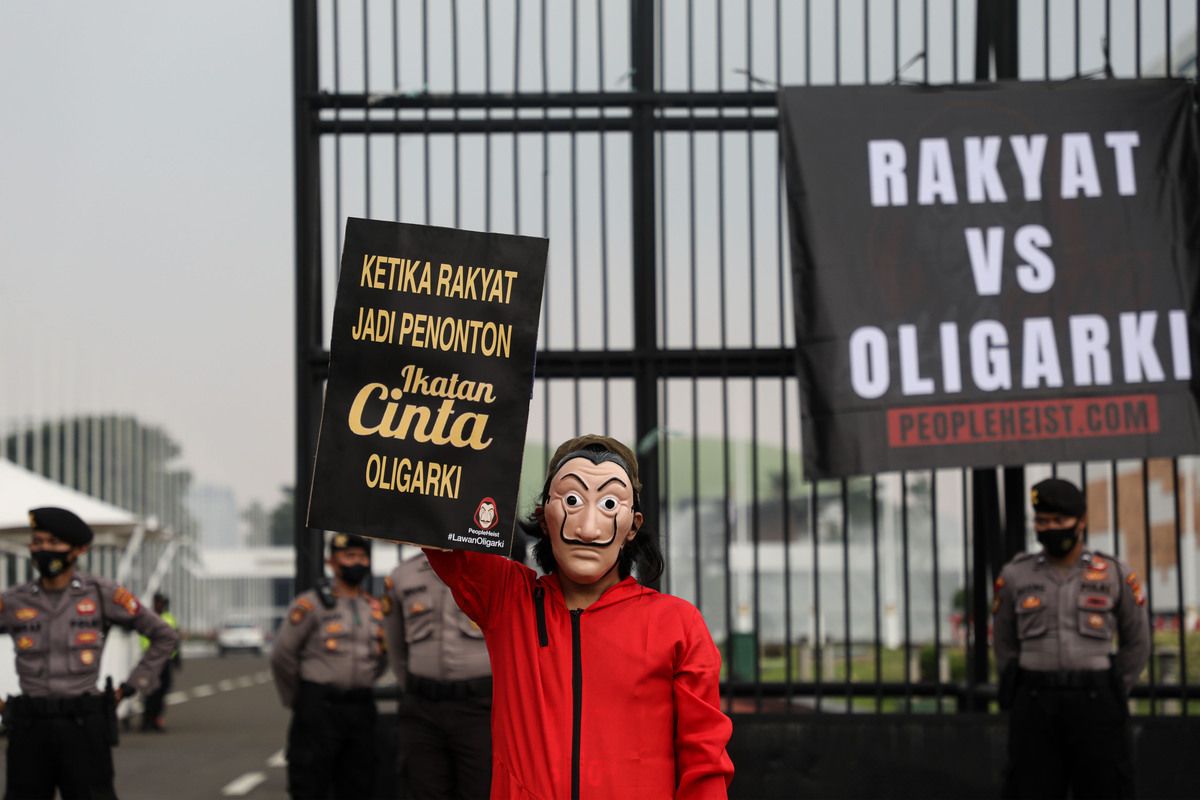
IN a cabinet plenary meeting marking the second anniversary of his administration, President Prabowo Subianto once again employed a metaphor that he has long cherished.
Wealth and natural resources, he stated, are like the blood of the nation. If that blood continues to leak, the body cannot survive.
Therefore, Indonesia is now in survival mode, survival mode. Those who are strong will survive, while those who are not will perish (Kompas.com, 23/10/2026).
The President cited the smuggling of tin, gold, coal, fuel, fertilizers, and narcotics as manifestations of this leakage, reminding that the archipelago has historically always been a target for powers seeking its wealth (Kompas.id, 22/10/2026).
This statement was quickly interpreted by the cabinet. Energy and Mineral Resources Minister Bahlil Lahadalia opened up the option to halt gas exports to neighboring countries in favor of prioritizing domestic needs (Kompas.id, 22/10/2026).
At this point, the speech deserves a closer reading. Is survival mode an accurate diagnosis, or is it merely rhetoric that shifts the source of issues outside the walls of one's own house?
For those who have followed Prabowo's political journey, this idea is not new. In Paradoks Indonesia, published in 2017, he depicted a wealthy nation where its people remain poor because national wealth continues to flow abroad, something he termed as net outflow of national wealth.
The book documented the results of natural resource extraction parked in foreign banks, the disparities that place around 66 percent of wealth in the hands of the top 10 percent, and severe environmental degradation.
These figures were debated at the time, even ridiculed. However, the diagnosis has now become the doctrine of the state.
Survival mode is a manifestation of Indonesia's paradox that has moved from the realm of the opposition to the cabinet table.
This anxiety has deep historical roots. Tan Malaka, long before the republic was established, viewed this country as a resource-rich land becoming a battlefield for foreign capital.
However, in "Madilog," he also issued a warning often forgotten. A people long colonized, he argued, are shackled by "mystical logic," a habit of explaining fate through supernatural forces and destinies outside oneself, rather than tracing the material causes that can be investigated.
This warning feels relevant today. The narrative of a blessed nation perpetually targeted by outsiders can indeed inspire, but if it stops there, it risks giving birth to a new myth.
The securitization theory developed by Ole Wæver and the Copenhagen School helps in interpreting such risks.
An issue is deemed a security problem not merely because its threat is real, but because it is declared an existential threat by authoritative actors.