

Minister: Harapan Kita Hospital Achieves Financial Independence and BPJS Patient Subsidies
-
News
-
2 hours ago
This article was translated by AI. Read the original article on Kompas.com. See Original

Nevertheless, this expenditure needs to be balanced with measurements of the benefits received by the community.
The Ministry of Trade reported that the price variation coefficient between regions decreased from 14.2 percent in 2015 to 10.25 percent in 2024.
Additionally, a study by the Trade Policy Agency for the period from 2024 to May 2025 found that the median prices of several staple food commodities and essential goods in regions utilizing the sea highway tended to be 5-14 percent lower than in non-sea highway routes.
These findings indicate that benefits exist, but do not prove that all reductions in price disparities are due to the sea highway.
Prices are also influenced by production, demand, weather, ground transportation costs, and local market conditions.
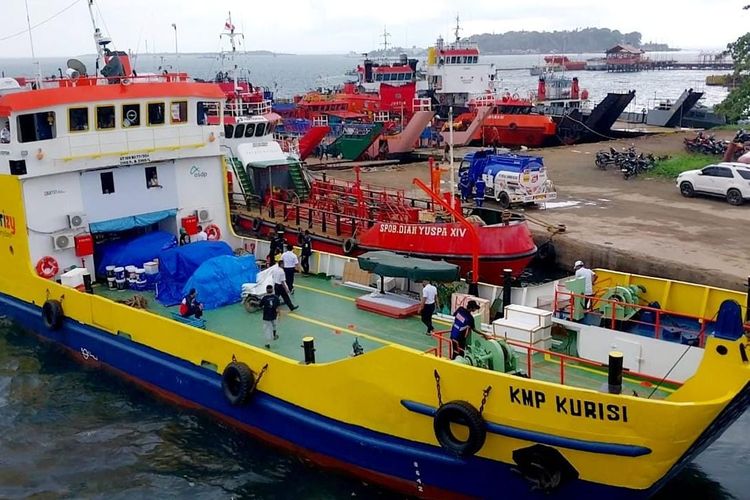
Pioneer passenger shipping offers different benefits. This service aids residents of remote islands in accessing healthcare, education, markets, and government centers. Its success should be measured by fare affordability, schedule regularity, passenger numbers, and accessibility of basic services.
Debate arises when commercial ships that have already been operating are utilized in the sea highway subsidy scheme. The use of private ships is not inherently wrong.
This method can save costs on ship procurement and utilize available capacity.
However, the additional benefits must be evaluated. Imagine an island already served by three commercial ships.
If one of those ships then receives a subsidy, but its schedule, frequency, and capacity do not increase, the community may not receive any additional service.
Conversely, if the subsidy increases frequency, opens port access, provides cargo space for essential goods, or lowers fares, the scheme could indeed be beneficial.
Thus, the government needs to compare conditions before and after subsidies for each route.
Metrics should include sailing frequency, additional capacity, vessel occupancy rates, transportation fares, and price changes for goods in the destination area. The designation of operators should also be transparent and allow for healthy competition.
The budget study by the Indonesian House of Representatives noted that from 2020 to 2023, the sea highway transported 102,877 TEUs and 3,178 tons of goods via 29 routes with 37 ships.
Meanwhile, a report from Ocean Week on October 13, 2026, stated that by the first half of 2026, the sea highway had completed 557 sailings and served 100 ports.