

Minister: Harapan Kita Hospital Achieves Financial Independence and BPJS Patient Subsidies
-
News
-
2 hours ago
This article was translated by AI. Read the original article on Kompas.com. See Original

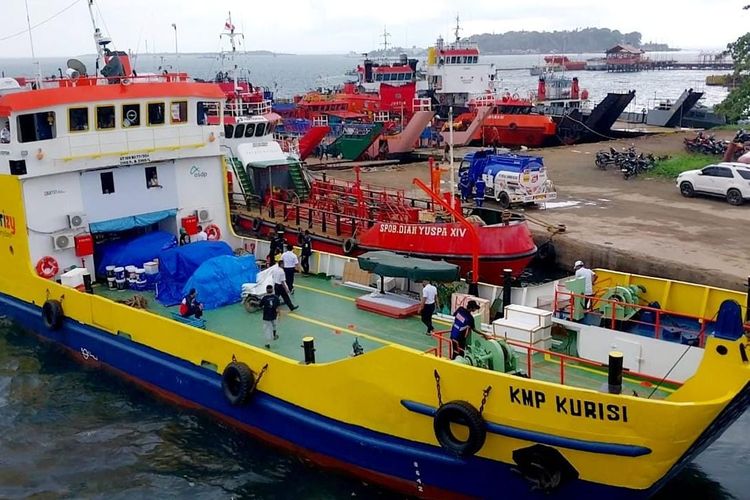
THE GOVERNMENT operates 41 sea highway routes and 107 pioneer passenger ship routes in 2026.
However, the success of these two programs cannot be measured merely by the number of ships sailing or the ports visited.
The fundamental question is whether subsidies are genuinely enhancing services, reducing logistics costs, and making goods more affordable for the public.
The sea highway focuses on distributing goods, especially essential and critical items, to backward, remote, outermost, and border areas.
Meanwhile, pioneer passenger shipping connects regions that are inadequately served by commercial transport, including access to education, healthcare, markets, and government services.
Both have distinct functions and do not necessarily overlap.
However, this functional difference does not negate the need to evaluate the effectiveness of their budgets.
The sea highway started in 2015 with three ships and three routes.
By 2023, the program serviced 39 routes with 38 ships. In 2024, the Ministry of Transportation recorded 39 ships and 39 routes.
A report by the Center for Budget Analysis and State Financial Accountability at the Indonesian House of Representatives noted that the realization of sea highway subsidies reached IDR 1.551 trillion and pioneer shipping subsidies amounted to IDR 4.508 trillion from 2020 to 2023.
Thus, the total subsidy realization for both programs reached approximately IDR 6.06 trillion over four years.
During the same period, the total realization of the maritime transport budget amounted to IDR 15.90 trillion.
This figure also includes subsidies for livestock ships, inter-island feeder ships, and mandated public services for Pelni passenger transportation.
Therefore, IDR 15.90 trillion cannot be solely referred to as the cost of the sea highway and pioneer ships.
The substantial budget indicates the government's commitment to improving connectivity in areas that are not commercially viable to serve.