
Gibran Does Not Discuss Resignation Intent
-
News
-
Just now
This article was translated by AI. Read the original article on Kompas.com. See Original
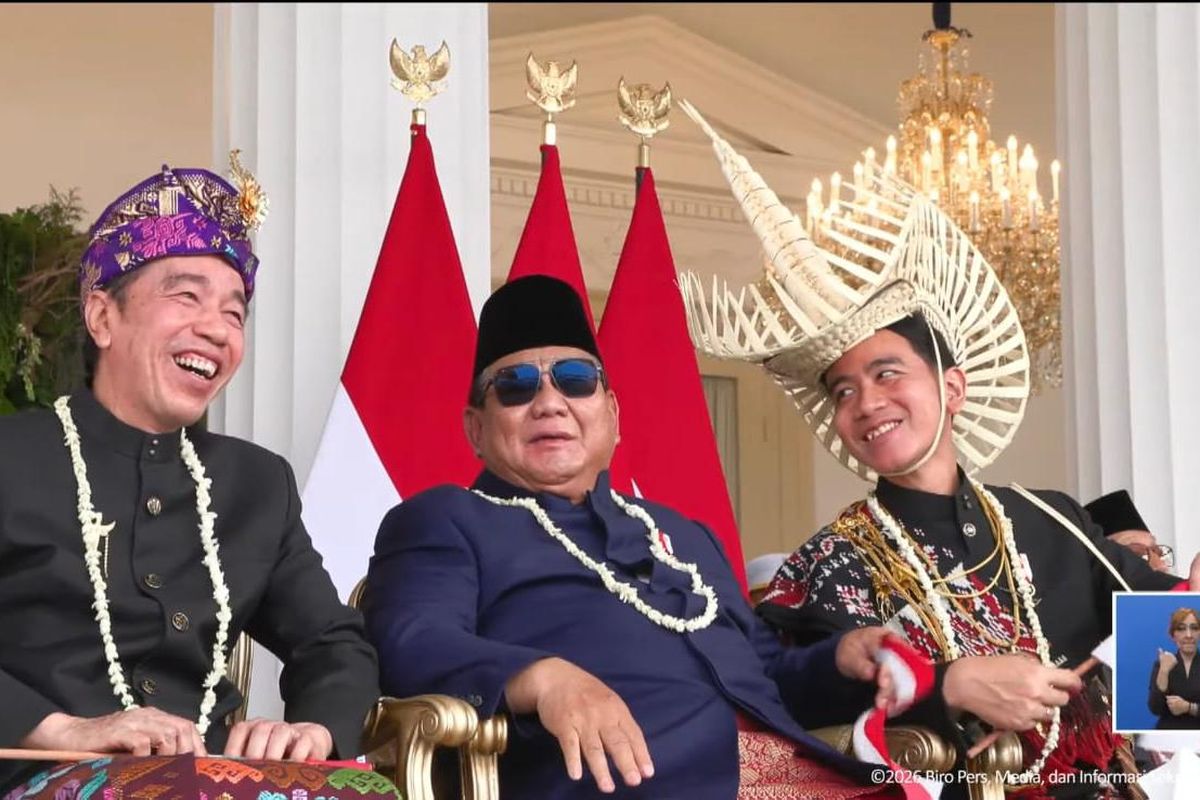
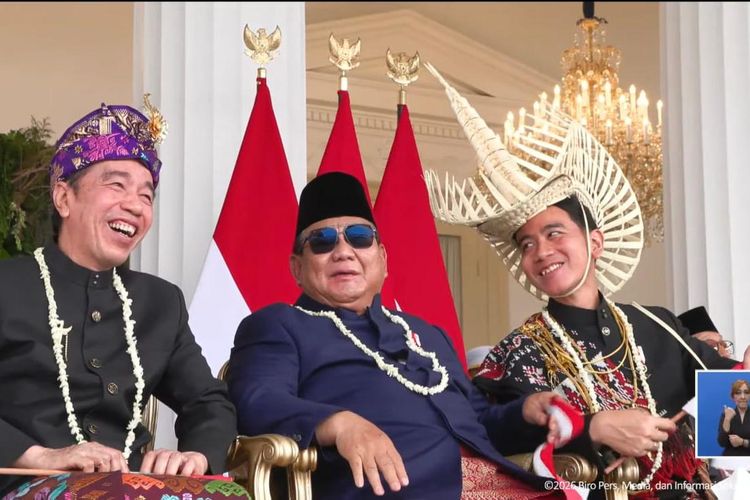
THERE is something intriguing about how Joko Widodo discusses the futures of Prabowo Subianto and Gibran Rakabuming Raka.
In September 2025, he confirmed that he had directed his volunteers to support the pair for two terms. This support was reiterated in January 2026.
However, when the same question was posed again on October 8, 2026, Jokowi did not repeat his earlier statement. He remarked that the election is still far off and urged everyone to focus on serving the people.
There was no retraction of support in that response, nor was there any indication of a potential change in the vice presidential candidate.
Yet, the shift in his way of answering became interesting as it emerged when several parties began to express their views on the 2029 presidential election.
For instance, Golkar supports the possibility of Prabowo running again, but has not yet decided who will accompany him. Gerindra has also yet to announce its decision regarding the candidate pair.
Amidst these developments, the discussion surrounding two terms raises a more important question than simply Jokowi's change in rhetoric.
Does support for the continuation of a president's leadership also entail a commitment to uphold his political partner?
A former president no longer holds governmental power, but his influence does not automatically cease upon leaving the palace.
His relationships with elites, volunteer networks, and political experience keep him relevant in power dynamics.
Jokowi possesses all these resources. His role in the political configuration for the 2024 presidential election means that every statement he makes regarding Prabowo and Gibran draws significant attention.
However, political communication has limits for interpretation. The statement that the election is still far off does not sufficiently prove a change in support.
Conclusions regarding any rift in relationships require stronger evidence than mere variations in word choice.
What is particularly interesting is how Jokowi is now in a different position. While he was still president, he held formal power resources. Now, his influence primarily operates through political relationships and his ability to shape opinions.
This change in position mandates an adjustment in his way of communicating. A statement that is too definitive regarding the next election could give the impression that a former president still wishes to dictate the current government configuration.
By choosing not to provide a new certainty, Jokowi at least avoids that impression. Whether that was his intention, only Jokowi can explain.
What is clear is that the political space of a former president is not the same as the authority of an incumbent president.
Golkar's statement reveals that the candidacy for president and vice president involves different political calculations.
Golkar's Vice Chairman Ahmad Doli Kurnia expressed his party's support for Prabowo in the 2029 presidential election. However, the vice presidential candidate has not yet been determined.
This position can be understood through the nature of multi-party presidentialism. In such a system, a president needs the support of multiple parties to maintain effective governance, while each party has its electoral and organizational interests that are not always aligned.
Some parties are interested in maintaining access to the cabinet. Others seek to strengthen their influence in policy formulation. There is also a need to prepare cadres who have opportunities to hold national positions.
All these interests converge when discussions turn to vice presidential nominations.
This position holds strategic value. Besides being part of national leadership, nominating a vice president can expand support bases, accommodate certain political powers, or enhance the competitiveness of the pair.