

Student in Malang Dies from Assault, Ministry of Education Urged to Improve Violence Prevention System
-
News
-
7 minutes ago
This article was translated by AI. Read the original article on Kompas.com. See Original
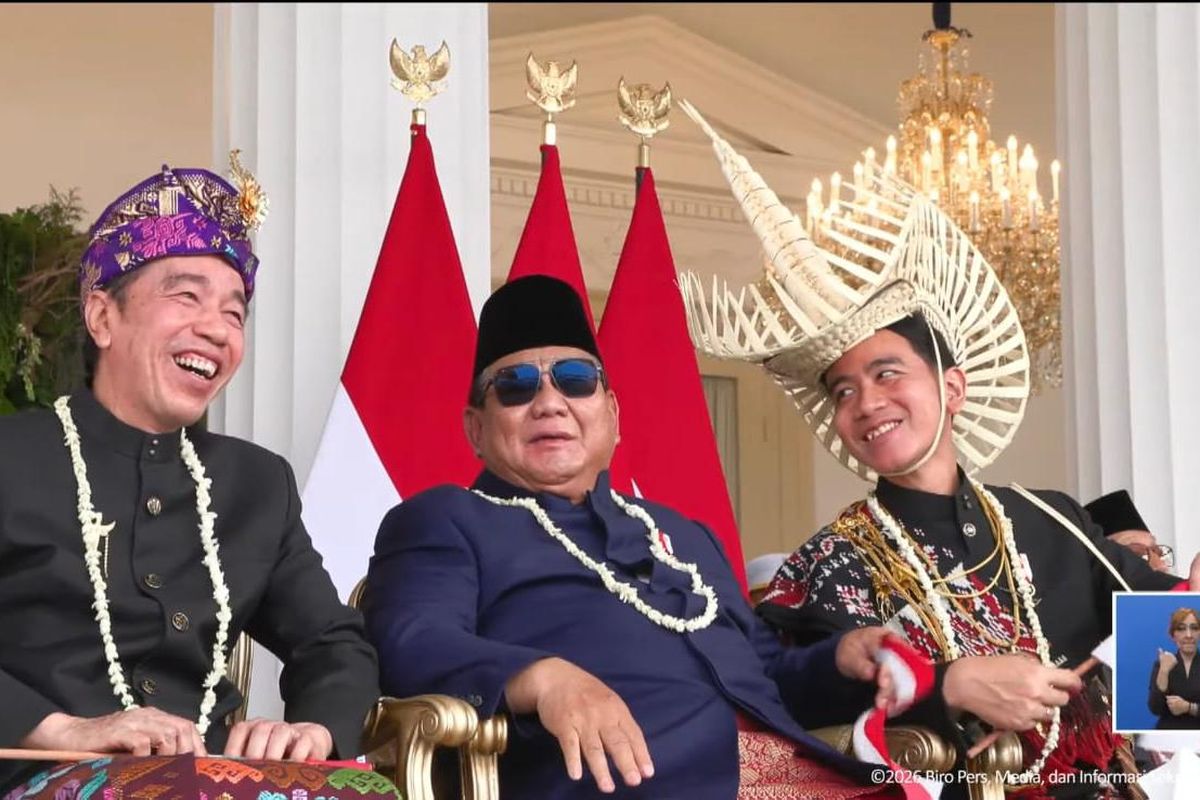
For Gibran, the political lesson is clear. Opportunities for re-nomination must be built on capacity and trust, not merely on proximity to figures who previously supported him.
Discussions regarding the 2029 presidential election arise while the Prabowo–Gibran administration has not yet completed two years. There remains a significant portion of the term to complete.
However, the elite political calendar often moves faster than the government accountability calendar.
As parties begin to calculate the chances for the next election, the public is still waiting for the results of the political promises made in the previous election. This is where attention should be focused.
Economic growth needs to be assessed by its impact on people's lives. Education and health programs must be evaluated based on their quality and reach.
Corruption eradication requires more serious metrics than political statements. Law enforcement and protection of civil liberties also determine the quality of governance.
This assessment requires data, citizen experiences, and oversight from public institutions.
For the government, political support is the capital for action. However, that capital only matters if it results in policies that yield real benefits.
The success of programs also needs to be distinguished from the success of maintaining power. The government can gain electoral support without all its policies succeeding. Conversely, sound policies can continue under a different leadership arrangement.
Thus, discussions about a second term should not precede evaluations of the first term.
Without adequate evaluation, support for two terms risks becoming loyalty to a figure rather than an acknowledgment of governmental achievements.
The constitution allows for presidents and vice presidents to be re-elected once. However, this possibility is not a guarantee that an officeholder will secure the next mandate.
Article 7 of the 1945 Constitution stipulates term limits. The decision of who will lead remains within the democratic process of candidacy and elections.
In this process, political parties have the authority to propose candidate pairs in accordance with constitutional provisions and laws. Voters then decide who earns their trust.
The relationship between these two stages is crucial. Elite decisions determine the options available on the ballot, but cannot replace the people's decisions.
Therefore, the quality of democracy is also determined by how open the nomination process is, how accountable the candidates are to the public, and whether voters have the opportunity to freely evaluate their options.
The discourse about two terms should be part of that debate.
Jokowi's support is a legitimate political stance. Golkar's calculations and those of other parties are also part of the democratic competition. However, none of this addresses whether the public will desire the same leadership in the future.
The answer must be sought through the performance of governance and voter assessments, not through certainties announced far in advance of the elections.
Perhaps that is the most significant meaning of the question mark that now accompanies the two-term discourse.
Democracy does not require us to know who will be in power in 2029 from now. What is needed is to ensure that, when the time comes, the people still have the freedom to determine the answer.