
Student in Malang Dies from Assault, Ministry of Education Urged to Improve Violence Prevention System
-
News
-
7 minutes ago
This article was translated by AI. Read the original article on Kompas.com. See Original
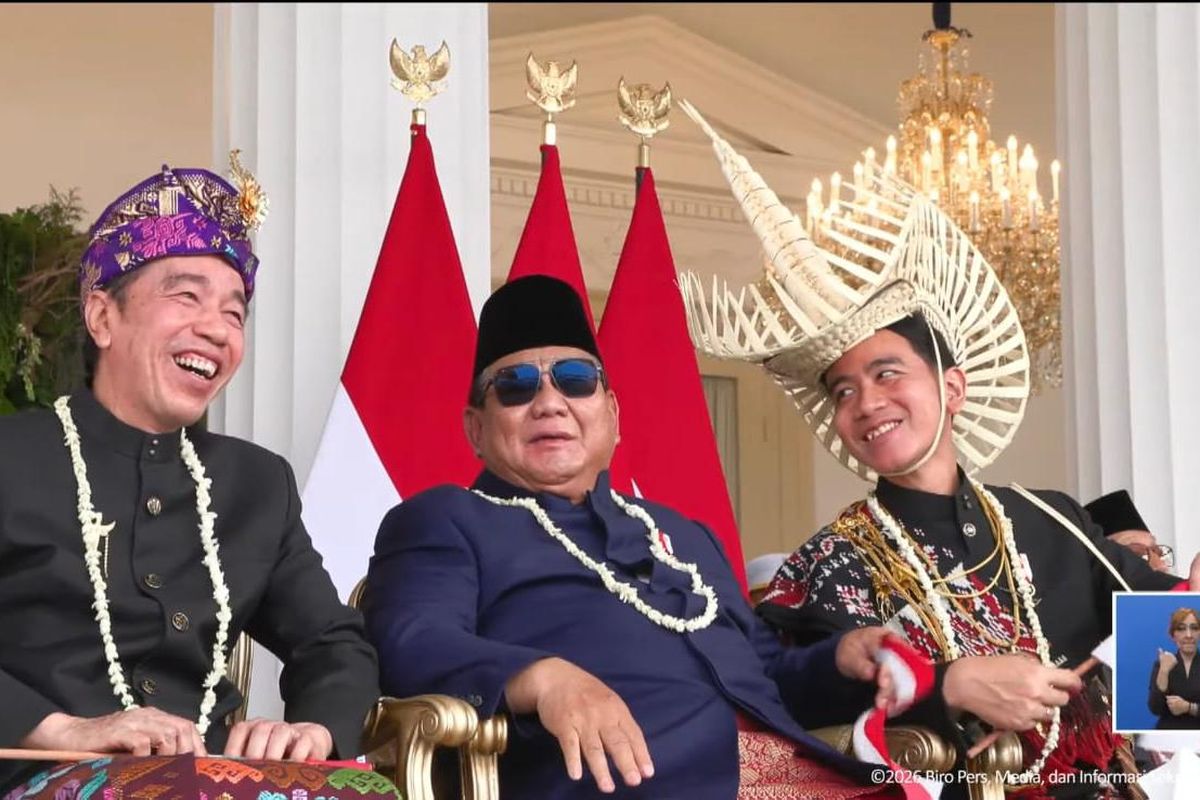
Therefore, parties that support the president may not immediately agree on a candidate to partner with him.
Indonesian political experience shows that coalitions can undergo adjustments as elections approach. Parties weigh electoral strength, elite relationships, and the potential benefits of political collaboration.
In this context, the decision regarding Prabowo's pair in 2029 is better viewed as the result of ongoing negotiations, not as an automatic continuation of agreements from the 2024 presidential election.
Excessive focus on Jokowi's stance may obscure significant changes in Prabowo's position.
As he participates in the 2024 presidential election, Prabowo needs support to gain a mandate. After assuming office on October 20, 2024, he will become the holder of governmental authority based on the constitution.
This new position carries responsibilities that cannot be shifted to characters who previously supported him.
Prabowo will determine policy direction, lead the cabinet, and manage relationships between the government and the legislature. These decisions will form the basis for assessing his leadership.
Here, a president's independence takes on meaning. He is not measured by how far he distances himself from his predecessor, but by his ability to make decisions and take responsibility for their consequences.
Prabowo can maintain a good relationship with Jokowi without losing his capacity to make independent political choices.
However, the independence of a presidential system faces challenges in a multi-party framework. The president possesses constitutional authority, but the execution of governance agendas still requires political support.
Providing too many concessions can weaken policy direction. Conversely, neglecting coalition interests can disrupt government collaboration.
The ability to manage these tensions will be a key measure of Prabowo's leadership as he approaches the end of his term.
The question of who will accompany him in the next election only becomes relevant after political needs and the direction of his leadership can be assessed more clearly.
For Gibran, his political challenge is different. He must establish recognition of his role as vice president.
In the 2024 presidential election, Gibran's candidacy cannot be separated from his familial relationship with Jokowi and the debate surrounding his nomination process. This situation shapes part of the public's perception of him.
However, after nearly two years in government, the criteria for evaluation should no longer stop at the origins of political support.
Gibran holds a constitutional position as vice president. In fulfilling this role, he assists the president according to the powers and assignments given to him.
His working space may differ from that of the president. However, the limitations of formal authority should not serve as an excuse to overlook the importance of contributions that can be recognized by the public.
Participation in government activities, the ability to engage in public communication, and involvement in resolving assigned issues can serve as the basis for assessment.
Gibran's challenge is to transform public recognition of him into trust based on his performance.
Historically in Indonesia's governance, the continuity of presidential leadership has not always accompanied that of the vice president.
Susilo Bambang Yudhoyono served his first term with Jusuf Kalla and his second with Boediono. Jokowi also replaced Jusuf Kalla with Ma'ruf Amin when he ran again in 2019.
This experience indicates that changing partners is a legitimate possibility in the presidential election system.