

Cak Imin Encourages Pesantren-Based Vocational Schools to Elevate Standards to International Levels
-
News
-
2 hours ago
This article was translated by AI. Read the original article on Kompas.com. See Original
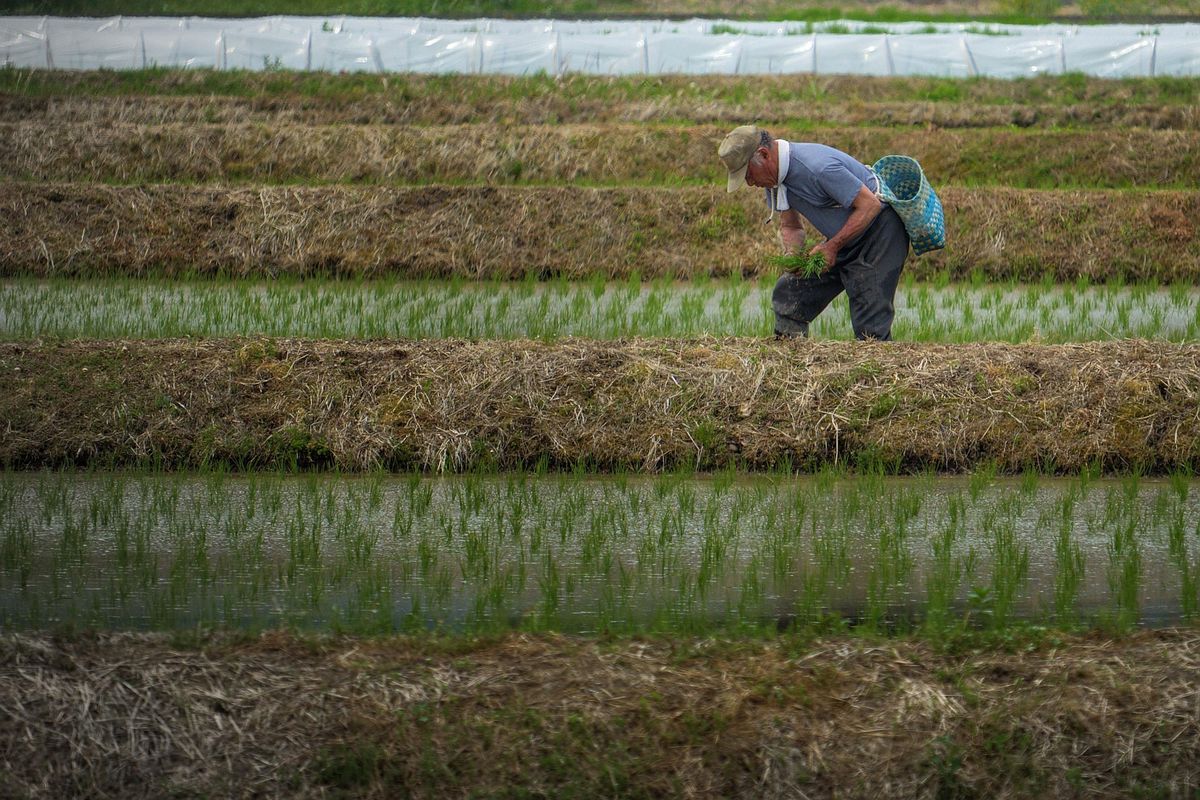
INDONESIA has no shortage of agricultural products; however, the challenge lies in transforming these products into greater economic value.
This issue becomes increasingly pressing as Indonesia's economy is called to grow higher, create quality jobs, strengthen exports, and reduce dependence on primary commodities.
BPS data indicates that Indonesia's economy grew by 5.29 percent year-on-year in the second quarter of 2026.
From the production side, the agriculture, forestry, and fisheries sectors even grew by 12.26 percent quarterly compared to the previous quarter.
This figure shows that agriculture remains one of the important pillars of the national economy.
However, mere growth in production is insufficient. We need to measure how much added value can be created from each agricultural commodity and how extensively that added value is enjoyed by stakeholders along the production chain.
This is where downstream processes become strategic.
Downstream processes are often simply understood as activities that convert raw materials into finished or semi-finished goods. While this understanding is not entirely incorrect, it is too narrow.
True downstream processes entail building a complete value chain from upstream to downstream.
Downstream processes should begin with seed provision, financing, cultivation technology, productivity enhancement, harvesting, post-harvest management, collection, storage, processing, packaging, standardization, certification, logistics, marketing, and access to domestic and global markets.
Thus, downstream processes are not just an industrial processing issue; they are an economic ecosystem issue.
Building a processing factory alone without ensuring a supply of raw materials will lead to continuity supply issues for the industry.
If the production of raw materials increases but storage and processing facilities are absent, prices at the farmer level can easily fall during peak harvest times.
If processed products are successfully made but lack standards, certification, branding, and market access, the expected added value will not be optimal.
Furthermore, if the industry grows but farmers lack bargaining power, downstream processes risk creating significant value without improving the welfare of those upstream.
Therefore, the essence of downstream processes is not the factory but the interconnection between components in the chain.
We need to shift our perspective from commodity-based development to value chain-based development.
In the old paradigm, farmers are positioned as commodity producers. After harvest, their responsibilities are considered complete.
In the new paradigm, farmers are the first link in a value chain that is directly connected to industries and markets.
Farmers need quality seeds, fertilizers, irrigation, technology, mechanization, weather information, technical guidance, and financing.
After harvesting, facilities for drying, grading, storage, cold storage, transportation, and aggregation are required before commodities enter the processing phase.
In the downstream phase, products require design, packaging, certification, branding, digital marketing, distribution networks, and access to export markets.
All these components must be interconnected. Successful downstream processing occurs when no link in the chain stands alone.
Thus, the establishment of a single processing factory cannot be considered a success in downstream processes if its raw materials are still sourced externally, if farmers are not connected with the industry, if logistics costs are high, and if the final product lacks a market.