

Cak Imin Encourages Pesantren-Based Vocational Schools to Elevate Standards to International Levels
-
News
-
2 hours ago
This article was translated by AI. Read the original article on Kompas.com. See Original
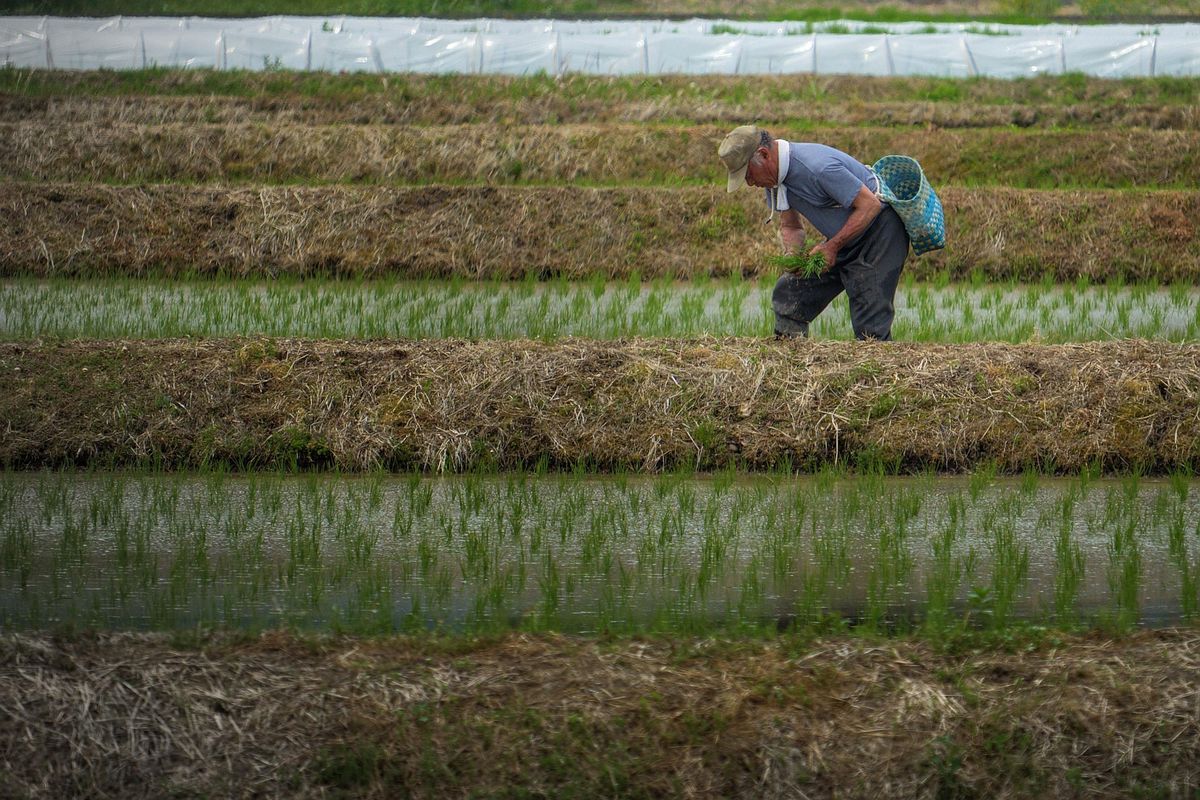
INDONESIA has no shortage of agricultural products; however, the challenge lies in transforming these products into greater economic value.
This issue becomes increasingly pressing as Indonesia's economy is called to grow higher, create quality jobs, strengthen exports, and reduce dependence on primary commodities.
BPS data indicates that Indonesia's economy grew by 5.29 percent year-on-year in the second quarter of 2026.
From the production side, the agriculture, forestry, and fisheries sectors even grew by 12.26 percent quarterly compared to the previous quarter.
This figure shows that agriculture remains one of the important pillars of the national economy.
However, mere growth in production is insufficient. We need to measure how much added value can be created from each agricultural commodity and how extensively that added value is enjoyed by stakeholders along the production chain.
This is where downstream processes become strategic.
Downstream processes are often simply understood as activities that convert raw materials into finished or semi-finished goods. While this understanding is not entirely incorrect, it is too narrow.
True downstream processes entail building a complete value chain from upstream to downstream.
Downstream processes should begin with seed provision, financing, cultivation technology, productivity enhancement, harvesting, post-harvest management, collection, storage, processing, packaging, standardization, certification, logistics, marketing, and access to domestic and global markets.
Thus, downstream processes are not just an industrial processing issue; they are an economic ecosystem issue.
Building a processing factory alone without ensuring a supply of raw materials will lead to continuity supply issues for the industry.
If the production of raw materials increases but storage and processing facilities are absent, prices at the farmer level can easily fall during peak harvest times.
If processed products are successfully made but lack standards, certification, branding, and market access, the expected added value will not be optimal.
Furthermore, if the industry grows but farmers lack bargaining power, downstream processes risk creating significant value without improving the welfare of those upstream.
Therefore, the essence of downstream processes is not the factory but the interconnection between components in the chain.
We need to shift our perspective from commodity-based development to value chain-based development.
In the old paradigm, farmers are positioned as commodity producers. After harvest, their responsibilities are considered complete.
In the new paradigm, farmers are the first link in a value chain that is directly connected to industries and markets.
Farmers need quality seeds, fertilizers, irrigation, technology, mechanization, weather information, technical guidance, and financing.
After harvesting, facilities for drying, grading, storage, cold storage, transportation, and aggregation are required before commodities enter the processing phase.
In the downstream phase, products require design, packaging, certification, branding, digital marketing, distribution networks, and access to export markets.
All these components must be interconnected. Successful downstream processing occurs when no link in the chain stands alone.
Thus, the establishment of a single processing factory cannot be considered a success in downstream processes if its raw materials are still sourced externally, if farmers are not connected with the industry, if logistics costs are high, and if the final product lacks a market.
Conversely, when farmers, cooperatives, MSMEs, industries, banking, government, universities, research institutions, and markets are interconnected within one ecosystem, downstream processes can become a driver of economic transformation.
We often focus too much on downstream industry and forget that the competitiveness of the industry is significantly determined by the quality of the upstream sector. Processing industries require three things: quality, quantity, and continuity of raw materials. These cannot arise spontaneously.
If farmers have low productivity, raw material costs will be high. If the quality of commodities is inconsistent, sorting and processing costs will rise.
If production is seasonal without storage facilities, industries will struggle to maintain continuity in production. As a result, processing industries become less competitive.
Therefore, the agenda for downstream processing should begin with the readiness of the upstream sector to supply the industry consistently and competitively.
This condition implies that policies regarding seeds, fertilizers, irrigation, mechanization, research, guidance, financing, and farmer institutions are indeed part of the downstream processing policy.
In other words, upstream policies are downstream policies.
There is one issue that needs attention: an increase in downstream value does not automatically raise farmers' incomes upstream.
Packaged coffee products can be sold at high prices, but coffee farmers may not receive a proportional share of the value.
Premium chocolate may be priced many times higher than cocoa beans, but cocoa farmers may not see a corresponding increase in income.
Therefore, downstream processes must strengthen farmers' bargaining positions.
Cooperatives, farmer corporations, contract farming, industrial partnerships, and schemes for joint ownership of processing facilities need to be expanded.
Farmers do not need to control the entire downstream industrial chain; however, they must have bargaining power and mechanisms to enjoy the added value that is created.
This is a crucial principle in building a downstream ecosystem. Added value can be created downstream, but the economic benefits must flow back upstream.
A downstream ecosystem will not function without financing. Unfortunately, the financing system often still regards farmers, MSMEs, cooperatives, and industries as standalone entities. In fact, what needs financing is the value chain.
Farmers need production financing. Cooperatives need capital for aggregation and storage.
MSMEs require capital for processing and packaging. Industries need investment financing. Exporters need trade financing.
With a value chain financing approach, risks can be managed better since financing is not only based on the assets owned by the entrepreneurs but also on transaction certainty and relationships between stakeholders within the value chain.
Bank Indonesia’s macroprudential policies that provide incentives for banks to lend to the agriculture, industry, and downstream sectors should be directed to extend beyond large companies to reach economic actors at the upstream level.
Because a factory lacking raw materials will not be productive, while farmers without market access will not gain optimal benefits.
The modern downstream ecosystem also requires digitalization.
Digitalization can be used to build traceability, connect farmers with buyers, predict raw material needs, monitor prices, manage stock, enhance logistics efficiency, and expand marketing.
In modern food and agricultural industries, consumers are increasingly asking not just about price.
They are more concerned about product origins, quality, food safety, sustainability, and certification.
Thus, the ability to trace products back to farmers will become increasingly important.
Digitalization is not just a marketing tool; it is the infrastructure linking upstream and downstream.
Another often overlooked link is research and innovation. Downstream processes will not be sustainable if they rely solely on existing technology.
We need innovations in seeds, cultivation technology, post-harvest technology, processing, packaging, preservation, energy efficiency, and the development of new derivative products.
Research should not stop at scientific publications; it must be translated into technologies that can be utilized by farmers and industries.
Herein lies the importance of building an innovation-based agro-industrial ecosystem.
Agricultural downstream processes should also not be centralized in major industrial zones.
Each region has superior commodities that can be developed into local economic ecosystems.
With this approach, downstream processing also becomes a regional economic development strategy.
At this point, downstream processing acquires an equity dimension.
Downstream processing is not merely about moving raw materials to factories but also about bringing industries closer to production sources and adding value for communities.
Indonesia must learn from various experiences of commodity-based industrialization. The mistake to avoid is pursuing partial downstream processing.
If this condition occurs, then downstream processes will not build an ecosystem.
We only create new standalone links. Therefore, the success of downstream processing should be measured more comprehensively.
If all the links are interconnected, Indonesia will not only produce commodities but also create value chains.
This condition distinguishes commodity-producing countries from value-creating ones. Indonesia has all the prerequisites to move in that direction.
In the end, agricultural downstream processes must be positioned as a national economic transformation agenda.
The goal is not just to make agricultural products more expensive but to ensure the entire agricultural ecosystem is more productive and valuable.
Thus, the future of agricultural downstream processes in Indonesia truly lies not only in factories but also in our ability to build strong bridges between upstream and downstream.
For downstream processes without a strong upstream will lose raw materials; upstream without robust downstream will lose added value. Both must be developed simultaneously.
Indonesia should no longer pride itself solely on being a country rich in commodities.
We must become a country capable of transforming the wealth of commodities into products, industries, technologies, brands, exports, and prosperity. The key to downstream processes is not merely building more factories but establishing a complete ecosystem.