

Prabowo Instructs Renovation of All Community Health Centers and Every District to Have a Good Hospital
-
News
-
16 minutes ago
This article was translated by AI. Read the original article on Kompas.com. See Original
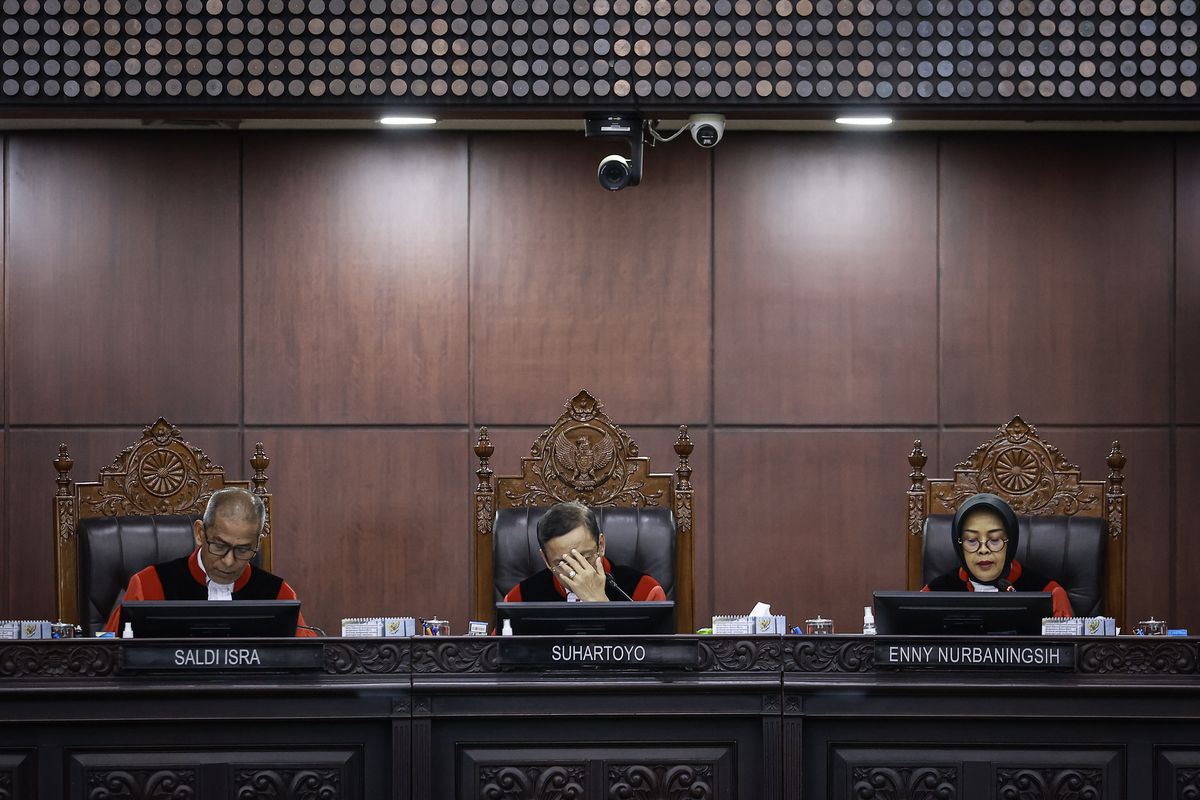
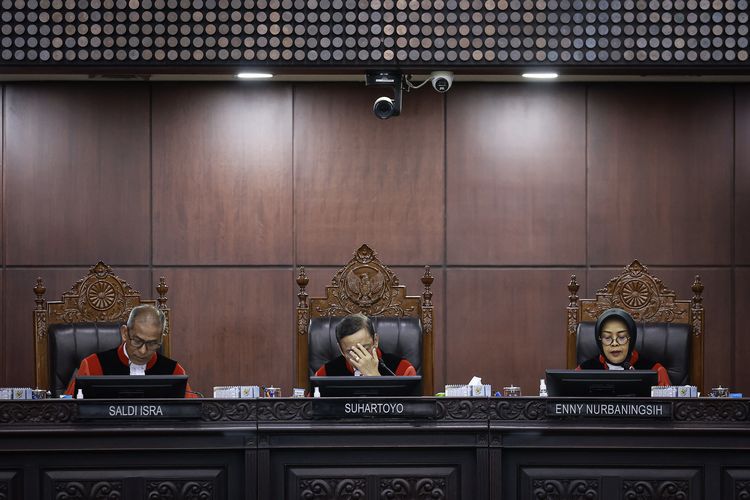
DECISION of the court typically culminates in a verdict. Disputes are decided, parties leave the courtroom, and the law provides certainty regarding the consequences that must be fulfilled.
The Constitutional Court's Decision Number 01/PHPU.PRES-XXIV/2026 regarding the educational qualifications of Gibran Rakabuming Raka is not so straightforward.
The case is indeed concluded. The request was declared inadmissible because the Applicants did not have legal standing.
However, before reaching this conclusion, the Court conducted a substantive assessment of the questioned facts and documents.
In its consideration, the Constitutional Court expressed confidence regarding the existence of a “special situation.”
During the hearings, the Court did not find or obtain convincing evidence indicating that Gibran possessed a diploma, certificate, or foreign degree that could be equated with the lowest education level as mentioned in Article 169 letter r and Article 227 letter l of the Election Law.
Nevertheless, the Court did not take that assessment to the point of disqualification. There was a change in status that was decisive: Gibran was no longer a presidential candidate. Since October 20, 2024, he has been inaugurated and sworn in as Vice President.
The case is closed. The constitutional issue remains uncertain.
A presidential candidate and the Vice President can be the same individual, but they are in different legal standings. The former is on the path to power, while the latter has already attained it.
This distinction determines the legal regime in play. While someone is still a candidate, the validity of their candidacy is within the framework of electoral law.
After inauguration, they hold a constitutional position whose removal process is governed by the 1945 Constitution. This is the line drawn by the Court.
The Constitutional Court stated that the issues raised by the Applicants are substantively no longer appropriate to be included within the regime of presidential and vice-presidential election result disputes.
Gibran’s status as a candidate ended when he was inaugurated and sworn in as Vice President on October 20, 2024. That inauguration also marked the conclusion of the 2024 presidential election stages.
Thus, even though the hearings did not find or obtain convincing evidence about foreign education documents as mentioned by the Court, it ruled that it could not annul or disqualify Gibran in his position as Vice President.
Here, it is important to distinguish between identifying legal issues and having the authority to render legal consequences regarding those issues. The court works with both.
Before reaching that boundary, the Court provided an important assessment of the documents used in the candidacy.
The Court assessed Letter Number 9149/D.D1/KS/2019 has procedurally met the requirements of the Education and Culture Ministerial Regulation. However, the Court did not stop at its procedural validity.
According to the Court, the letter represents equivalence in knowledge equivalent to completing vocational school, not equivalence to high school diplomas or their foreign equivalents, which were not factually found in the trial examination. This distinction is crucial.
The Court stated that the phrase “assessed to have equivalent knowledge” is not the same as “having at least completed high school” as stipulated in Article 169 letter r of the Election Law.
The latter should be proven by possession of a diploma, certificate, or degree, not merely an assessment of knowledge equivalence.
This ruling does not imply that Gibran forged his diploma, nor does it state he never attended the education he claims.
The Court's conclusion is much more specific: no convincing evidence was found or obtained regarding degrees, certificates, or foreign diplomas that could serve as a basis for equivalence as referred to in the Election Law.
The accuracy in interpreting statements like this is of utmost importance. In a court ruling, one extra word can lead to an entirely different legal conclusion.
Another intriguing aspect of this ruling is the issue of the timeframe. The request was submitted on September 10, 2026.
Meanwhile, the deadline for submitting PHPU for the 2024 presidential election, according to the provisions referenced by the Court, had already passed on March 23, 2024, at midnight. The difference is more than two years.
However, the Court did not accept the exception regarding the timeframe. In its consideration, the Court stated that even though the request was submitted past the established deadline, this situation could be justified due to a special circumstance/event and the principle of ius curia novit.
Therefore, the exception regarding the timeframe was declared legally unfounded.

























