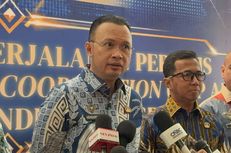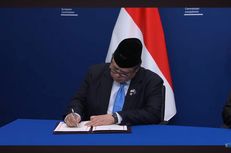


Prabowo Gathers Gerindra Cadres in Hambalang, Dasco and KDM Attend
-
News
-
1 hour ago
This article was translated by AI. Read the original article on Kompas.com. See Original
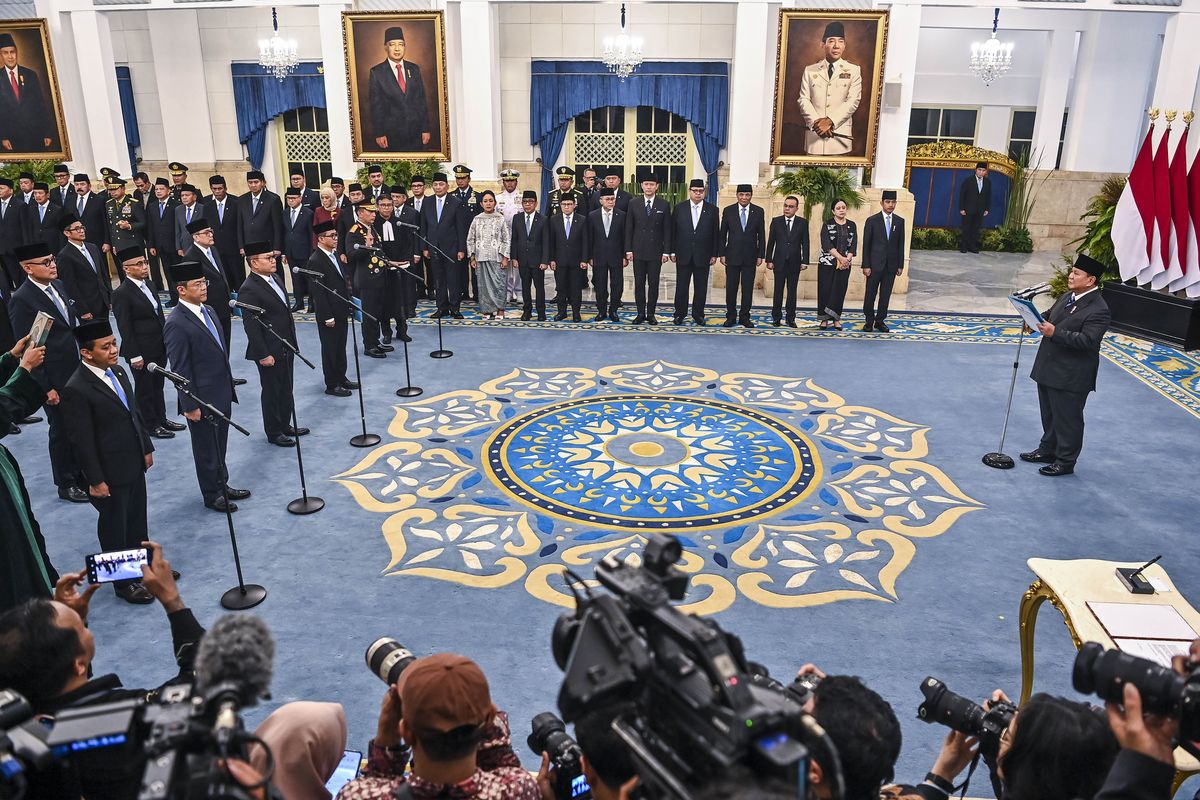
RESHUFFLE of the cabinet multiple times in the two years of President Prabowo Subianto's administration has drawn the attention of political observers.
Many aspects invite interpretation. On one hand, this constant reshuffling displays an aggressive consolidation of power.
On the other hand, the high frequency of filling positions cannot be separated from a political accommodation mode or large-scale "power-sharing."
This essay aims to elaborate on this latter aspect as a practice of political magnanimity.
Etimologically, 'magnanimity' derives from the Latin words 'magnus' (great) and 'animus' (spirit), which literally means greatness of spirit.
In actions and policies, it manifests as generosity, willingness, and pleasure in giving, including extending forgiveness.
In the political realm, 'political magnanimity' is implemented in the form of embracing, accommodating, and even offering political protection to opposing elements.
Instead of carrying out purges or political revenge against opponents, 'political magnanimity' fosters great tolerance and provides honorable places for adversaries or critics.
This essay departs from the premise that Prabowo's politics of magnanimity, as reflected in the cabinet reshuffle—especially bringing radical critics into the palace circle—is rooted in an abundance mentality he inherited from his family and showcased since his youth.
However, at the same time, political magnanimity is also a necessity in the face of political challenges in the era of disruption.
To briefly explain this, the essay employs a Psychohistorical approach from the realm of Political Science and Attribution Theory from the field of Communication Studies.
Psychohistory connects public policies, leadership styles, and the actions of a figure with his personal background, such as parental upbringing, family values, and the social environment in which he grew up.
Similar to Psychohistory, Attribution Theory in communication shows how humans explain someone's actions and behaviors by attributing them to one of two attributions: internal attribution and external attribution.
Internal attribution is a way of thinking that concludes a person's behavior is caused by factors within themselves, such as personality, character, talent, beliefs, motivation, or their past.
External/situational attribution, conversely, views someone's behavior as a result of their surrounding situations, environment, social pressures, or chance events.
Using the Psychohistorical and Attribution Theory approaches, the cabinet reshuffle and the distribution of power seats carried out by Prabowo can be seen as a politics of magnanimity with an abundance mentality as its root.
The abundance mentality is a term coined by Stephen Covey, meaning a mindset or paradigm where one believes that everything in the world—such as resources, opportunities, success, attention, and happiness—is abundantly available and more than enough for everyone.
This mindset causes one to focus on opportunities, believing that others' success does not diminish their own, enjoying sharing, and being oriented towards win-win solutions in social and political interactions.
A political leader with this mentality sees power, influence, and resources not as a limited 'cake' that will run out when shared (‘scarcity mentality’), but as something that is always enough for everyone.
Based on Prabowo's political views, his childhood history, family background, and testimonies from his friends, he tends to adopt an abundance mentality.
People who know him, such as Irfan Wahid (Ipang Wahid) in an interview, have expressed this aspect of his abundance mentality.
Ipang Wahid testified that Prabowo is a leader who is very easily moved, emotionally touched, enjoys feeding ants, and is generous.
This personal character of generosity has been publicly revealed on several occasions.
For example, the Indonesian public was captivated by Prabowo's spontaneous act of gifting a luxury Rolex watch to all players and coaching staff of the Indonesia National Football Team after a crucial victory in World Cup qualifiers.
The palace confirmed that the fantastic gift came purely from Prabowo's personal funds, not using state budget.
Long before becoming president, while still active in the military, this trait of abundance was also manifested in his concern for human resources.